
Imperial Cities — what to know
Four royal capitals — Marrakech, Fes, Meknes and Rabat — each built by a different dynasty over 1,200 years of Moroccan history. Together they form the classic imperial circuit: a journey through medieval medinas, monumental gates, and living Islamic architecture that has no parallel anywhere in the world.
What Are the Imperial Cities?
Morocco has four cities that served as imperial capitals — each one chosen by a different ruling dynasty and built, in many cases, from the ground up. Marrakech was founded by the Almoravids in 1062. Fes is the oldest, founded in 789. Meknes was reborn under Sultan Moulay Ismail in the 17th century. Rabat became the administrative capital under the French Protectorate and has remained so since independence. Together they represent an unbroken arc of Moroccan civilisation, each city reflecting the ambitions and aesthetics of the dynasty that built it.
Marrakech — The Red City
Founded in 1062 by the Almoravids, Marrakech remains Morocco's most internationally recognised city. Its medina walls — built from local rose-pink pisé clay — give it the nickname 'the Red City'. Djemaa el-Fna, the central square, is a UNESCO Intangible Cultural Heritage site: each evening it transforms into an open-air theatre of Gnawa musicians, snake charmers, storytellers and food stalls. The Saadian Tombs, discovered in 1917 after centuries of concealment, are the finest example of Saadian-era ornament in Morocco. The Koutoubia Mosque, completed in 1199, is the city's visual anchor — its 70-metre minaret served as the model for the Giralda in Seville.
Fes — The Spiritual Capital
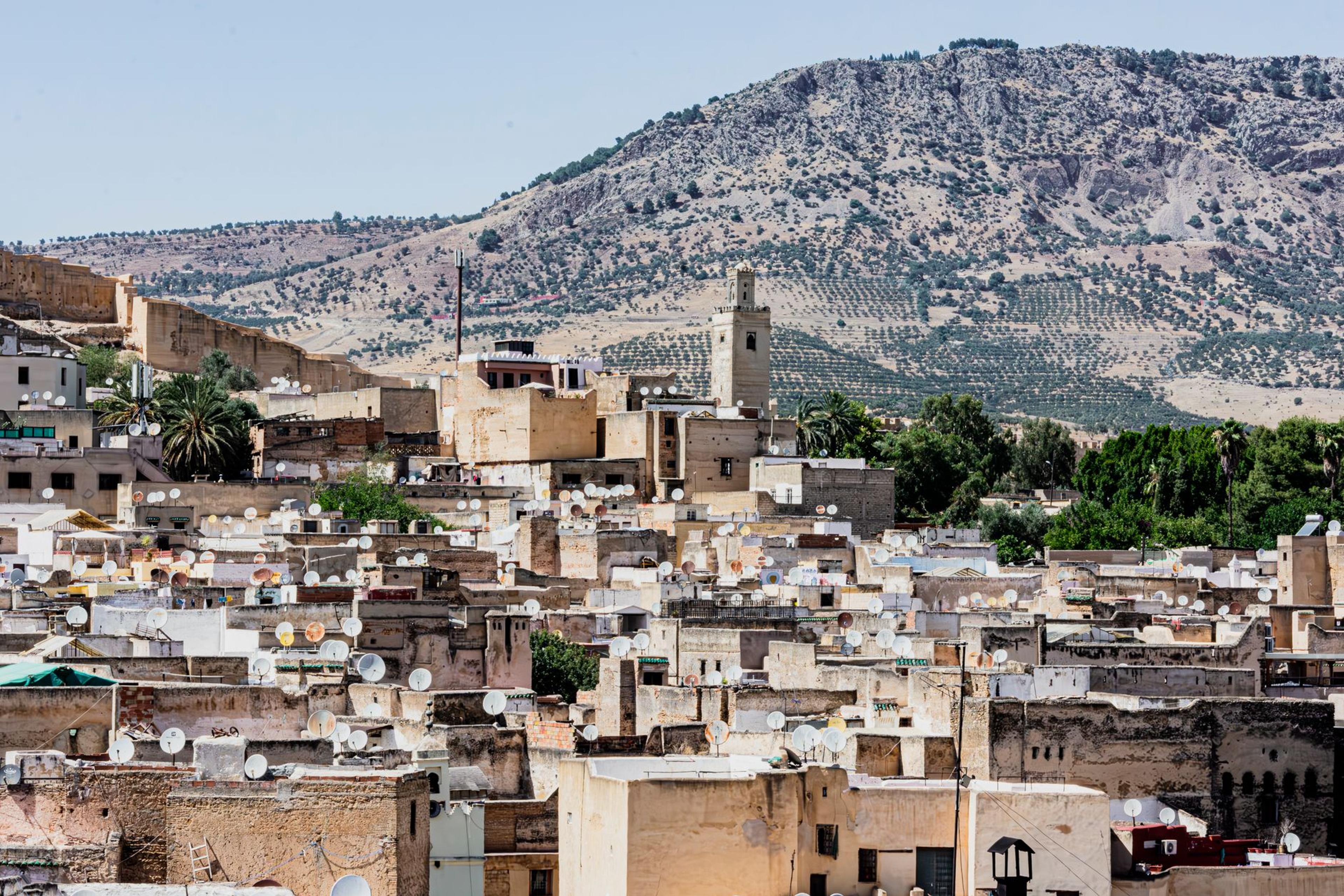
The oldest of the four cities, Fes was founded in 789 CE and reached its zenith under the Marinid dynasty in the 13th and 14th centuries. Fes el-Bali — the old city — is the world's largest car-free urban zone, a labyrinth of 9,400 streets where mules still outnumber motorcycles. Al Quaraouiyine, founded in 859 CE, is recognised by UNESCO as the world's oldest continuously operating university. The Chouara Tanneries have operated since the 11th century, dyeing leather in circular stone vats using processes unchanged for a millennium. Fes is the city that most rewards travellers who are willing to walk slowly, get genuinely lost, and look up.
Meknes — The Forgotten Capital
Morocco's most undervisited imperial city is also one of its greatest rewards. When Sultan Moulay Ismail declared Meknes his capital in 1672, he set about building a city that would rival Versailles — 25 km of double defensive walls, royal stables for 12,000 horses, underground granaries, and the enormous Bab Mansour gate, the finest in North Africa. The city never recovered its imperial status after Moulay Ismail's death, leaving its monuments frozen in 18th-century grandeur. Meknes is also the base for visiting Volubilis — Morocco's best-preserved Roman site, with mosaics and a triumphal arch still standing after 2,000 years.
Rabat — The Royal Capital
Morocco's administrative capital is also its most relaxed city for travellers. Founded in the 12th century by the Almohads, Rabat was later expanded by the Alaouite dynasty and became Morocco's capital under the French Protectorate in 1912. The Mausoleum of Mohammed V — father of Moroccan independence — is a masterpiece of Alaouite craftsmanship: carved Italian marble, painted cedar ceilings, and an honour guard in traditional dress. The adjacent Hassan Tower, begun in 1195 and never completed, gives a sense of the city that might have been. The Kasbah des Oudaias, overlooking the Atlantic, is one of the most atmospheric corners in Morocco.