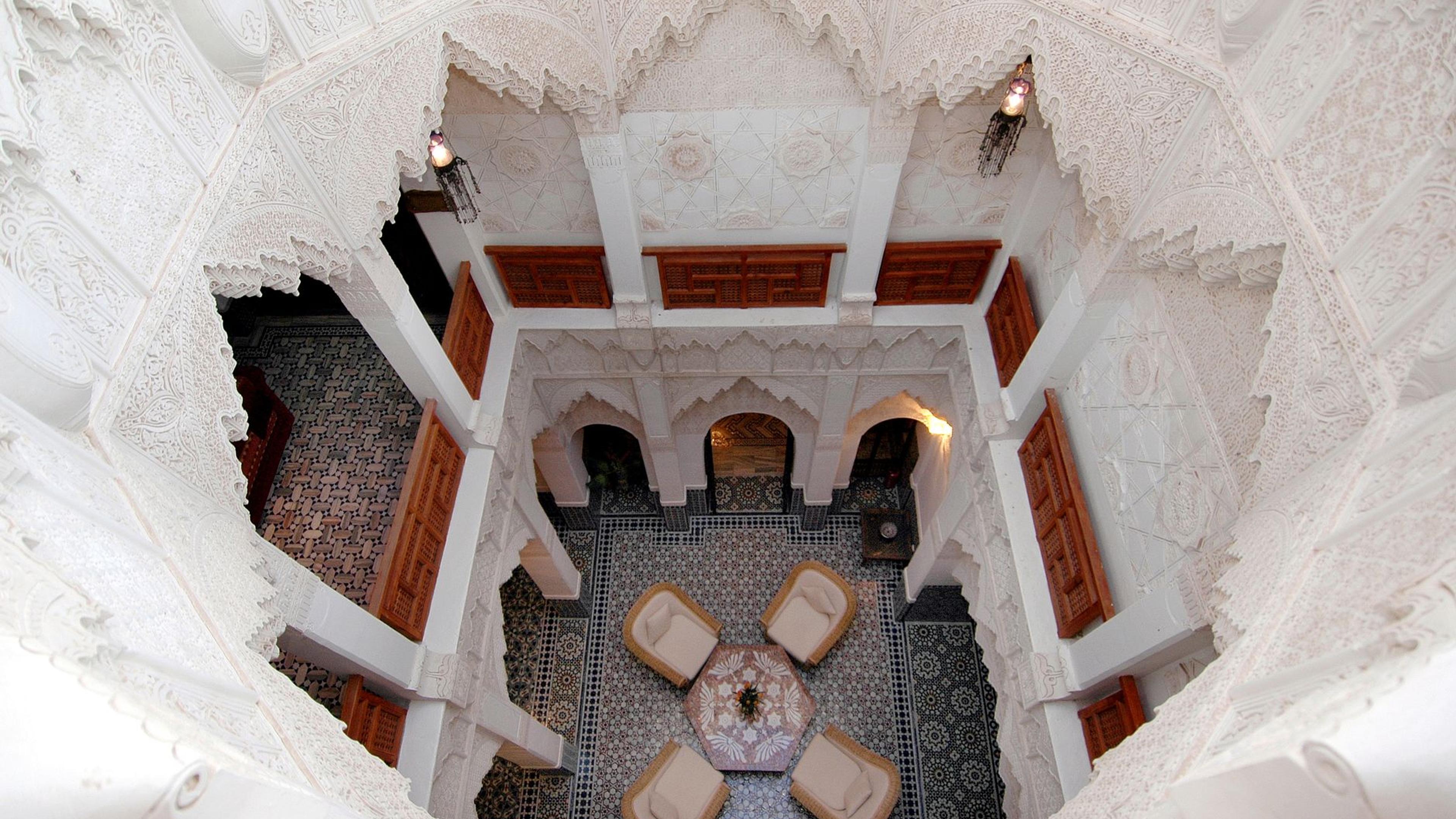
The best riad in Marrakech is the one in the right part of the medina for your trip, with a car drop-off close enough to walk your bags in, and the comforts that matter to you: a pool, a spa, a rooftop or simply a quiet room. For most first-time visitors that means a riad within ten to fifteen minutes' walk of Jemaa el-Fna, in the Riad Zitoun, Kasbah or Mouassine areas. A good mid-range riad costs roughly 700–1,500 MAD (about US$70–150) a night for a double room with breakfast.
This guide explains how to choose a riad in Marrakech, which neighbourhoods suit which travellers, what riads cost, the red flags to watch for, and the riads we book for our own guests.
What is a riad?
A riad is a traditional Moroccan house built around an inner courtyard, usually with a garden or a small fountain at its centre. The outside walls are almost blank; everything faces inwards. That is why a riad feels so calm the moment the door closes behind you, even when the souk is ten metres away.
Most riads in Marrakech have between three and fifteen rooms, a roof terrace and a small team who cook breakfast and often dinner. If you want the full background on the architecture and history, read our guide to what a riad is in Morocco.
Which area of Marrakech is best for a riad?
Where your riad sits in the medina shapes your whole stay. These are the areas we steer guests towards, and who each one suits.
Riad Zitoun and Jemaa el-Fna south
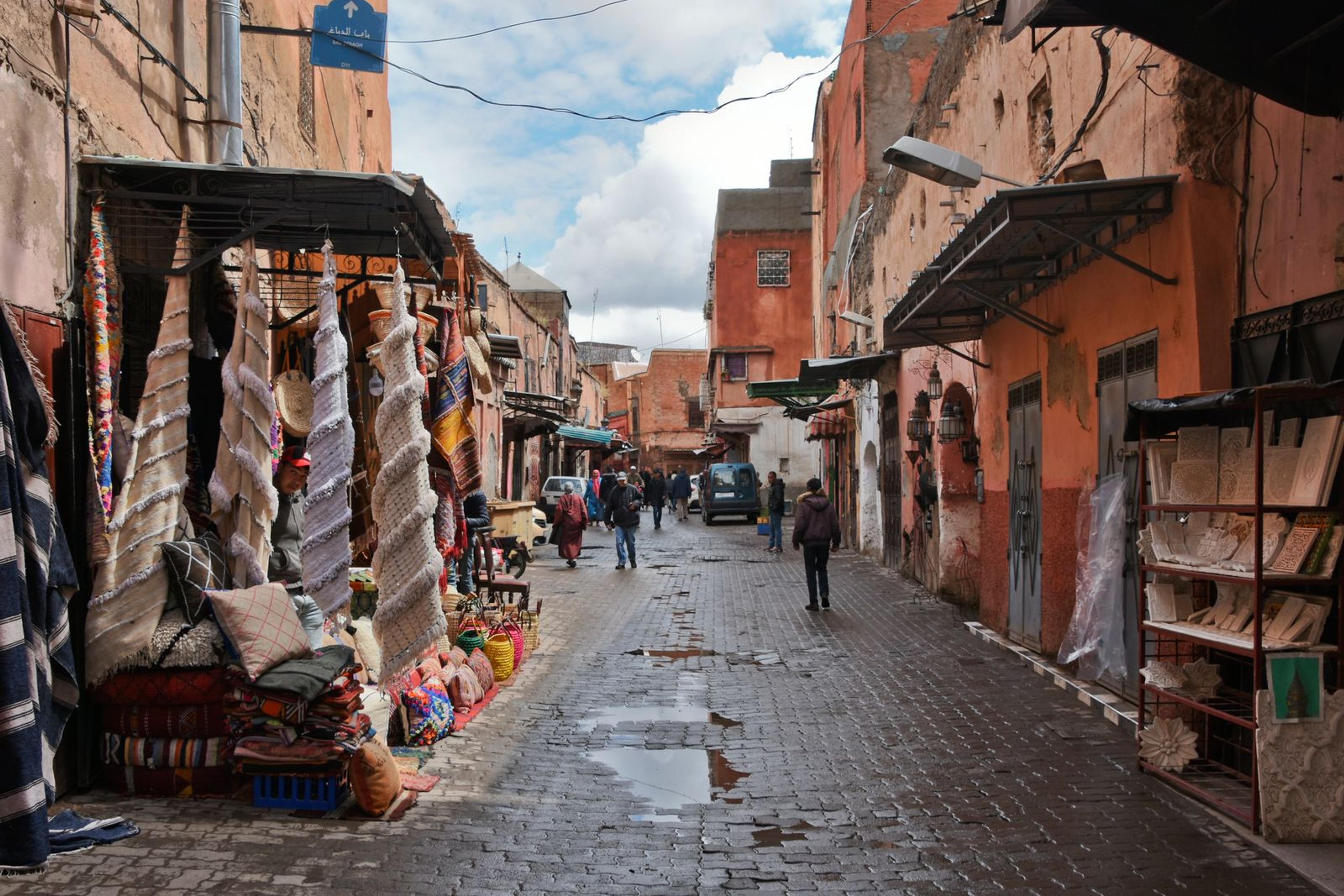
The lanes of Riad Zitoun el-Kedim and Riad Zitoun el-Jdid run south from Jemaa el-Fna towards the Bahia Palace. You can walk to the square in minutes and to the palaces in ten. It is the best all-round area for a first visit. The trade-off: the lanes nearest the square are busy late into the evening.
The Kasbah
The southern Kasbah quarter, around the Saadian Tombs and the Bab Agnaou gate, is calmer and more local. Cars can get closer here than in most of the medina, which makes arrivals easier with luggage. It is a 15–20 minute walk to Jemaa el-Fna.
Mouassine
Mouassine sits just west of the main souks, near the Mouassine fountain and Le Jardin Secret. It has some of the most beautifully restored riads in the city and puts the souks on your doorstep. Expect more foot traffic and more shopfronts outside your door.
Bab Doukkala and Riad Laarous
The north-west of the medina is more residential and quieter at night, with local bakeries, hammams and street food rather than souvenir stalls. It suits second-time visitors and anyone who wants to see daily life. Jemaa el-Fna is 15–20 minutes away on foot.
The Mellah
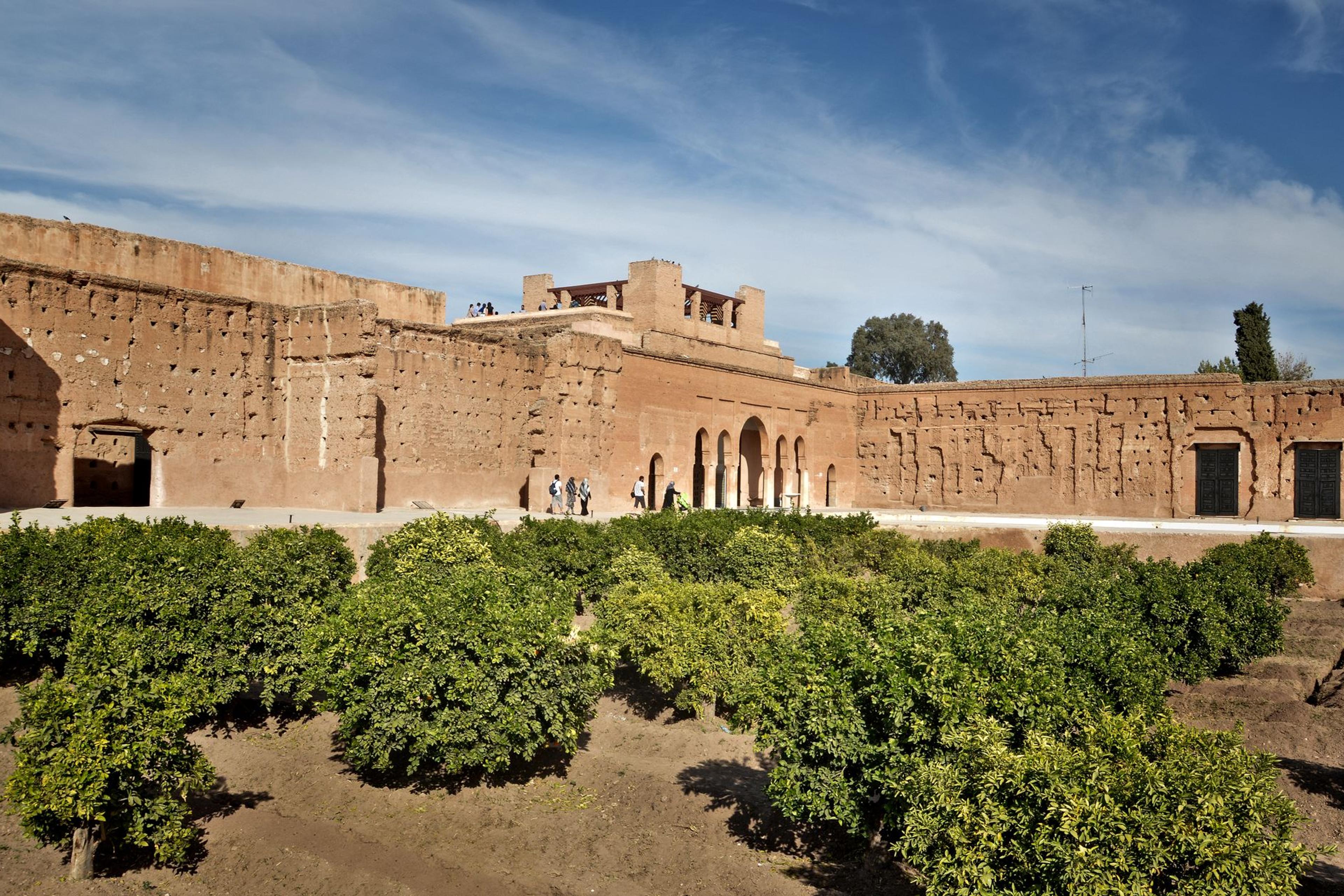
The old Jewish quarter lies next to the Bahia and El Badi palaces. It is lively by day, with the spice square and covered market, and it has good-value riads. Some lanes are dark and very quiet after dusk, so check the exact walk from the drop-off point.
Outside the walls, the Hivernage and Gueliz districts have modern hotels rather than riads, and the Palmeraie has resort villas. They are good for families who want large pools, but you will need a taxi into the old city every day.
How to choose a riad in Marrakech
Photos all look similar. These are the questions that separate a good riad from a disappointing one.
- How far is the nearest car drop-off? Cars can't enter most medina lanes. A good riad sends someone to meet you with a luggage cart. Ask for the walking time from the drop-off, not from Jemaa el-Fna.
- Are there stairs to your room? Riads are traditional houses and most have no lift. If stairs are a problem, ask for a ground-floor room when you book.
- Is the pool heated? Most riad pools are small courtyard plunge pools and many are unheated. Lovely in May, cold in January.
- Is there heating in winter? Nights in Marrakech drop to around 5–7°C in December and January, and a courtyard house holds the cold. Check for heating or a fireplace.
- How noisy is it? Sound carries through an open courtyard. Light sleepers should ask for a room away from the entrance and be ready for the dawn call to prayer from a nearby mosque.
- What is on the roof? A shaded roof terrace for breakfast or sunset is one of the real pleasures of riad life. Some have plunge pools up there too.
How much does a riad in Marrakech cost?
These are rough 2026 ranges for a double room with breakfast. Prices rise in spring, in October and over Christmas and New Year.
- Budget riads: 350–700 MAD (about US$35–70). Simple rooms, shared roof terrace, often no pool.
- Mid-range riads: 700–1,500 MAD (about US$70–150). Better rooms and service, often a plunge pool and a hammam.
- Luxury riads: 2,000–5,000 MAD (about US$200–500). Spa, larger pool, excellent breakfast and dinner, very attentive staff.
- Top-end riads and palace hotels: 5,000 MAD (about US$500) and above.
On our tours the riad is included in the price, so you don't have to compare hundreds of listings yourself. Our 5-day luxury Marrakech escape, for example, stays in a five-star riad in the medina, and our other luxury Morocco tours work the same way.
Riad or hotel in Marrakech?
A riad gives you character, a central location and the feeling of staying in someone's home. A modern hotel gives you lifts, larger pools, parking and more privacy from the city.
Choose a riad if you want to walk everywhere, love traditional architecture and don't mind stairs. Choose a hotel in Hivernage if you are travelling with young children who need a big pool, if mobility is a concern, or if you plan day trips every day and want a car at the door. Many of our guests do both: two nights in a riad, then a hotel or a desert camp later in the trip.
The riads we book for our guests
We don't claim these are the best riads in Marrakech. Nobody has stayed in all of them. They are riads we know well, can reach easily with luggage, and trust to look after our guests.
- Riad Palais des Princesses & Spa — in the Riad Zitoun area, a short walk from Jemaa el-Fna, with its own spa. Rated 4.5 on Google at the time of writing. Guests stay here on our 14-day Grand Morocco circuit.
- Riad Zaki Marrakech — rated 4.4 on Google at the time of writing. It is the Marrakech stop on our 12-day tour from Casablanca.
- Riad Ks & Spa and Hotel & Spa Riad El Walaa — spa riads we use on some of our longer Grand Morocco tours, or similar riads depending on availability.
For private tours we choose the riad around you: a ground-floor room for someone who can't manage stairs, a family room, or a rooftop suite for a special occasion.
Red flags when booking a riad online
- "Riad" apartments. Some listings use the word for a flat in a modern building. Check that the photos show a real courtyard.
- Wide-angle photos. Courtyards are often smaller than they look. Look for guest photos, not only the professional ones.
- "Five minutes from Jemaa el-Fna". Ask how long it takes from the car drop-off with luggage, especially if you arrive at night.
- No one to meet you. Medina lanes are a maze. A riad that won't send someone to the drop-off point is a riad that will make your first evening harder.
Which riad suits which traveller?
- First-time visitors: Riad Zitoun or Mouassine, close to the square.
- Couples: a small riad with a roof terrace and a hammam, in Mouassine or the Kasbah.
- Families: a riad with family rooms and a pool, or a hotel in Hivernage if the children need space. See our family Morocco tours.
- Older travellers: a riad close to a car drop-off with ground-floor rooms. Our tours for seniors choose accommodation with this in mind.
Stay in a riad on your Morocco tour
Most AZA tours that stop in Marrakech include riad nights in the medina, chosen for location, comfort and easy arrivals. If you have a riad in mind, tell us and we'll build around it. Get a custom quote with your dates and the kind of stay you want.
Planning a Morocco tour? Browse our tours
See all tours →Quick answers
For a first visit, stay inside the medina within ten to fifteen minutes' walk of Jemaa el-Fna, in the Riad Zitoun, Kasbah or Mouassine areas. Bab Doukkala suits second-time visitors who want a quieter, more local feel. Hivernage and Gueliz, outside the walls, have modern hotels with bigger pools but need a taxi into the old city.
In 2026 a budget riad costs about 350–700 MAD (US$35–70) a night for a double with breakfast, a good mid-range riad about 700–1,500 MAD (US$70–150), and a luxury riad 2,000–5,000 MAD (US$200–500). Prices rise in spring, October and over Christmas and New Year.
Usually not. Cars can't enter most medina lanes, so taxis stop at the nearest gate or square. A good riad sends someone to meet you there with a luggage cart and walk you in. Always ask for the walking time from the car drop-off, especially if you arrive after dark.
Many do, but they are usually small courtyard plunge pools rather than swimming pools, and a lot of them are unheated. They are lovely from April to October and cold in winter. If a proper pool matters, look at luxury riads with larger pools or a hotel in Hivernage.
A riad is better if you want character, a central location and the feel of a traditional home. A hotel is better for young families who need a big pool, for travellers who can't manage stairs, or for anyone who wants a car at the door. Many visitors do two nights in a riad and move on.
Yes. Riads face inward with a single street door, usually staffed or locked, so they feel very secure. The only real issue is the walk in: some lanes are dark and confusing at night. Choose a riad that meets you at the drop-off point and you avoid that problem entirely.
They can be. Marrakech nights drop to around 5–7°C in December and January, and a courtyard house holds the cold. Better riads have heating or fireplaces in the rooms and warm blankets. Ask about heating before you book a winter stay.
Many are, especially riads with family rooms and a pool. Very young children can find steep stairs and open courtyards tricky, so check the layout. Families who want space to run around often split the stay between a riad and a hotel in Hivernage or the Palmeraie.