

In this guide · 7 sections
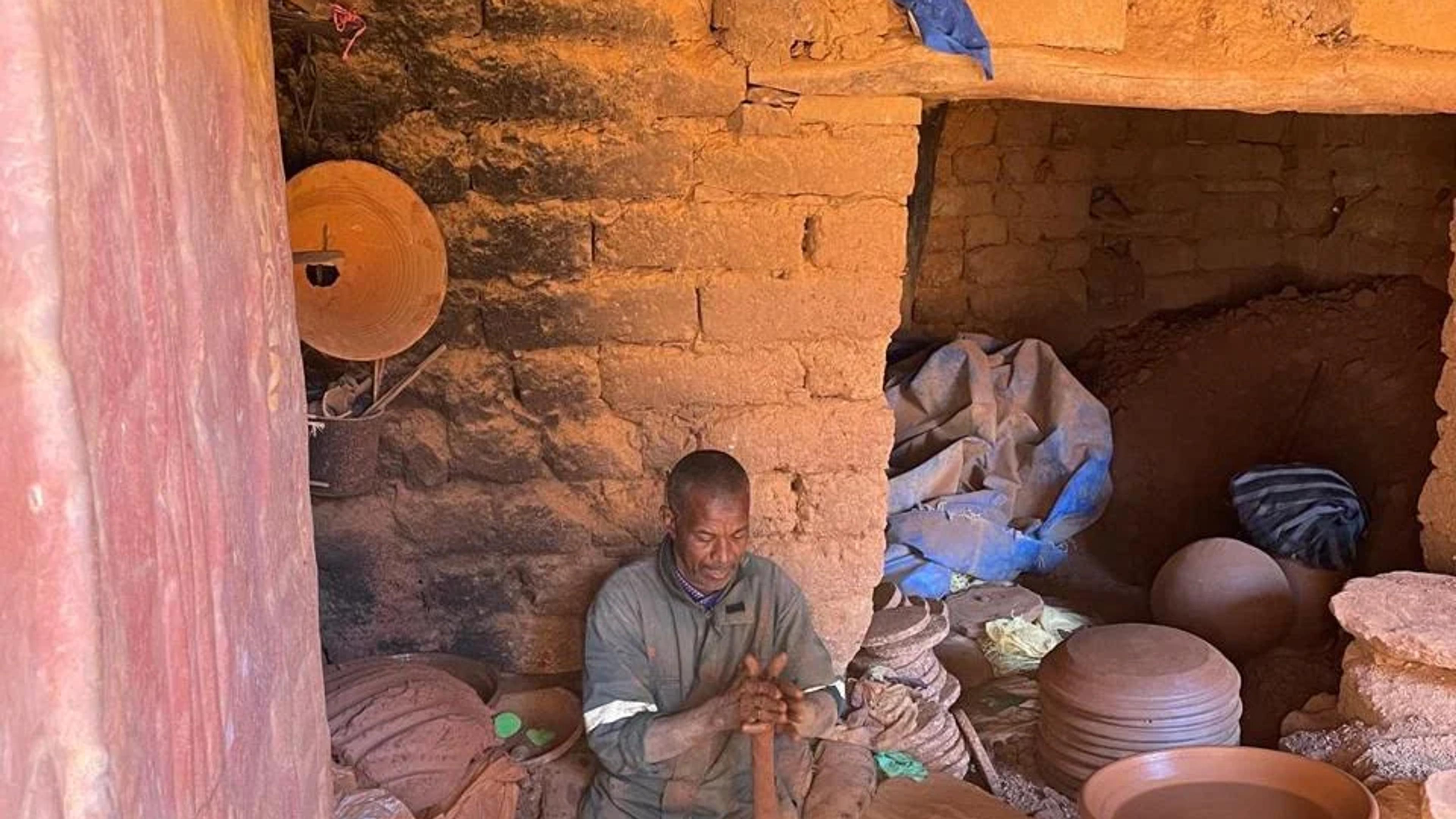
A traditional Moroccan tagine pot starts as local clay. The potter digs it, clears out the stones, soaks it and works it until smooth, then shapes the base and the cone-shaped lid on a wheel. The pieces dry in the sun before being fired in a kiln. Everyday cooking tagines are plain or simply glazed terracotta; the brightly painted ones are mostly for serving and display. In High Atlas villages such as Talatast in the Zat Valley, families still make them this way.
01Where do Moroccan tagines come from?
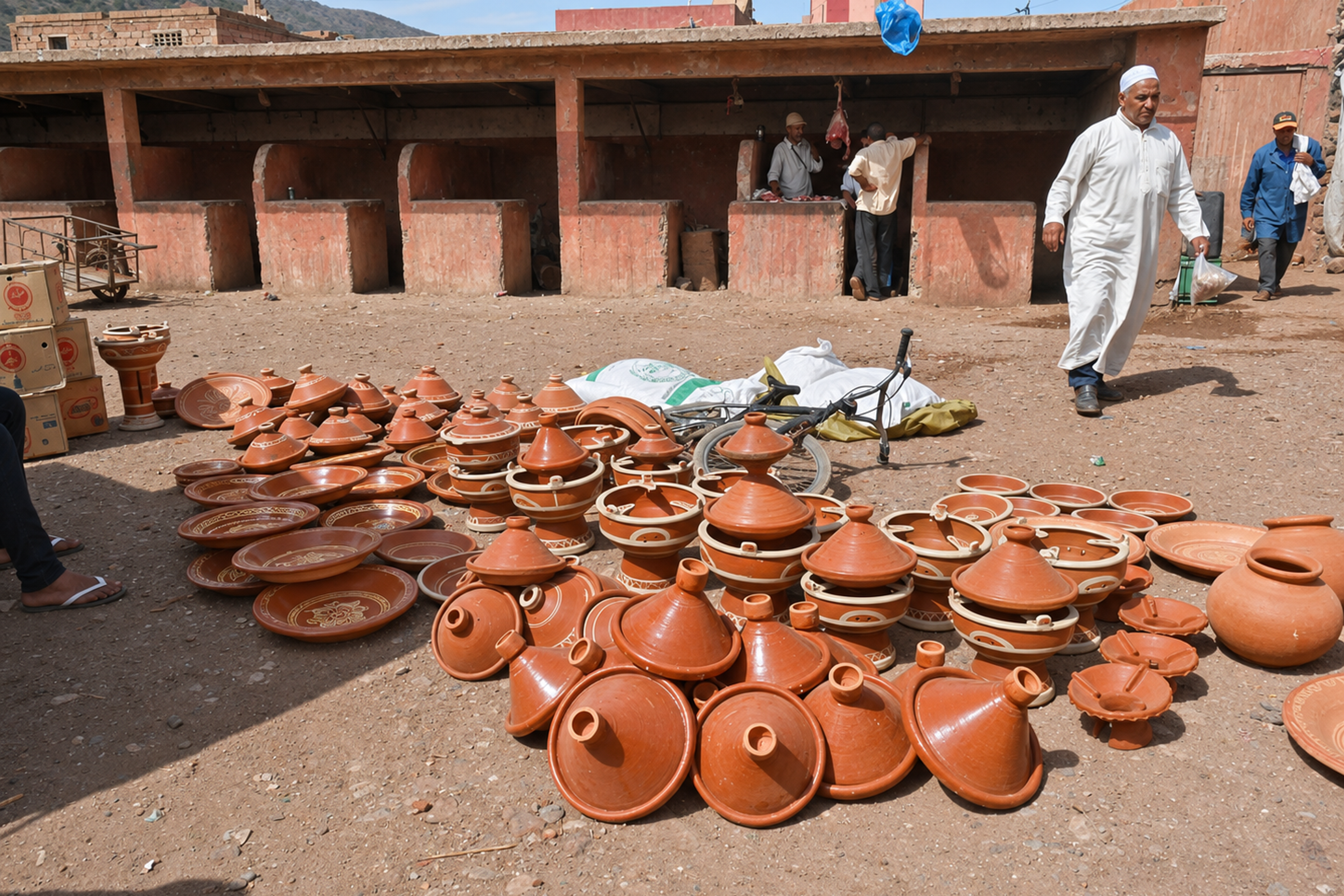
Potters work all over Morocco. Safi on the Atlantic coast and Fes are the best-known pottery centres, famous for glazed and painted ware. In the mountains, small villages make simpler, sturdier pots for everyday cooking and sell them at local weekly markets. The pots you see piled up at a rural souk, like Tighdouine’s on Wednesdays, often come from workshops a short walk away.
02How is a tagine made, step by step?
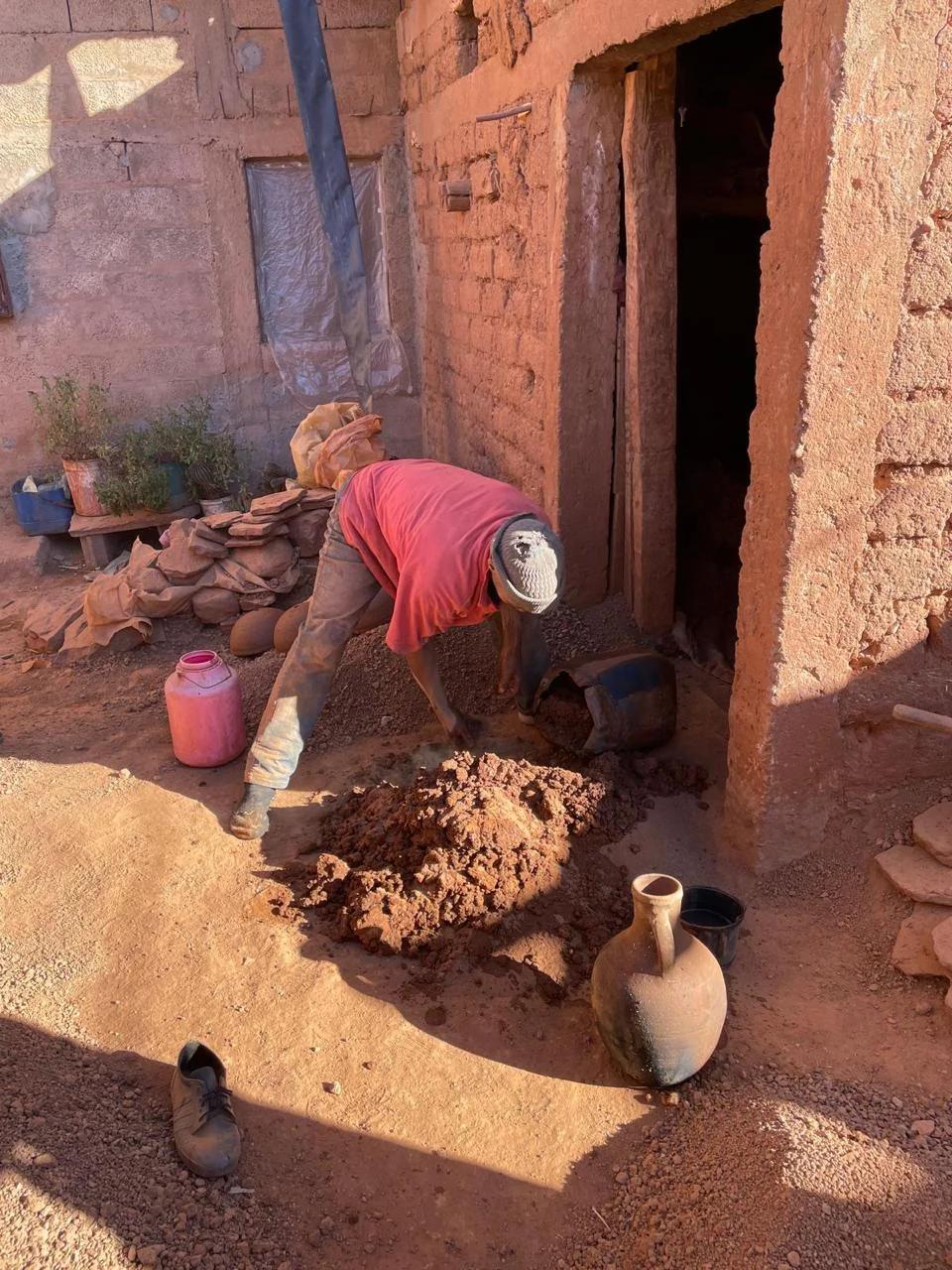
1. Digging and preparing the clay
Village potters use clay from the surrounding hills: red or brown earth that is dug, broken up and cleared of stones and roots. It is mixed with water and left to soak, then worked by hand until it is smooth and even. Poorly prepared clay is the main reason pots crack in the kiln, so this slow, physical stage matters most.
2. Throwing the base and lid
Many village potters work at a wheel set low in the workshop floor, sitting at ground level and turning it with the foot while shaping the clay with their hands. The shallow base and the tall, conical lid are thrown separately, and the lid gets its small knob or opening at the top. Making a set that closes snugly takes years of practice.
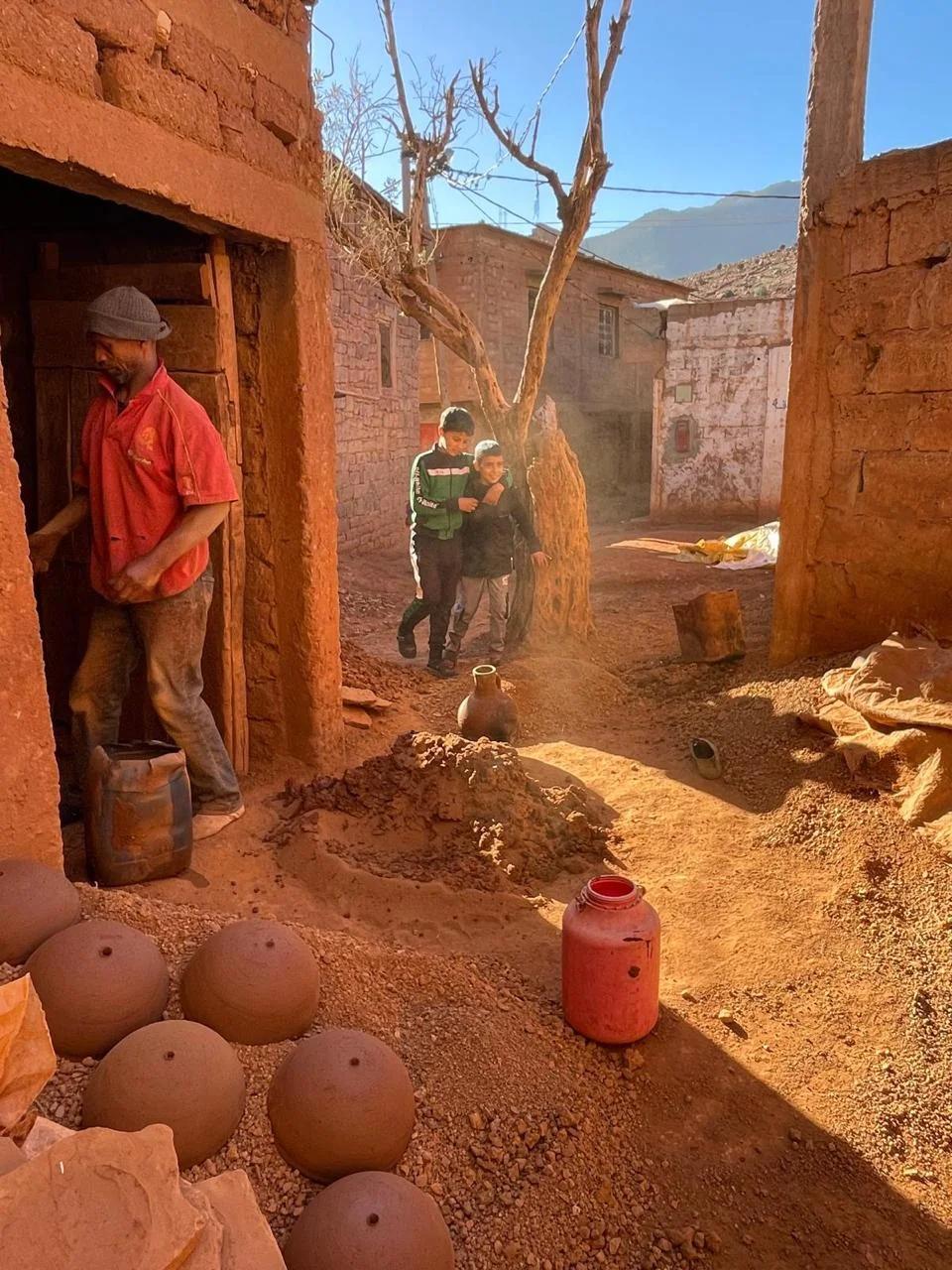
3. Drying in the sun
Freshly thrown pieces are left to dry slowly, often lined up outside the workshop in the sun. If they dry too fast they warp or crack, so potters move them between sun and shade as the day goes on.
4. Firing
Once completely dry, the pots are fired in a kiln, traditionally wood-fired, which turns the clay hard and gives it its warm terracotta colour. Pieces that will be glazed are coated and fired a second time.
03Why does a tagine have a cone-shaped lid?
The tall lid is what makes tagine cooking work. As the food simmers, steam rises into the cone, cools against the walls and runs back down into the dish. That keeps meat and vegetables moist with very little added water and concentrates the flavour, which is ideal in places where water and fuel have always been precious.
04Glazed, unglazed or painted: which tagine should you buy?
- Unglazed terracotta: the traditional cooking pot. Many cooks say it gives the best flavour, but it must be seasoned before first use and handled gently.
- Simply glazed cooking tagine: glazed inside, easier to clean and a good all-round choice for cooking at home.
- Painted or decorative tagines: beautiful for serving and display. Some decorative glazes are not intended for cooking, so unless the seller confirms a piece is made for cooking, use it for serving dry food or as decoration.
05How do you season a new clay tagine?
An unglazed tagine needs seasoning once before you cook in it. This strengthens the clay and helps prevent cracking.
- Soak the base and lid completely in water for a few hours.
- Let them dry, then rub the inside of the base and lid with olive oil.
- Place the tagine in a cold oven, heat it gently to a low temperature and leave it for about two hours.
- Turn off the oven and let the tagine cool slowly inside.
After that, always heat a tagine gradually, use a heat diffuser on a gas or electric hob, and never put a hot tagine on a cold surface or pour cold liquid into it. Sudden temperature changes are what crack clay.
06Buying a tagine to take home
- Buy directly from the potter or at a local souk when you can. Prices are fairer and the money goes to the maker.
- Check for cracks: tap the pot gently. A clear ring is a good sign; a dull sound can mean a hidden crack.
- Bargain politely. Our guide to Morocco’s souks explains how.
- For the flight, wrap the base and lid separately in clothes and carry them in your cabin bag if you can.
07Where can you watch tagines being made?
Pottery towns like Safi have large workshops, but a village workshop in the mountains shows the craft at its most traditional. On our private Zat Valley Discovery day trip from Marrakech we visit a local pottery artisan in the valley when one is working that day, and on Wednesdays Tighdouine’s souk is full of pots from the surrounding villages. Our Zat Valley guide covers the potters’ village of Talatast and the rest of the valley.
Quick answers
A traditional tagine is made of fired clay (terracotta), either unglazed or glazed. It has a shallow round base and a tall cone-shaped lid, both shaped on a potter’s wheel, dried and fired in a kiln.
Tagines sold as cooking pots are made for it. Some decorative painted tagines use glazes that are not meant for cooking, so unless the seller confirms a piece is for cooking, use painted tagines for serving or display.
An unglazed clay tagine should be seasoned before first use: soak it, rub it with olive oil and heat it slowly in a low oven, then let it cool gradually. Glazed cooking tagines need less preparation, but still benefit from gentle heating.
Yes, on low heat with a heat diffuser between the flame or plate and the clay. Heat it up slowly and avoid sudden temperature changes, which can crack it.
Safi and Fes are the best-known pottery centres. For a traditional village workshop, the potters of Talatast and the Zat Valley near Marrakech still make tagines by hand. Workshop visits depend on the artisans being there that day.
Want this trip planned for you?
Tell us your dates and what you like. We send back a route and a price.
Get a free quoteBrowse tours →