Yes — Morocco is safe for tourists. The country welcomed over 17 million visitors in 2025, and violent crime against tourists is rare. The real risks are petty theft (pickpocketing in crowded souks) and persistent touts steering you toward shops or unofficial "guide" services you didn't ask for — both manageable with basic awareness and a bit of confidence. This isn't a scare piece, and it isn't a sales pitch either: below is a straight rundown of what to actually watch for, region by region, plus what changes when you travel with a guided small-group tour instead of solo.
Petty Crime — What to Watch, and Where
Pickpocketing is the main risk, concentrated in crowded spots: Jemaa el-Fna square in Marrakech after dark, busy souk lanes, and train stations. Keep bags zipped and worn across the body, and in the Fes medina specifically, keep your bag in front of you rather than on your back — the alleys are narrow and crowded enough that it matters. Don't leave valuables visible in a parked car, and use your riad's safe for passports and spare cash rather than carrying everything with you each day.
Common Scams and How to Avoid Them
- "Free" henna application that turns into an aggressive demand for payment — politely decline any unsolicited approach before it starts
- Unofficial "guides" who approach you on the street claiming to know a shortcut — only use guides booked through your riad or tour operator
- Petit taxis that "forget" to use the meter — insist on it, or agree a fixed price before getting in
- Being told a landmark or shop is "closed today" by a stranger, then redirected to a different shop — this is almost always false; verify with your riad or guide
Solo Female Travellers
Morocco is a genuinely popular solo female destination, and most women who visit report feeling safe. The real friction is unwanted attention and comments in the street rather than danger — more persistent in Marrakech and Casablanca than in smaller towns. Dressing modestly (covered shoulders and knees) reduces the frequency of it but doesn't eliminate it entirely; that's an honest limitation, not a guarantee. Sticking to riads inside the medina walls and travelling with a guide changes the day-to-day experience substantially, which is why solo female travellers make up a meaningful share of our small-group departures.

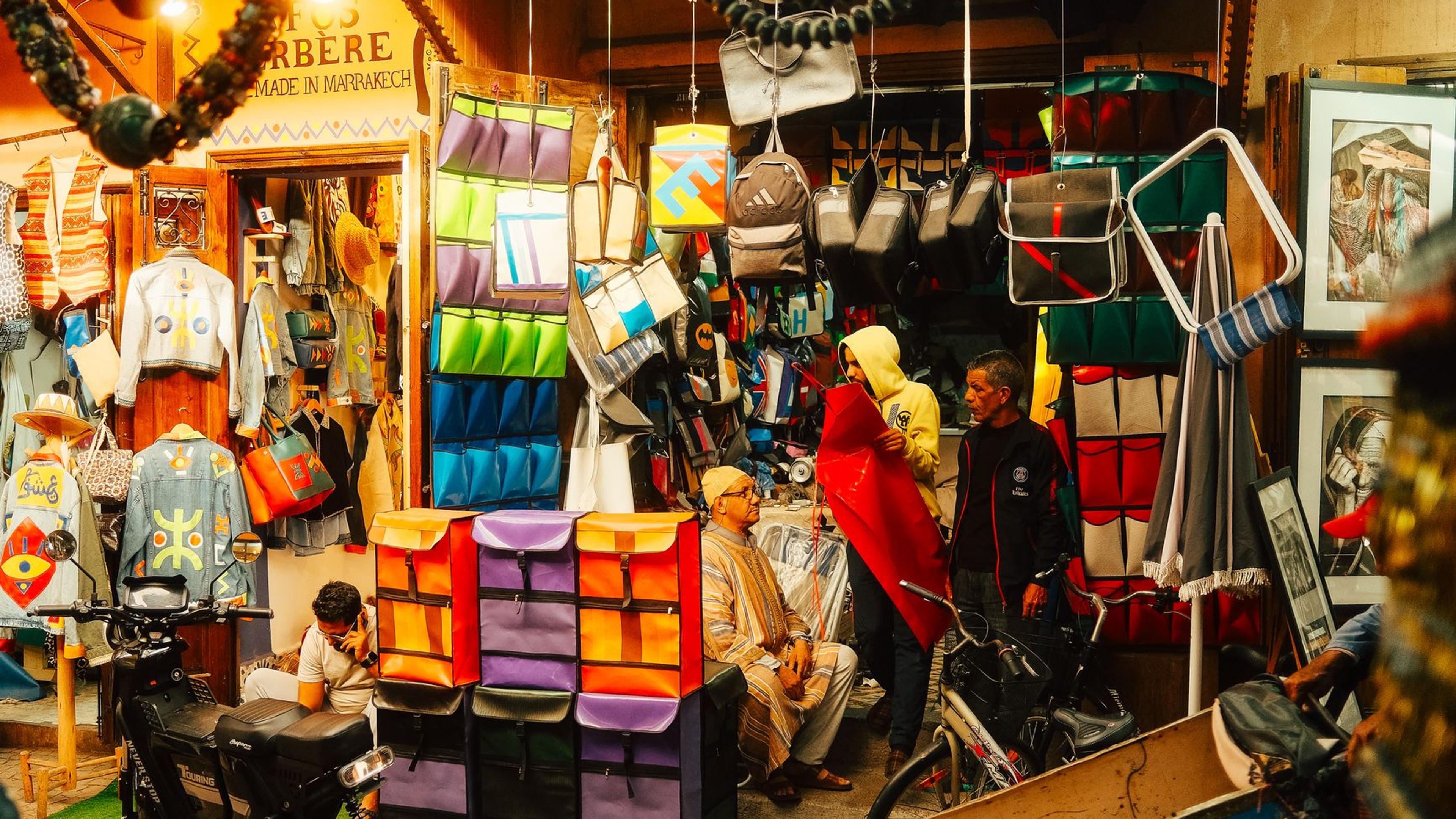
Shopping in a Moroccan medina souk
We keep a dedicated Morocco solo female travel guide with the city-by-city picture, what to wear, and how the desert leg works when you're travelling alone.
LGBTQ+ Travellers
Same-sex relations remain illegal under Moroccan law, though prosecution of tourists is extremely rare and not something our guides have encountered on tour. Public displays of affection are best avoided regardless of orientation — Morocco is culturally conservative in public spaces generally. Marrakech and Casablanca have a more visible LGBTQ+ presence than smaller towns. Discretion is the practical approach, not a judgement on the traveller.
Terrorism Risk
Low. The last major incident targeting tourists was a 2011 café bombing in Marrakech; there has been no comparable attack since. Morocco maintains a highly visible security presence at major tourist sites and has extensive counter-terrorism cooperation with European and US agencies. It remains one of the more stable countries in North Africa.
Health & Medical
Tap water isn't recommended for visitors — stick to bottled or filtered water, which is sold everywhere. Pharmacies (marked with a green cross) are plentiful in every city and well-stocked, with many pharmacists speaking French or English. Travel insurance with medical evacuation cover is genuinely necessary, particularly if your route includes Atlas Mountains trekking or desert nights far from a hospital.

Marrakech, Morocco
Road Safety
This is honestly the biggest real risk category, more than crime. Mountain roads through the Atlas passes are narrow with sharp switchbacks, and driving standards vary. We don't sugar-coat this: if you're self-driving, avoid night driving on rural routes and budget more time than GPS estimates suggest. Every AZA tour uses licensed professional drivers on these routes specifically to remove this risk from your trip.
How Guided Tours Change the Risk Profile
Most of the risks above shrink significantly with a guided tour: a licensed guide handles the touts and scams before they reach you, a professional driver takes the mountain roads, and pre-vetted riads replace the guesswork of solo booking. Our private Morocco tours are a common choice for families and solo travellers who want that layer of built-in safety without joining a group. You can read more about AZA and how our guides are trained.
If joining others appeals, our small-group departures cap at 12 people — big enough for company, small enough that the guide knows everyone's name by lunch. And for older travellers weighing pace, comfort and medical practicalities, our Morocco for seniors guide answers the questions this page can't.
Questions about a specific route or travelling solo? Get in touch and we'll give you a straight answer, not a sales pitch.
Planning a Morocco tour? Browse our tours
See all tours →Quick answers
Yes. Violent crime against tourists is rare and Morocco welcomes over 17 million visitors a year. The realistic risks are petty theft in crowded souks and persistent touts — both manageable with basic awareness, confident body language, and keeping valuables secure.
Yes, and it's a popular solo female destination. The main challenge is unwanted attention and comments rather than danger. Dressing modestly and sticking to riads in the medina reduces friction. Many solo women choose a small-group tour for extra ease.
Generally yes in the main lit thoroughfares around Jemaa el-Fna, which stay busy until late. Quieter side alleys are better avoided alone after dark — not because of high crime rates, but because they're poorly lit and easy to get lost in.
Same-sex relations are illegal under Moroccan law, though prosecution of tourists is extremely rare. Public displays of affection are best avoided by all travellers in this culturally conservative country. Discretion is the practical approach, particularly outside Marrakech and Casablanca.
Road safety, not crime. Mountain roads through the Atlas passes are narrow with sharp switchbacks and driving standards vary. Using a licensed professional driver, as every AZA tour does, removes most of this risk.
Yes. Cover should include medical evacuation, particularly if your trip includes Atlas Mountains trekking or overnight desert stays far from a hospital. Standard travel insurance policies typically cover Morocco without extra riders.
It's not recommended for visitors. Stick to bottled or filtered water, which is inexpensive and sold everywhere, including in rural areas and desert camps.