No — you do not need a tour guide to visit Morocco. The country has good intercity buses, safe cities, riad owners who hand out directions freely, and forty years of practice hosting independent travellers. What a guide changes is depth and friction: in twenty years of planning tours I've watched the same pattern hundreds of times — independent travellers see Morocco's places, guided travellers meet its people. Whether that difference is worth the money depends on which trip you're taking. Here's the honest breakdown.
Where You Genuinely Don't Need a Guide
Marrakech, on your first day or your fifth visit: the medina is chaotic but compact, and getting productively lost in it is half the point. Essaouira, Chefchaouen, Rabat — calm, walkable, self-explanatory. The train and CTM bus network between major cities is comfortable and cheap. Restaurants, riads, hammams: all bookable yourself. If your Morocco trip is cities, coast and cafes, you can do the whole thing independently and have a wonderful time — our own travel cost guide even budgets that version of the trip for you.
The Three Places a Guide Changes Everything
1. The Fes medina
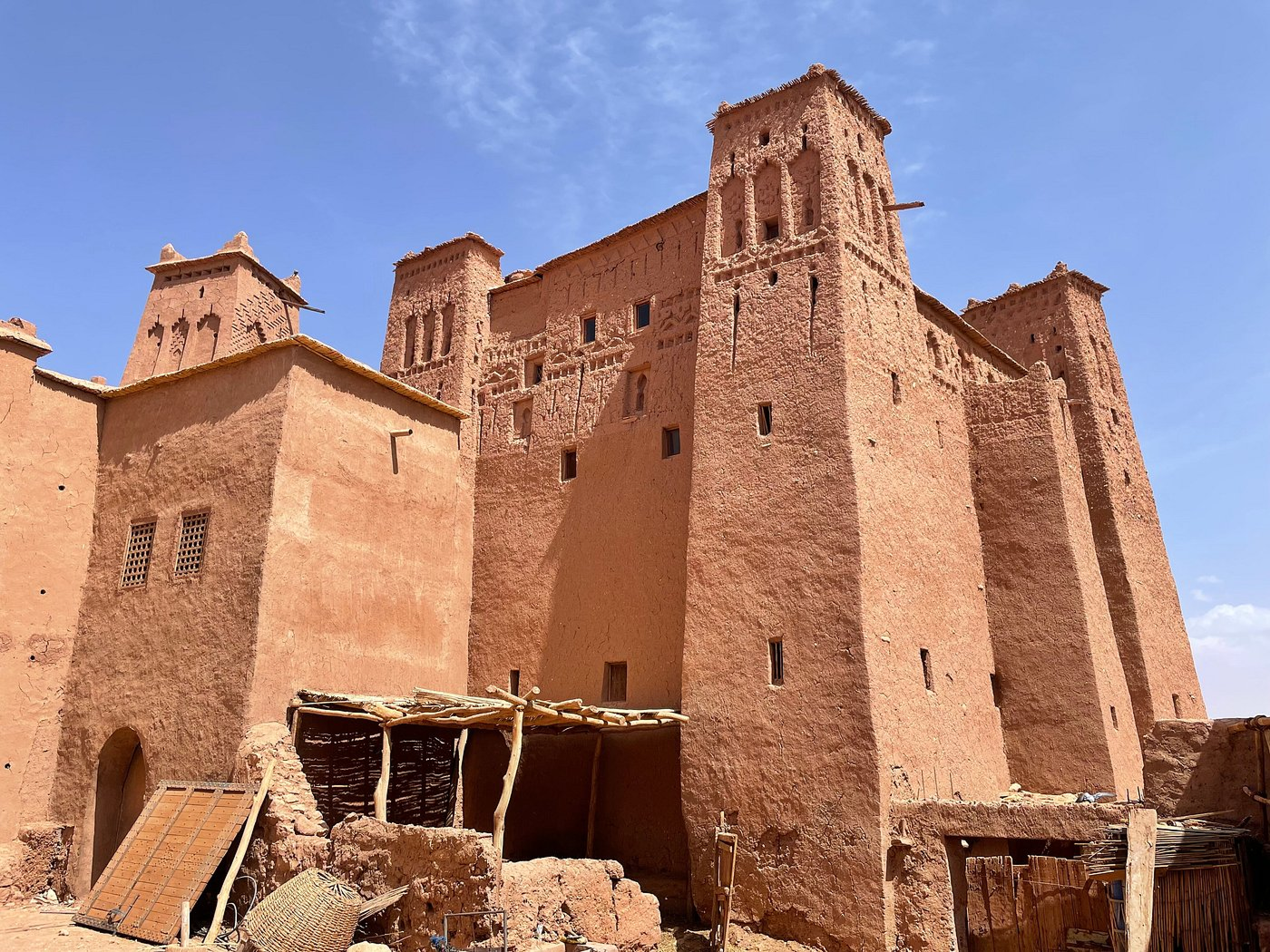
A traditional kasbah, southern Morocco
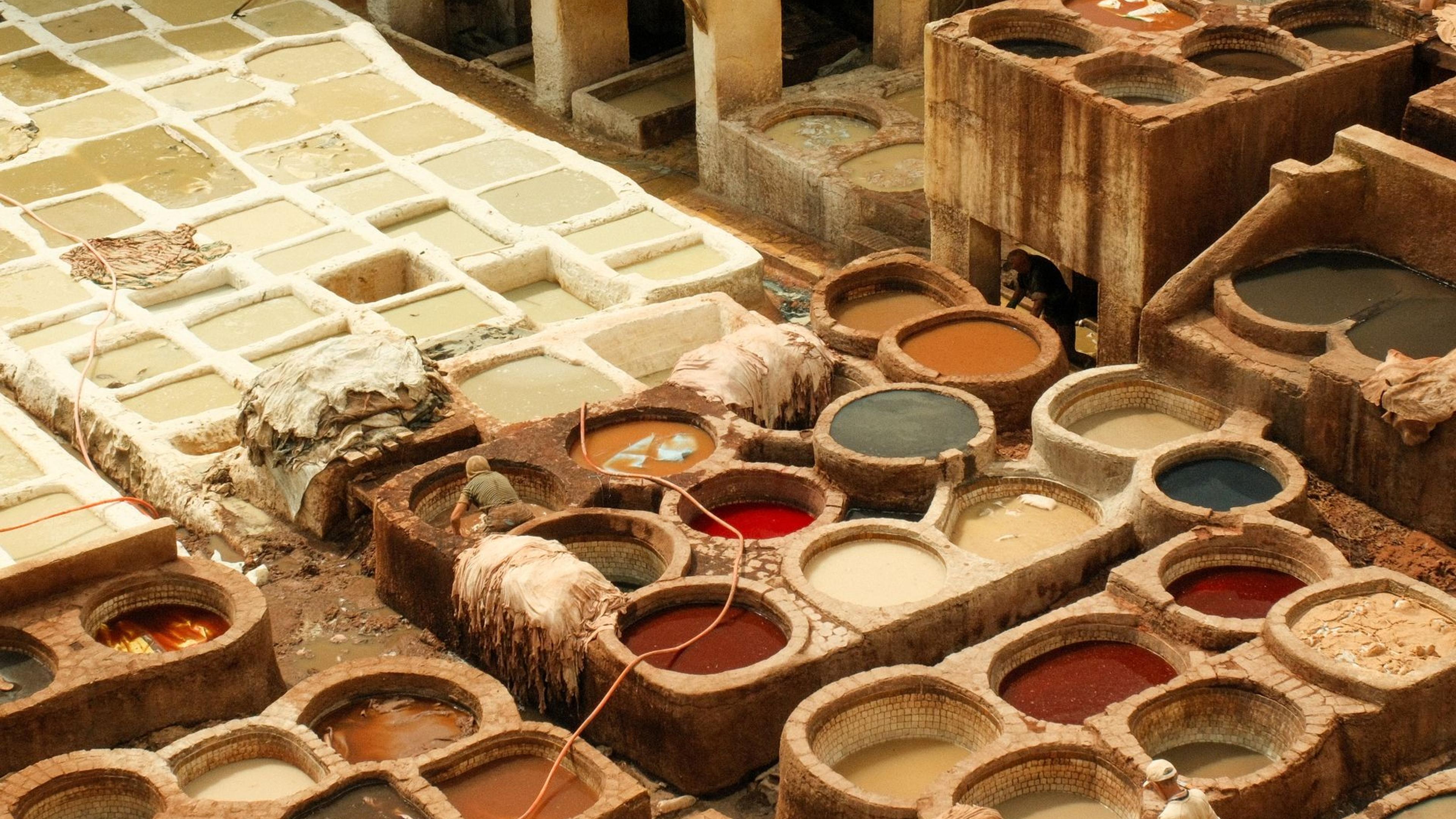
Nine thousand alleys, no vehicles, no sight lines, and a thousand years of layered history that is completely invisible without someone to read it for you. Fes is the one place in Morocco where even confident independent travellers routinely hire a licensed guide for a day — and the difference between wandering past the Chouara tanneries and understanding what you're looking at is the difference between a photo stop and the best cultural day of your trip. If you do one guided day in Morocco, do it in Fes.
2. The desert
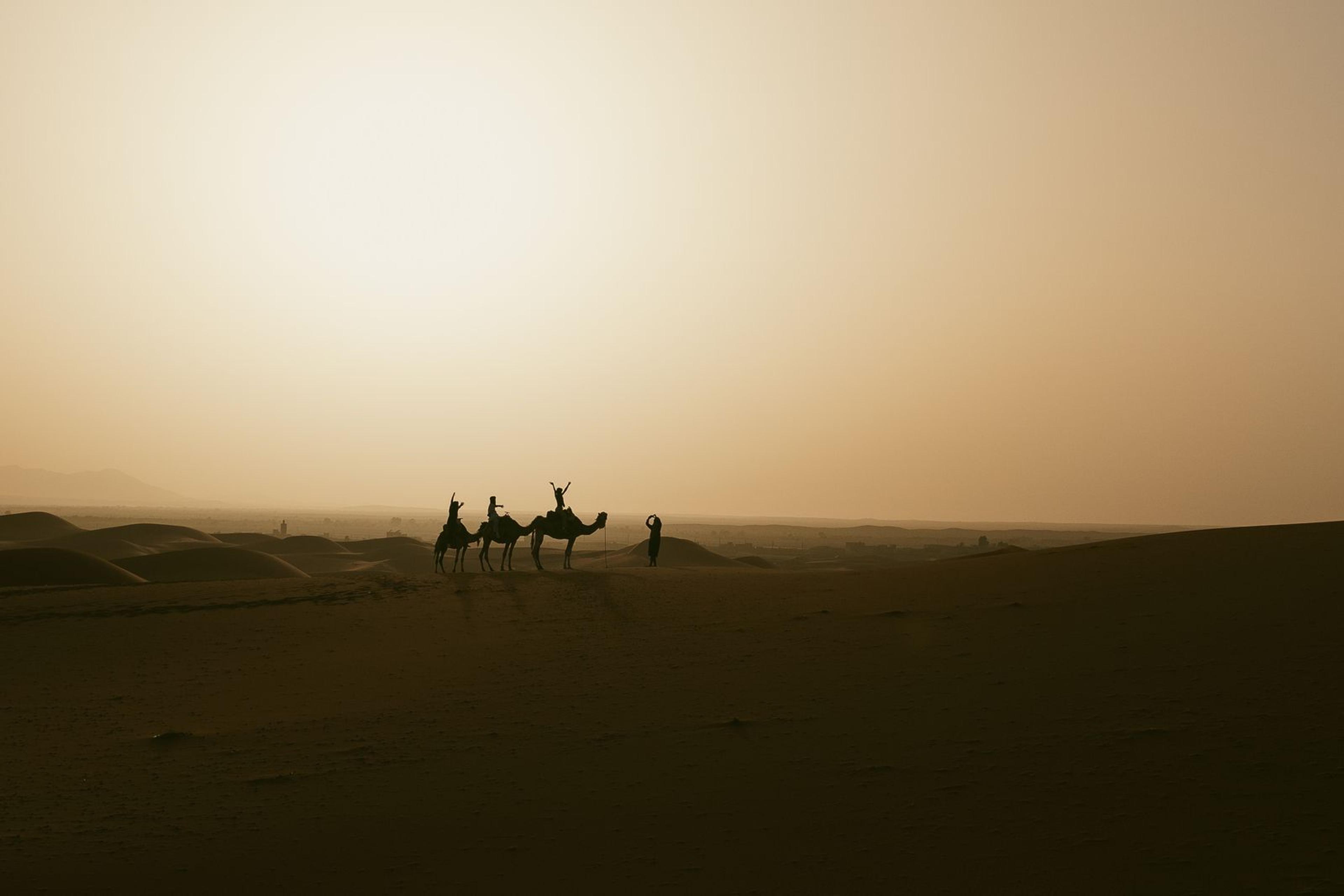
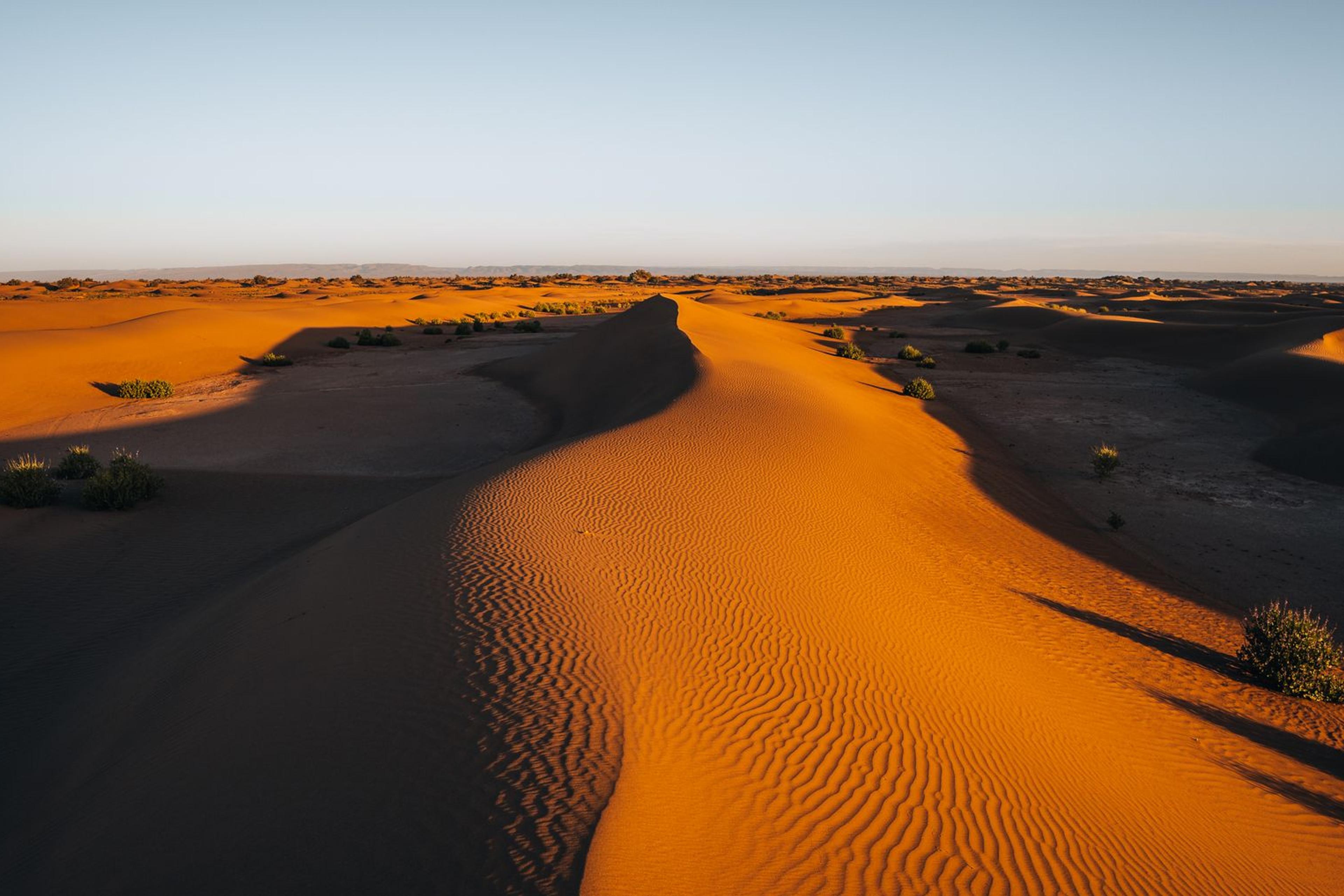
Technically you can drive yourself to Merzouga and book a camp on arrival. Practically, the desert is where DIY logistics bite: the good camps sell out to operators, the route over the Atlas involves 9+ hours of mountain driving you'll want to enjoy rather than perform, and out in the dunes the difference between a well-run camp and a bad one — bedding, food, camel welfare, what happens if a sandstorm rolls in — is invisible until you're in it. This is the one leg where even independence-minded travellers usually book a desert tour, and it's why those tours exist in every budget.
3. Everywhere, if depth is the point
The honest case for a guide isn't navigation — Google Maps mostly works. It's access. A good Moroccan guide gets you into the artisan's workshop rather than the shop in front of it, translates the conversation with the nomad family you'd otherwise smile at awkwardly, knows which village is having its souk day, and answers the hundred small questions — about Islam, about the king, about why the tea pour is so theatrical — that guidebooks answer badly. Cultural travel without translation is window shopping. That's not a sales line; it's the reason my job has existed for twenty years.
What About the Famous "False Guides"?
You'll read warnings about unofficial guides who latch on in medinas and demand payment. They exist, mostly around the Marrakech and Fes tourist arteries, and they're an argument for either confidence or a licensed guide — not a reason to fear Morocco. A firm, smiling "no thank you" ends almost every encounter. Licensed guides carry official cards and are booked through riads, tourist offices or operators — never accepted off the street. The wider safety picture, including this, is covered in our Is Morocco Safe? guide.
What Does a Guide Actually Cost?
A licensed city guide hired independently runs $30–$60 for a half or full day — arrange through your riad, agree the price beforehand, and expect it to be the best money you spend in Fes. On multi-day tours the guide is built into the package price; your only extra is the tip ($5–$10 per person per day — the full etiquette is in our tipping guide). Beware the opposite signal too: a "tour" priced suspiciously low usually means a driver, not a guide — someone who gets you from A to B but can't tell you what either place means.
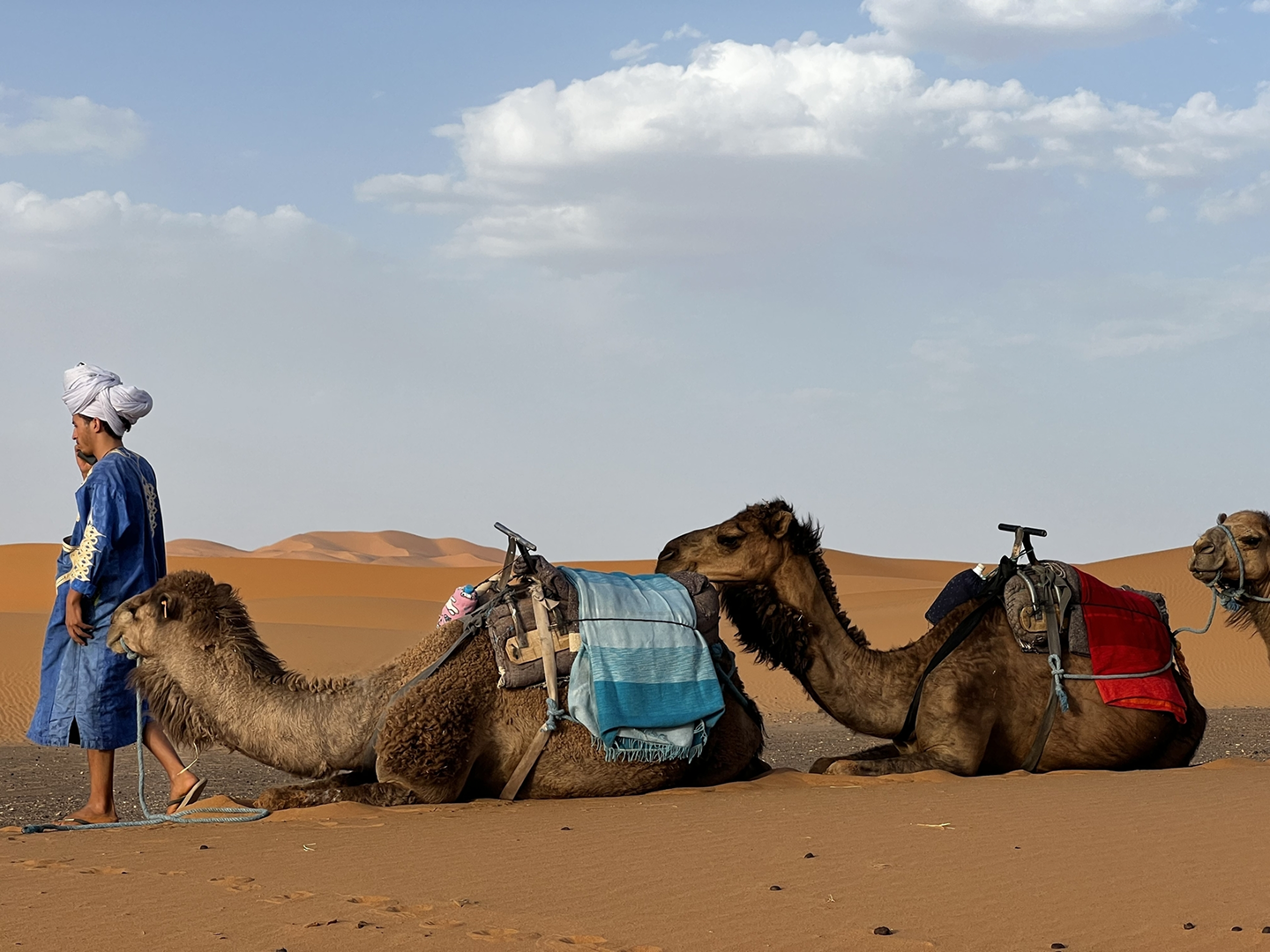
A camel guide in the Sahara
So: Guided Tour, Guide-for-a-Day, or Neither?
- City break (Marrakech, Essaouira, Chefchaouen) → no guide needed; hire one for a single morning if the history itch strikes.
- Fes → one licensed guide-day, however independent you are.
- Desert trip → book it as a tour; DIY saves little and risks the best part of your holiday.
- Full circuit (cities + mountains + desert) in limited time → a guided tour earns its price in logistics alone; the culture is the bonus.
- Deep cultural interest, any route → a guide is the trip. Choose the operator by the guides, not the price.
If you land on the guided side, the choice between a small group and a private tour is the next fork — group for cost and company, private for pace and flexibility. And if you land on the independent side: genuinely, enjoy it. Morocco rewards both kinds of traveller, and the country doesn't need us to be worth the trip.
Planning a Morocco tour? Browse our tours
See all tours →Quick answers
Yes, easily. Cities are safe and walkable, intercity buses and trains are comfortable, and riads help with everything. Guides add depth and logistics, not permission — the exceptions where they genuinely matter are the Fes medina and desert trips.
For a full circuit (cities, mountains, desert) in limited time, usually yes — the logistics alone repay the price, and a good guide adds cultural access you can't buy separately. For a single-city break, usually no.
Need, no. Want, almost certainly — Fes is the one place even confident independent travellers hire a licensed guide for a day. The medina's 9,000 alleys and layered history are largely invisible without one.
Licensed guides carry an official national or regional guide card and are booked through riads, tourist offices or tour operators — never accepted from someone who approaches you on the street. Ask to see the card; real guides show it happily.
Day trips can be marginally cheaper booked on the ground, but quality desert tours and multi-day routes sell their best camps and riads in advance — what's left last-minute is cheaper for a reason. Book ahead for anything involving a desert night.
A driver moves you between places; a licensed guide interprets them — history, culture, language, access to workshops and families. Many cheap "tours" are driver-only. Ask specifically which one your price includes.