Morocco is one of the more popular destinations for solo female travellers, and most women who visit report feeling safe. The specific challenges — unwanted attention and persistent touts — are real, but they're manageable, and they look different depending on which city you're in. I've led solo female travellers through Morocco for years, both on group departures and privately, and this guide is the honest version of what to expect, not the sanitised one.
The First 48 Hours
Most solo-travel anxiety burns off in the first two days, so stack them in your favour. Have your riad arrange the airport pickup — it costs a few dollars more than hunting a taxi and means someone is holding your name when you land. Do your first medina walk in daylight, before dinner, when the lanes are busy with shoppers rather than touts. Buy a local SIM or eSIM at the airport (Maroc Telecom and Orange booths are in arrivals) so maps work from minute one, and save your riad's location offline — medina GPS gets patchy under the covered lanes. None of this is fear management; it's just the difference between arriving smoothly and arriving flustered.
What to Wear, and Why
This is about cultural respect, not risk avoidance — covered shoulders and knees in medinas and religious sites reads as basic courtesy, the same way you'd dress for a conservative family gathering. Loose, breathable layers work better than anything tight regardless of modesty. Marrakech's Gueliz district, riad courtyards, and resort pools are noticeably more relaxed — normal Western clothing and swimwear are fine there. The honest caveat: dressing modestly reduces the frequency of unwanted comments in the street. It doesn't eliminate it entirely, and that's worth knowing rather than being surprised by.
Which Cities Feel Easier vs Harder
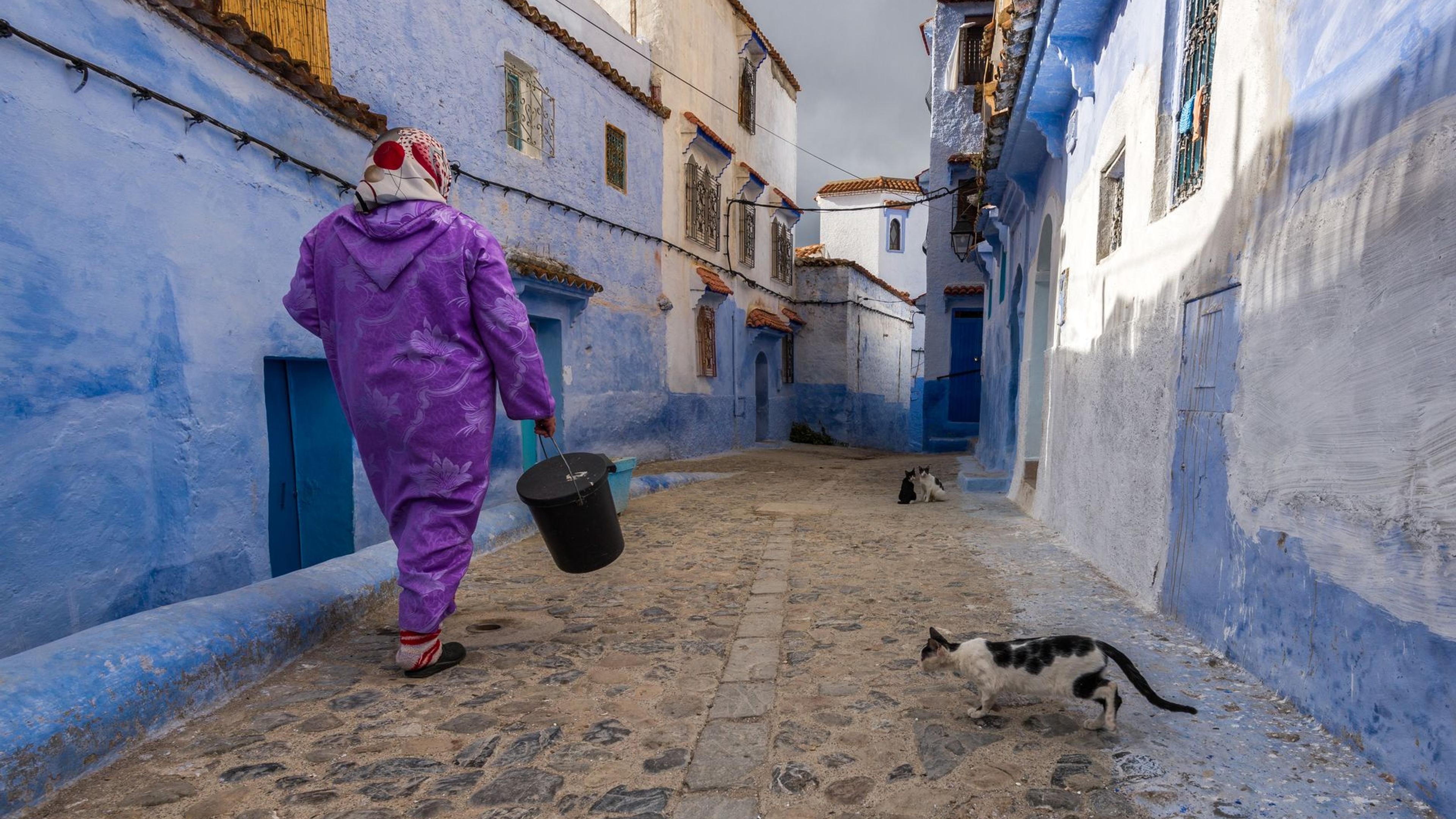
Marrakech's medina, particularly around Jemaa el-Fna, sees the most persistent touts and comments — it's the country's busiest tourist zone by far. Chefchaouen and Essaouira feel noticeably calmer and more relaxed, both in pace and attention. Fes's medina is genuinely disorientating with around 9,000 alleys, but that's a navigation issue, not a gendered safety one — it just means a guide is more useful there than anywhere else in the country.

Shopping in a Moroccan medina souk
Accommodation: Stick to Riads in the Medina
Riads inside the medina walls are a better choice than budget hotels scattered around the new town — they're smaller, family-run, and the owners tend to look out for solo guests without being asked. Some are specifically female-run, which several solo travellers tell me makes a real difference to how comfortable they feel asking questions or arriving late. If budget hostels are more your style, a few in Marrakech and Fes now offer women-only dorms.
Transport Safety
Shared grand taxis, where you're paired with other strangers heading the same direction, are completely normal and used daily by Moroccan women travelling alone — don't let the idea of "sharing a taxi with strangers" put you off. What's worth avoiding is an unmarked petit taxi alone late at night; stick to ones your riad calls for you. Trains and CTM intercity buses are straightforward and commonly used solo.
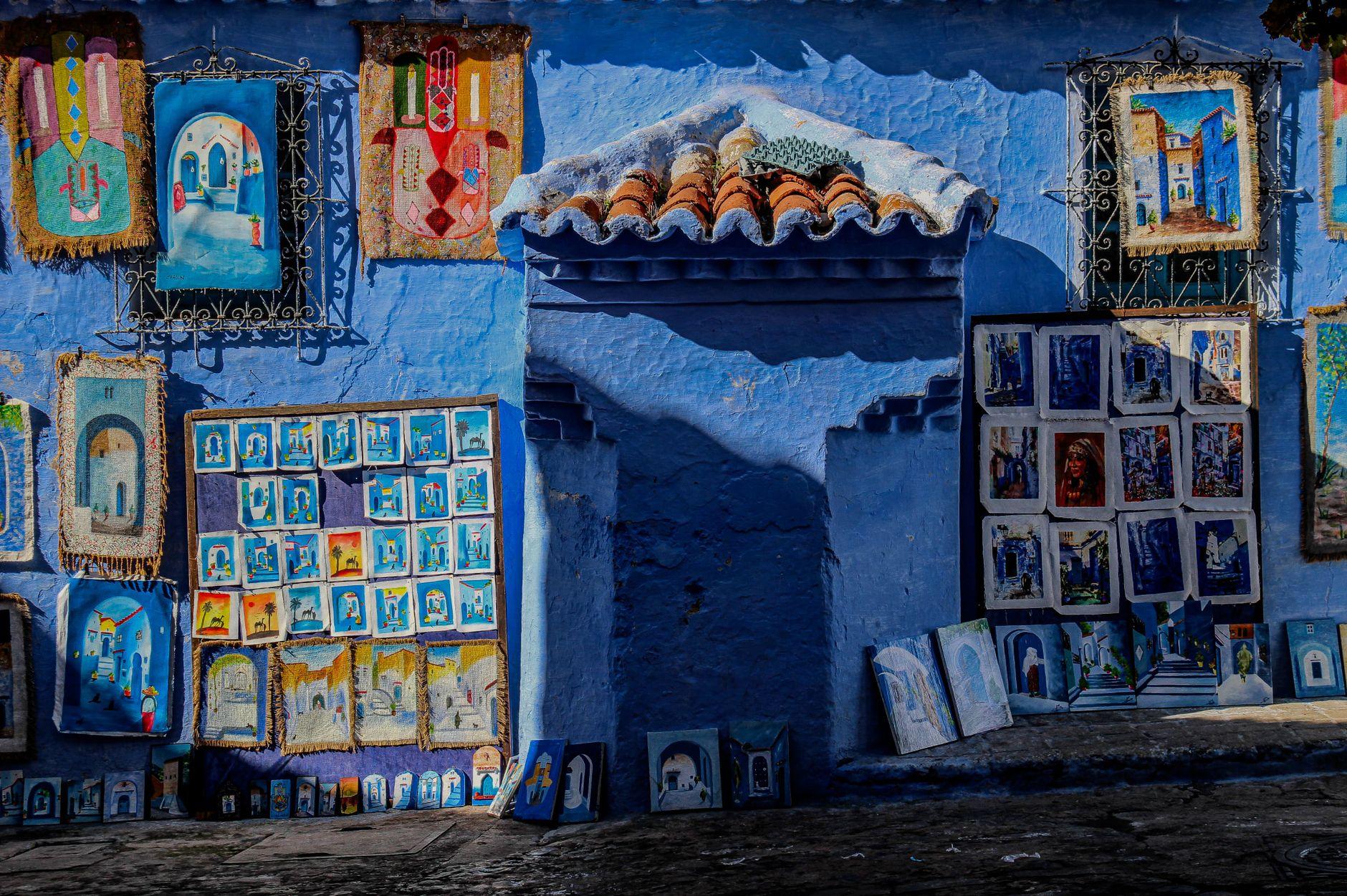
Chefchaouen, Morocco
The Desert, Solo
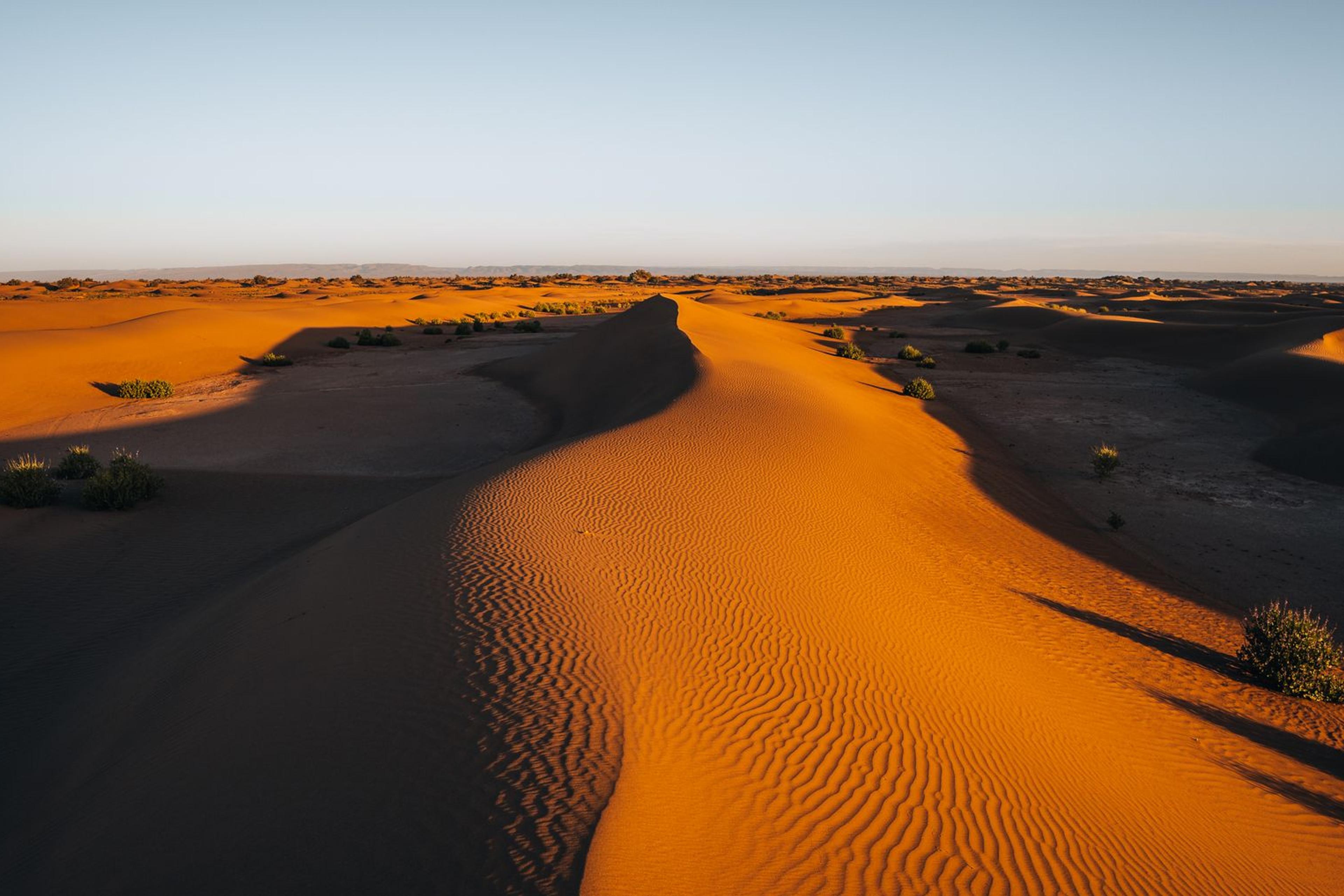
Solo women are a fixture on desert departures — on a typical 3-day Merzouga tour you'll share the vehicle and camp with a small mixed group, which gives the trip built-in company at exactly the moments (evenings, the camp night) where solo travel can feel exposed. Camps have private tents and, increasingly, private bathrooms. The desert itself is the least-hassled environment in Morocco — the touts are a city phenomenon. Dress guidance for the dunes is in our what to wear on a desert tour guide — short version: comfort rules out there.
How a Guided Tour Changes the Experience
A guide handles the touts and unwanted approaches before they reach you, which removes most of the daily friction solo travellers describe. Private tours suit travellers who want full control over pace without giving up that support; small-group tours (max 12 people) are genuinely popular with solo women specifically because they come with built-in company. Neither is objectively better — it depends whether you want the trip to yourself or want to meet people along the way.
For the broader safety picture beyond gender-specific concerns — petty theft, scams, road safety — see our is Morocco safe guide. Planning a solo trip and want a second opinion on the route? Get in touch — we answer these questions directly, not through a call centre.
Planning a Morocco tour? Browse our tours
See all tours →Quick answers
Yes — Morocco is one of the more popular solo female destinations and most women report feeling safe. The main friction is unwanted attention and comments rather than danger, and it's manageable with basic awareness and confident body language.
Loose, breathable clothing covering shoulders and knees works well in medinas and religious sites, out of cultural respect rather than risk. Marrakech's Gueliz district and riad pools are more relaxed — normal Western clothing is fine there.
Yes, though it's the busiest tourist zone in the country and sees the most persistent touts and street comments. Sticking to a medina riad, dressing modestly, and travelling with a guide for the souks reduces most of the daily friction.
Independent desert travel is logistically difficult regardless of gender — most visitors, solo women included, join a small-group or private tour for the Merzouga route, which includes a guide, driver, and pre-arranged desert camp.
Attention and comments in the street are common, particularly in busy tourist areas like Marrakech's medina, but escalation beyond that is rare. Confident, brief responses (or none at all) and continuing to walk work better than engaging.
Many solo women choose a small-group tour specifically for the built-in company and the guide handling logistics and unwanted attention. A private tour works just as well if you'd rather keep full control of the pace and itinerary.