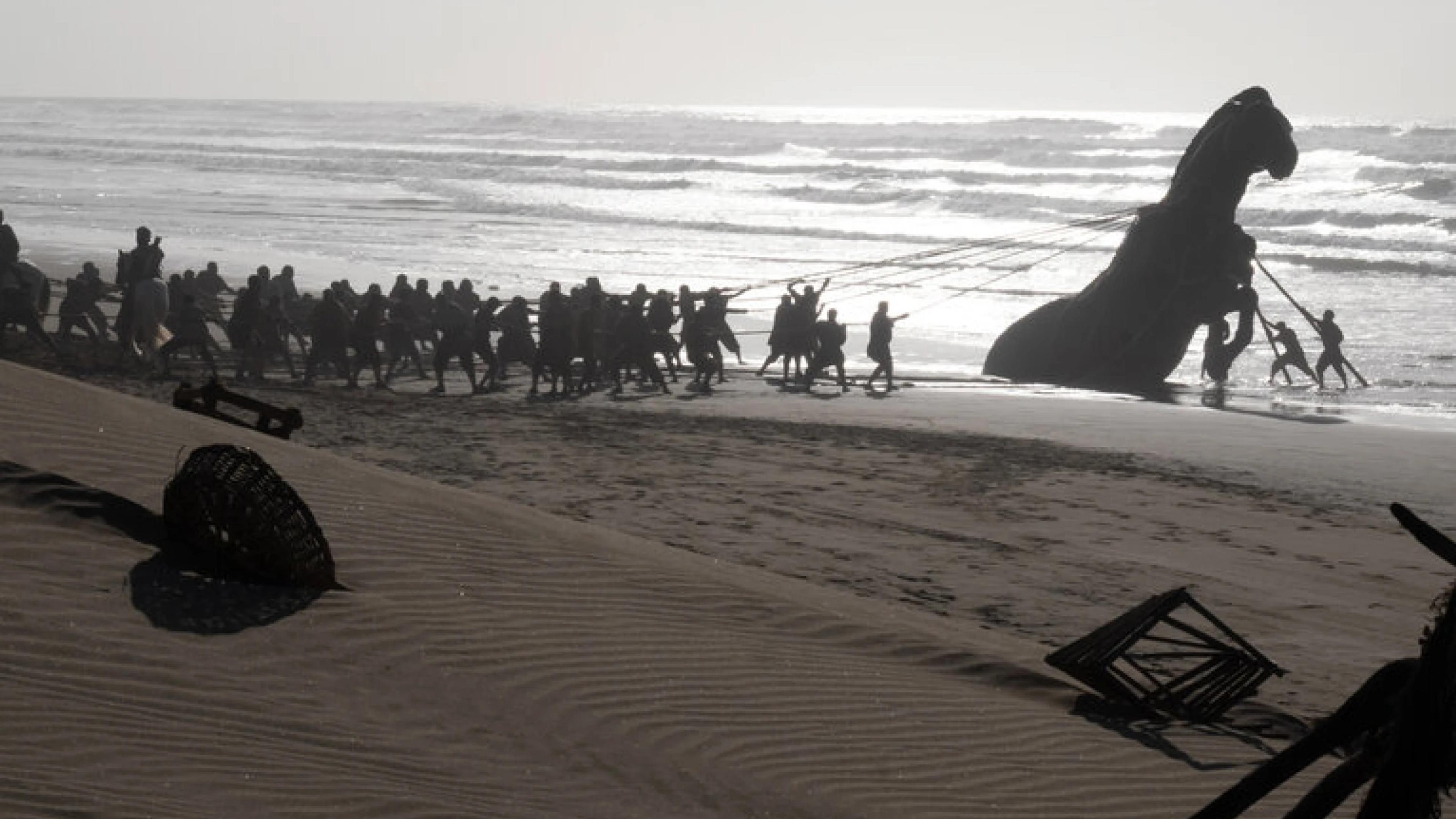
Christopher Nolan's The Odyssey — his $250 million adaptation of Homer's epic, starring Matt Damon as Odysseus — filmed across five countries, and Morocco carried some of its most important scenes. The fall of Troy was shot at Aït Benhaddou, the fortified red-earth ksar on the road between Marrakech and the Sahara. The production also used Ouarzazate as a base, plus locations in Marrakech, the Atlantic beaches at Essaouira, where the Trojan Horse is discovered and Odysseus's ships depart for Ithaca, and Dakhla further south, where Charlize Theron's Calypso keeps Odysseus captive on the island of Ogygia. Filming ran from February to August 2025; the film opened July 17, 2026 to Nolan's biggest debut since The Dark Knight Rises, and passed $650 million worldwide within its first ten days. Here's exactly what was filmed where, and how much of it you can actually see on the ground today.
Aït Benhaddou — Where Troy Falls
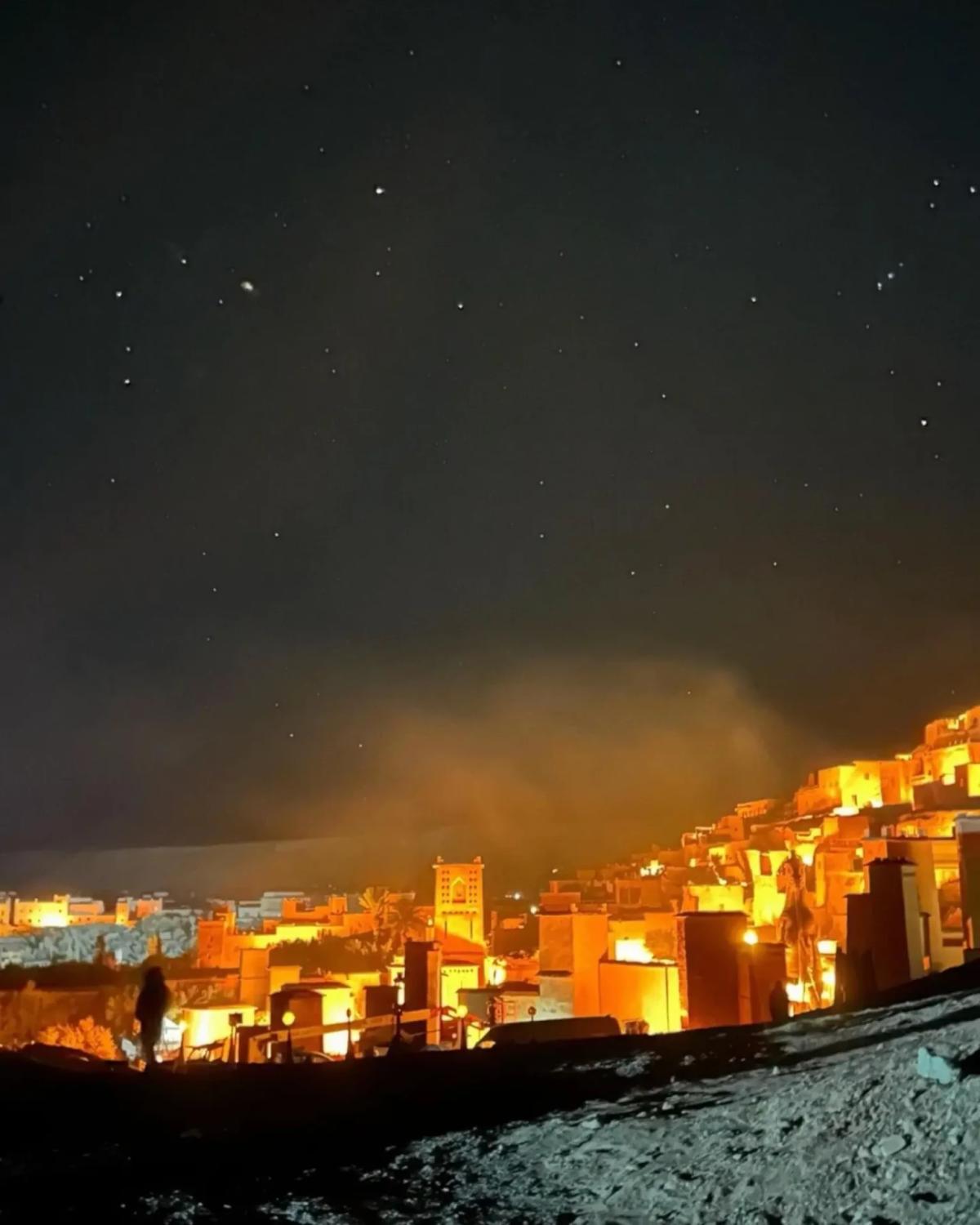
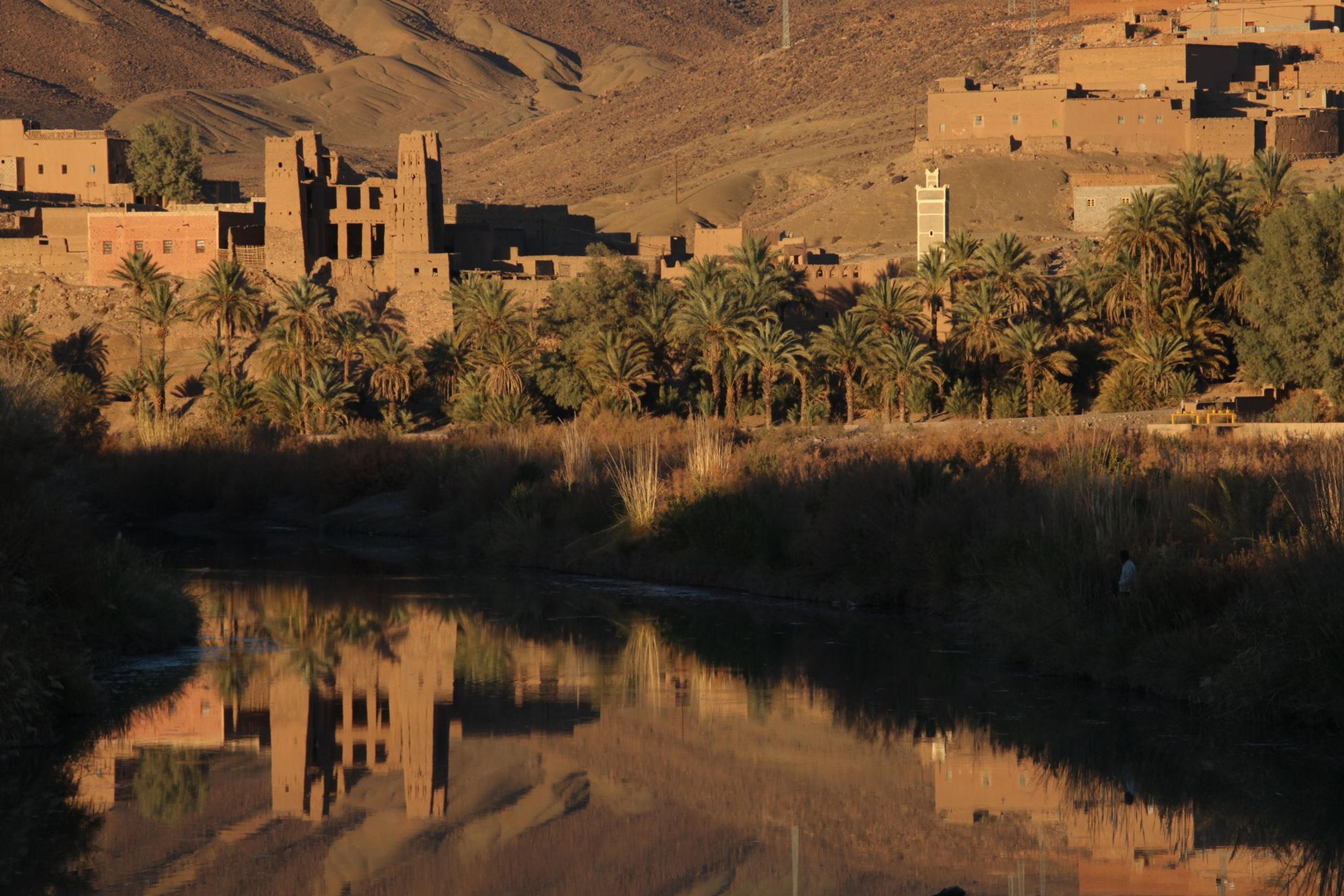
Aït Benhaddou is a UNESCO World Heritage ksar around four hours from Marrakech, over the Tizi n’Tichka pass through the Atlas Mountains on the road to Ouarzazate. In The Odyssey, its red-mud ramparts stand in for the fall of Troy.
It isn’t a new role for the site. The same fortified walls have played Jerusalem in Kingdom of Heaven, the slave city of Yunkai in Game of Thrones, ancient Egypt in The Mummy, and Rome in Gladiator — a filmography that stretches back to Lawrence of Arabia in 1962. Location scouts keep returning for a simple reason: the architecture reads as "ancient Mediterranean" or "ancient Near East" to a camera in a way almost nothing else still standing does.
Aït Benhaddou also sits at the start of what local guides call the Route of a Thousand Kasbahs — the Ounila and Draa valleys running southeast from Ouarzazate, lined with fortified earth villages that once guarded the caravan routes between the Sahara and Marrakech. None of them appear in The Odyssey specifically, but they’re the same architecture and the same valley, which is part of why the region photographs so consistently as "the ancient world" for film after film.
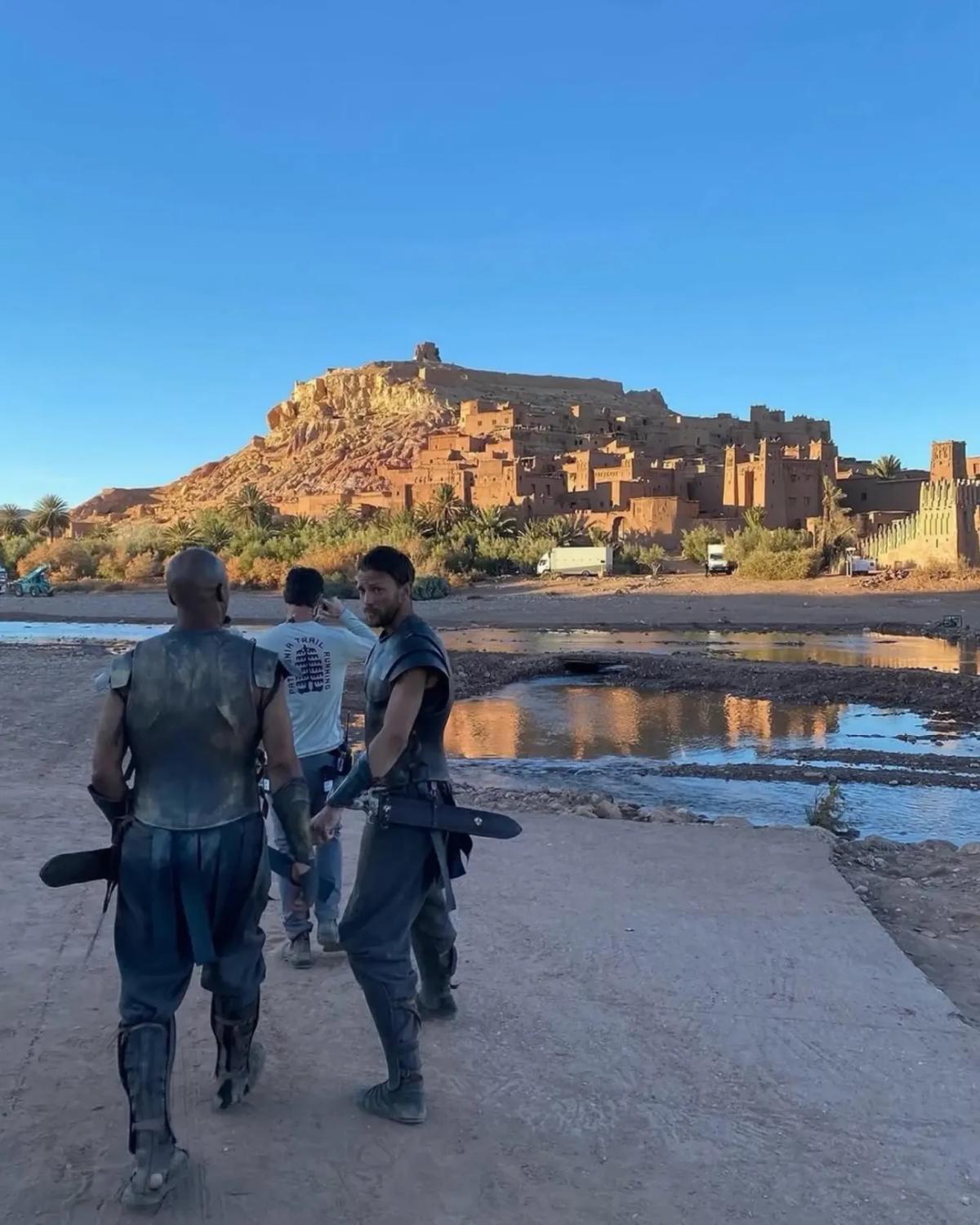
What you’ll actually see today is the ksar itself — partly inhabited, mostly guesthouses and a handful of families — climbing a hillside above the Ounila riverbed, with the Kasbah of Taourirt visible across the valley in Ouarzazate. You cross the river on a footbridge or stepping stones depending on the season, then climb narrow lanes between the pisé (rammed-earth) towers to a viewpoint at the top. Keep some small change on you — families who still live inside the ksar occasionally guide visitors through the upper sections, and a tip is expected.
Ouarzazate — the Production’s Desert Base
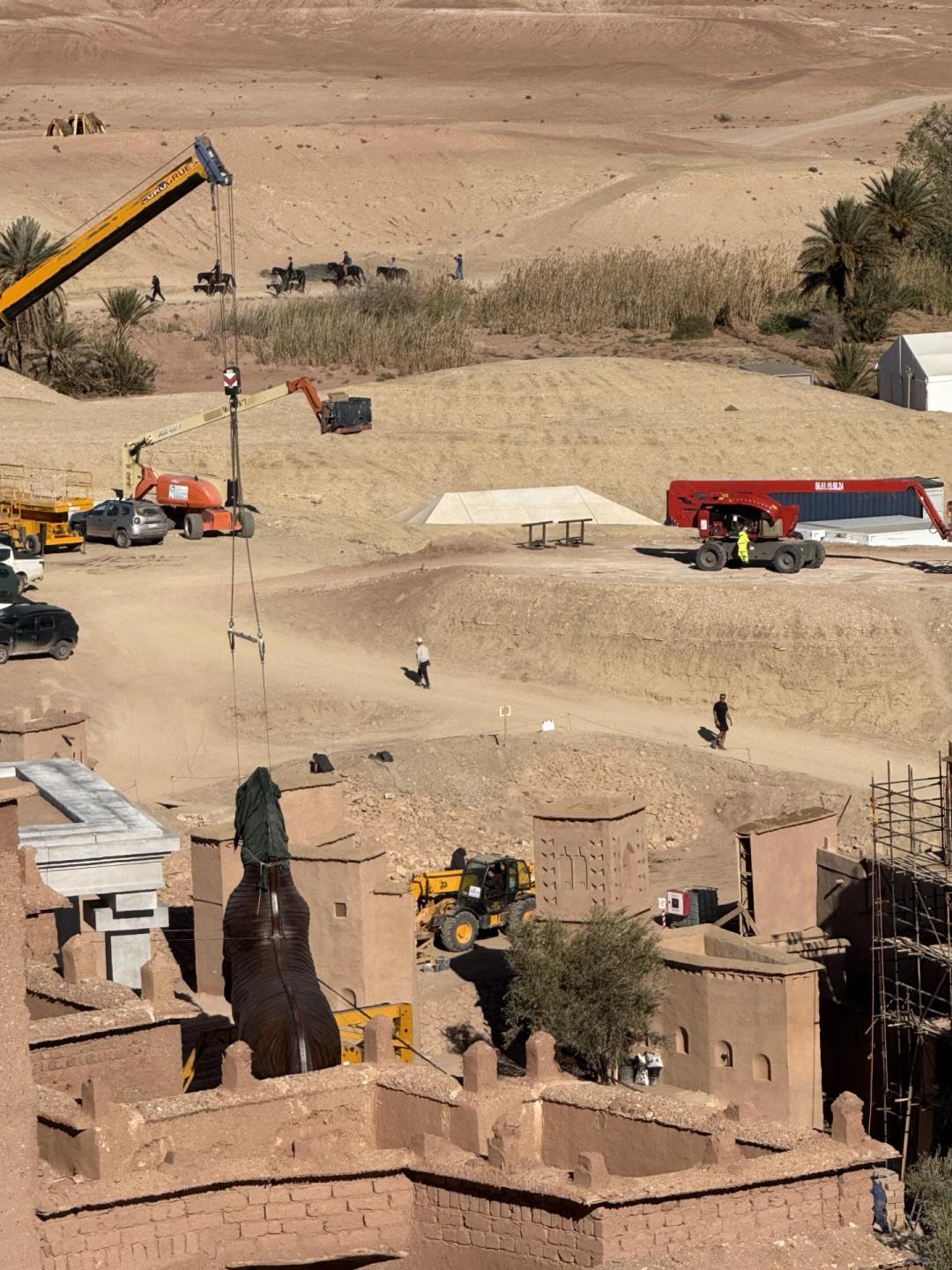
Twenty minutes past Aït Benhaddou is Ouarzazate, Morocco’s film industry hub since the 1980s and home to Atlas Studios and CLA Studios — sound stages, backlots, and standing sets that have hosted productions from Lawrence of Arabia and Jesus of Nazareth through to Kingdom of Heaven, Babel, and Prince of Persia. Set-construction photos and local reporting placed Nolan’s crew here from February 2025, building and dressing sets before filming moved through the region.
Ouarzazate isn’t dressed up for visitors the way Aït Benhaddou is. It’s a working town built around the studios, with its own kasbah (Taourirt, worth an hour) and not a great deal else — but it’s the reason this stretch of southern Morocco already has film-crew-grade hotels, drivers, and fixers, decades before Nolan arrived. Locals still call it "Ouallywood." Most visitors base themselves in Ouarzazate or nearby Aït Benhaddou for one night when touring this route, rather than day-tripping from Marrakech and back — the drive alone is the better part of a day.
Marrakech — On Camera and as a Production Base
Marrakech was used both as a filming location and as the production’s logistics base — it’s the nearest of the three regions with direct international flights, so cast, crew, and equipment moved through it constantly. Nolan has shot in Marrakech before: Inception (2010) used it as a stand-in for Mombasa.
The city gives a production options a five-hour drive into the desert doesn’t: the walled medina, the Koutoubia minaret, Jemaa el-Fna square with its nightly food stalls and performers, and the palmeraie on the city’s edge. Exactly which corners of Marrakech appear on screen hasn’t been confirmed in detail, but the medina’s mix of real medieval density and controllable side-streets is what keeps productions coming back to it. For visitors, it’s also simply the easiest of the four locations to reach — most Morocco itineraries start and end here regardless of whether a film ever gets mentioned.
Essaouira — the Trojan Horse Beach
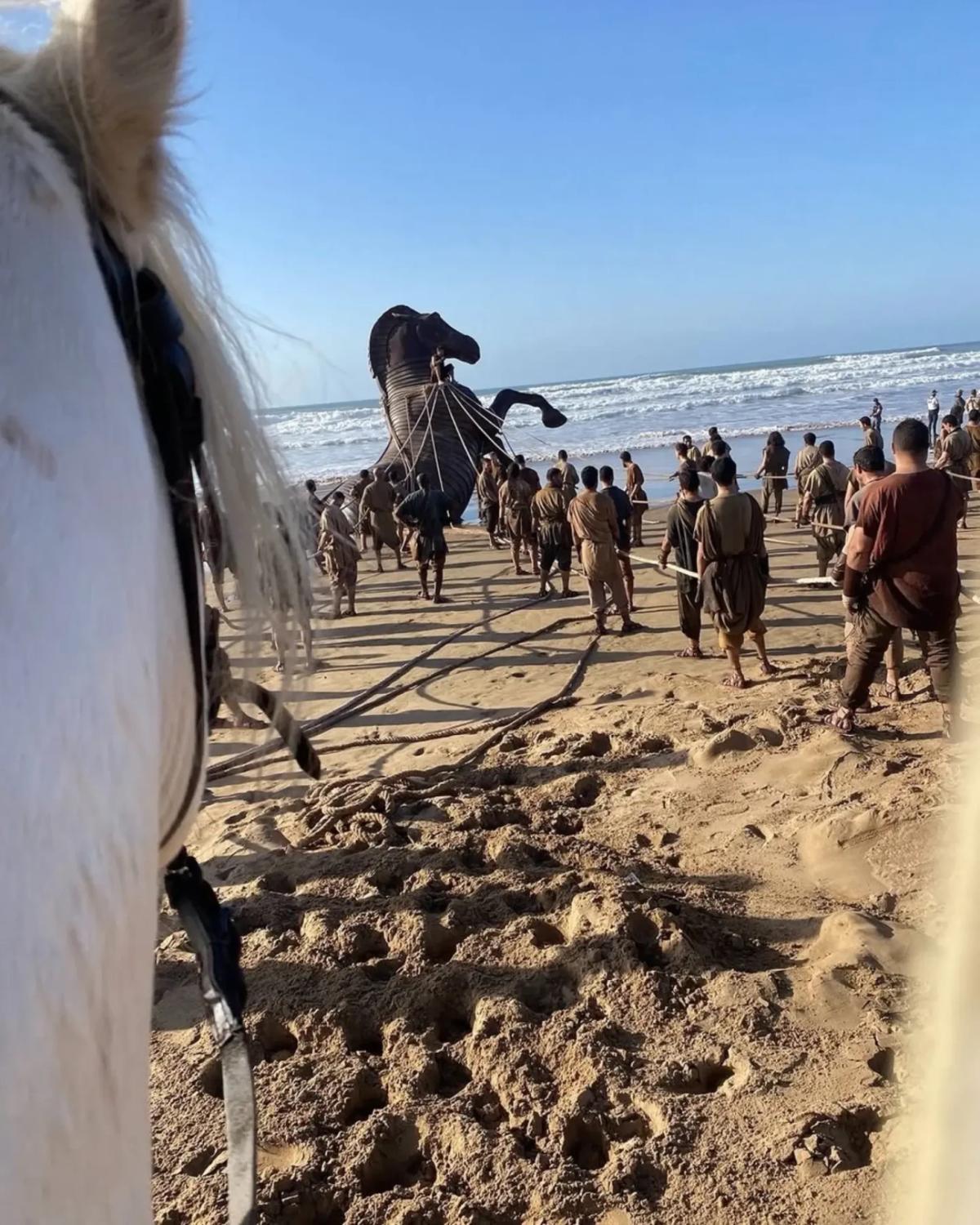
On the Atlantic coast, about two and a half to three hours west of Marrakech, Essaouira’s beach and 18th-century sea walls stand in for the site where the Trojan Horse is discovered, and for Odysseus’s departure by boat back toward Ithaca.
Essaouira has its own long production history. Orson Welles shot Othello on its ramparts in 1949 — there’s still a small square named after him near the port. Game of Thrones used the same Skala fortifications for Astapor. What makes it work on camera is a combination most Moroccan coastal towns don’t have together: a genuinely rough Atlantic swell, exposed stone sea walls with cannon still mounted on them, and a working fishing port with blue wooden boats that hasn’t been prettied up for tourism. It’s also the one Odyssey location that sits outside the standard Marrakech–Ouarzazate–Sahara corridor, so seeing all four in one trip takes some deliberate routing rather than a single loop.
Dakhla — Where Calypso Keeps Odysseus
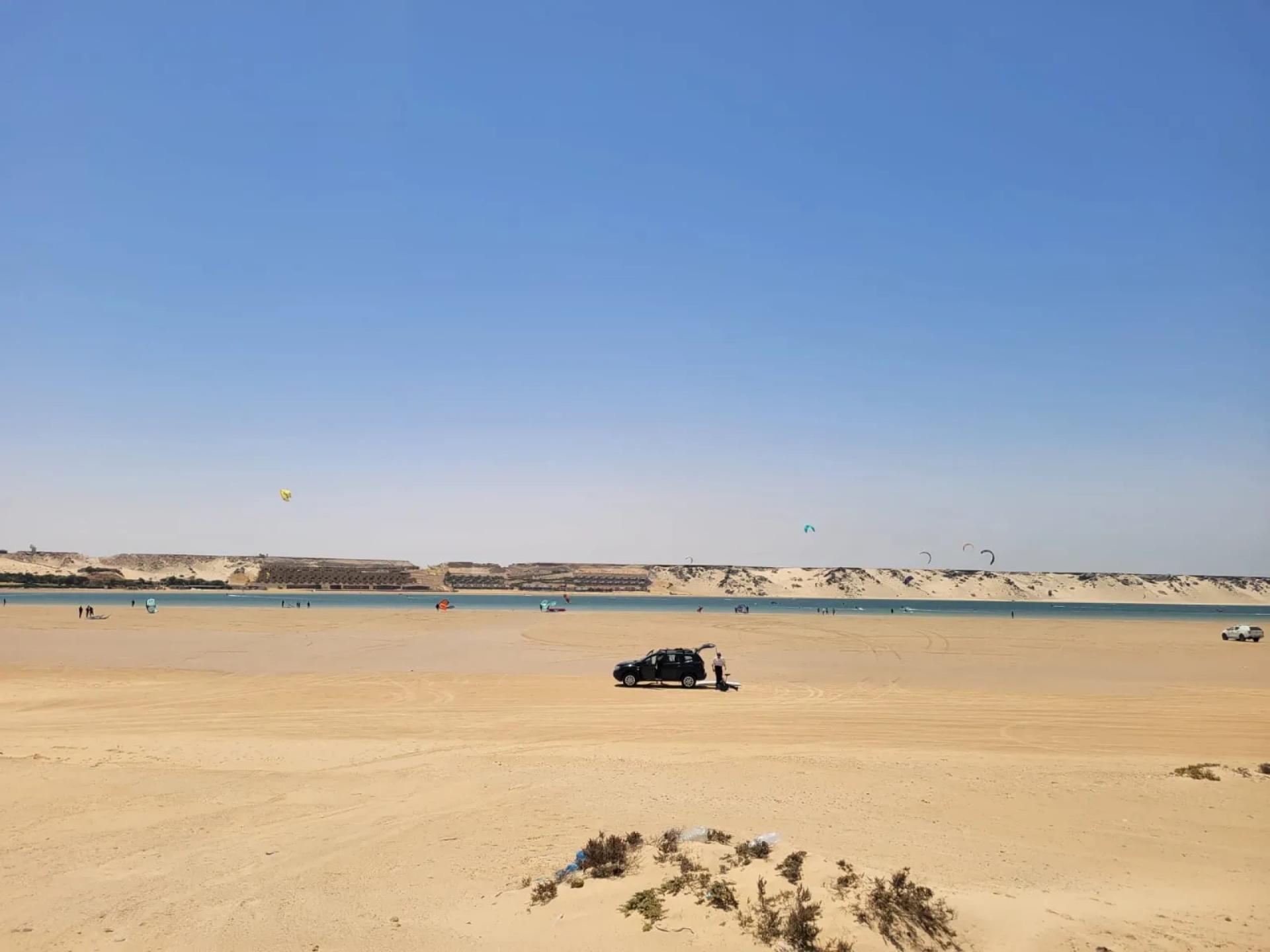
Charlize Theron plays Calypso in The Odyssey — the nymph who keeps Odysseus on her island of Ogygia for seven years. Nolan shot those scenes not in Greece but at the White Dune, about thirty kilometres from Dakhla on Morocco's Atlantic coast, where Damon, Theron, and Zendaya filmed across several days in July 2025. It's a stretch of sand and turquoise lagoon backed by dunes, with flamingos working the shallows at low tide — remote enough, and strange enough, to double convincingly for a nymph's private island at the edge of the world.
The wind is the thing everyone who's worked there mentions. Damon later described Theron acting through gusts of 30 to 40 miles an hour: "She had to do these scenes that were already challenging with a wind ripping sand directly into her eyes," he said. "She's just a boss, though."
Dakhla is Moroccan territory, administered by Morocco since Spain withdrew in 1975. The United States formally recognized Moroccan sovereignty over the Sahara in 2020, and in October 2025 the UN Security Council endorsed Morocco's autonomy plan as the basis for settling the dispute — a position more than a hundred countries now back in some form, with dozens of nations having opened consulates along this same coast in Dakhla and Laâyoune.
It's a long way from AZA's usual Marrakech–Sahara circuit — about 1,500km further south — so it isn't part of our standard tour routes. But it's a real, thriving part of Morocco, and now a real film location too.
Can You Visit The Odyssey Filming Locations?
Short answer: yes to the towns and landscapes, no to anything resembling a film set. Nolan’s sets at Aït Benhaddou and Ouarzazate were built for the shoot and struck afterward — there’s no standing "Troy" to walk through, and the production didn’t leave anything permanent behind. What you can see is the real place the camera was pointed at: the ksar, the kasbah, the medina, the beach.
Worth knowing before you go: Aït Benhaddou was already one of the busiest day-trip stops between Marrakech and the desert before The Odyssey came out, and film-related search interest is pushing even more visitors there this year. Early morning or late-afternoon light — and noticeably fewer tour buses — is worth planning your visit around. Most people spend 60–90 minutes walking the ksar itself. Spring and autumn give the most comfortable temperatures for the drive over the Atlas and the walk through the ksar; the same season that works best for a Morocco trip generally.
The direct way to see Aït Benhaddou and Ouarzazate together is on the route our Sahara tours already run. Our 3-Day Marrakech to Merzouga Desert Tour crosses the Tizi n’Tichka pass and stops in both on the way to the dunes at Merzouga. The 4-Day Sahara Desert Tour via Zagora covers the same corridor with a different desert finish. If you’d rather build a trip specifically around all four filming locations — including Essaouira, which the desert-bound routes don’t reach — a private tour lets you set that itinerary yourself, adding a coastal night before or after the desert leg. Our 5-Day Morocco Itinerary: Marrakech & the Sahara lays out one version of this route day by day.
Planning a trip that includes the real Odyssey filming locations? Our Sahara desert tours already run through Aït Benhaddou and Ouarzazate on the way to Merzouga, and we can build a private itinerary that adds Essaouira if you want all four locations in one trip. Get in touch and we’ll map it around your dates.
Tempted by the Real Thing?
If these locations have you planning a desert trip of your own, start with our comparison of Merzouga vs Zagora vs Erg Chigaga — the three Saharas a film crew (or a traveller) can actually reach — and check the best time to visit the Sahara before you set dates. The light that made these places worth filming is seasonal, and October to April is when you get it.
Planning a Morocco tour? Browse our tours
See all tours →Quick answers
Christopher Nolan filmed The Odyssey across five Moroccan locations: Aït Benhaddou (which plays Troy), Ouarzazate (production base), Marrakech, Essaouira (the Trojan Horse beach), and Dakhla on the Atlantic coast, where Charlize Theron's Calypso scenes were shot at the White Dune.
No — there’s no ancient city standing in for Troy that you can visit. The production used Aït Benhaddou, a fortified Moroccan ksar, as a stand-in, the same way earlier films used it for Jerusalem, Rome, and other ancient settings.
Yes, but you’re visiting the real towns and landscapes, not a film set. Nolan’s Aït Benhaddou and Ouarzazate sets were built for the shoot and taken down afterward — there’s nothing left to tour that’s specific to the film.
Yes. Nolan used Marrakech as a stand-in for Mombasa, Kenya in Inception (2010). Morocco has hosted major international productions since Lawrence of Arabia in 1962.
It’s roughly a 3.5–4 hour drive over the Tizi n’Tichka pass in the High Atlas. Most visitors see both as part of a multi-day desert tour rather than a single long day trip, since the same road continues on to Merzouga and the Sahara.
It opened July 17, 2026 to $124.5 million domestically, followed by a $90 million second weekend — Nolan’s biggest opening since The Dark Knight Rises. It passed $650 million worldwide within ten days.
Matt Damon plays Odysseus, with Tom Holland and Zendaya among the principal cast. It’s Nolan’s most expensive film to date at a reported $250 million budget, and the first feature shot entirely on IMAX film cameras.
Yes — it’s one of the most photogenic standing kasbahs in Morocco regardless of what’s filmed there, and most visitors combine it with Ouarzazate and the drive over the Atlas on the way to the Sahara, so it’s rarely a detour on its own.