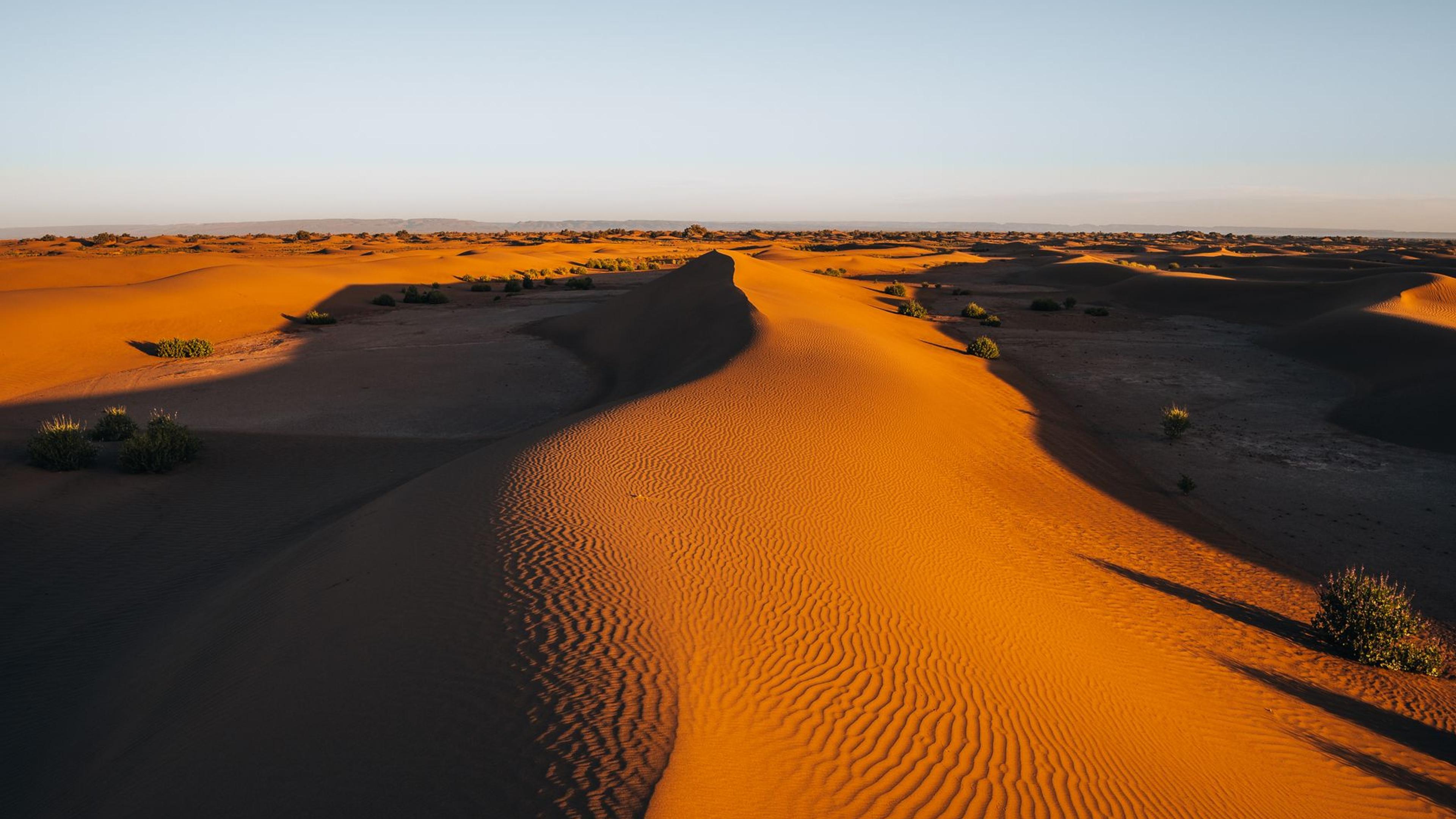
The best time to visit the Sahara Desert in Morocco is October to April. Daytime temperatures sit between 20°C and 28°C, nights are cool rather than freezing for most of that window, and the light on the dunes is at its best. The months to avoid are July and August, when afternoon temperatures in Merzouga and Zagora regularly pass 45°C — heat that no sunset camel ride can justify. Below is the month-by-month picture from someone who drives these routes every week, plus the honest answer on winter nights, sandstorm season, and when we personally would go.
How Desert Seasons Actually Work
The Sahara doesn't do gentle seasons — it swings. The number most first-time visitors get wrong isn't the daytime high, it's the difference between day and night. A perfect 24°C October afternoon in Erg Chebbi can drop to 8°C by midnight. In December and January that swing is bigger: sunny 18°C days and nights that can touch zero out in the dunes. This is why the question isn't just "which month is warm?" — it's "which month gives you a comfortable day AND a bearable night?" October and November get that balance right in autumn; February through April get it right in spring.
If you're planning a whole Morocco route rather than just the desert leg, read this alongside our best time to visit Morocco guide — the coast and the mountains follow different rules — and the month-by-month weather guide for the full country picture.
Month by Month in the Dunes
October – November: the best of the year
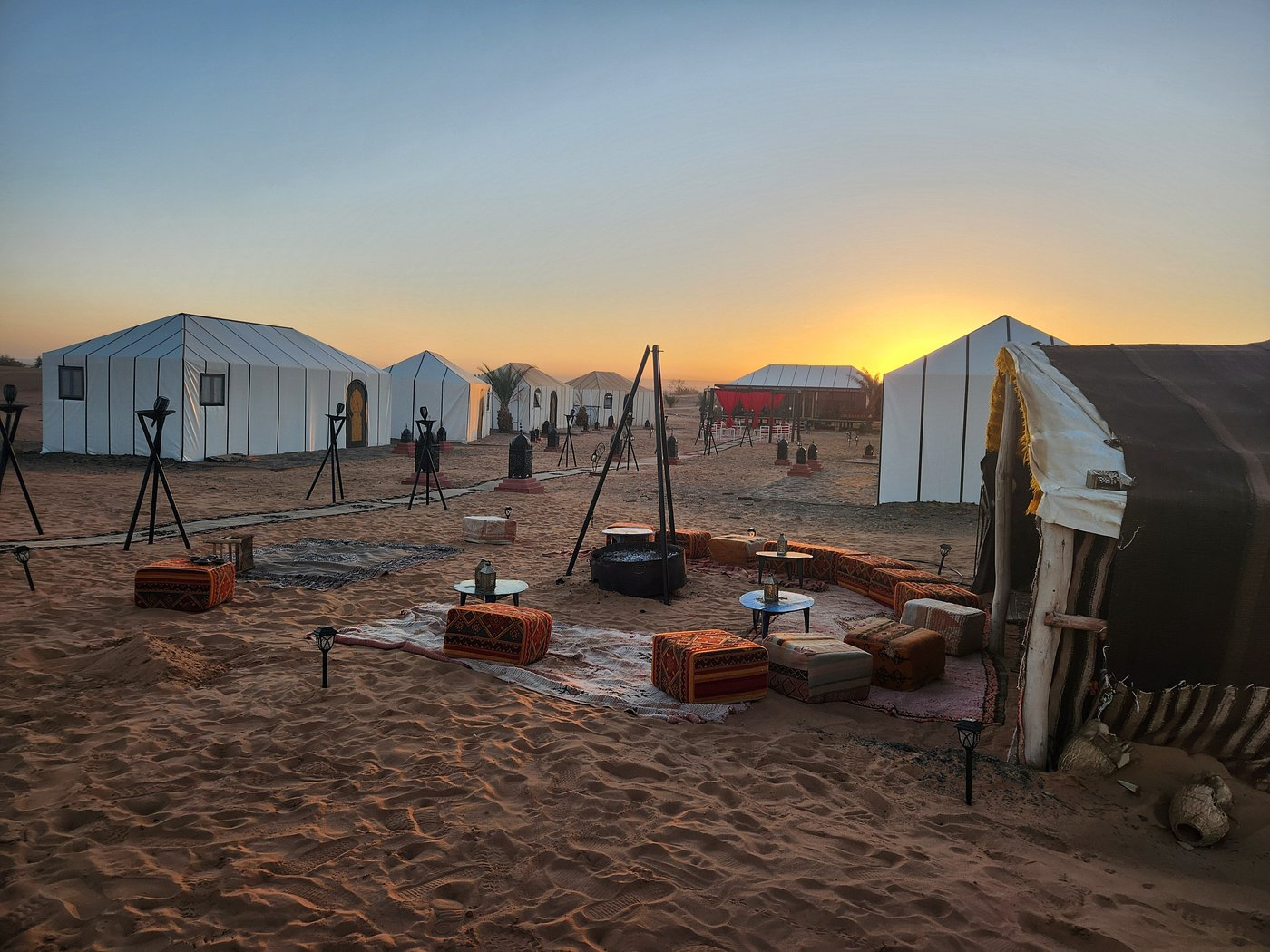
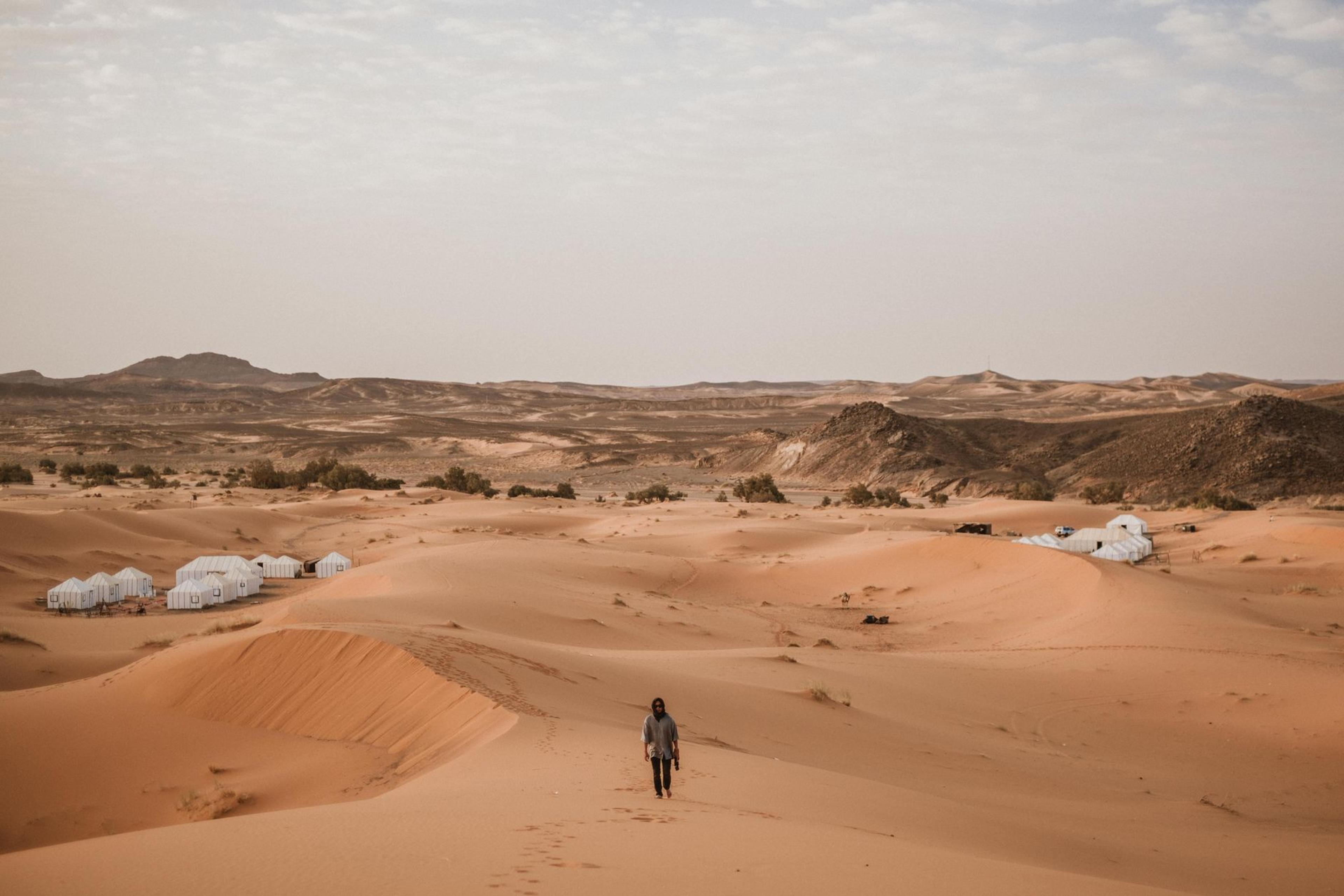
A desert camp in the Sahara
If I could put every guest in one month, it would be late October. Days are warm without being hot, evenings at camp need only a light jacket, and the post-summer air is clear enough that the Milky Way shows up before the tea has finished brewing. November runs slightly cooler and slightly quieter — by the end of the month you'll want a proper layer for the night, but the trade is having sunrise on the dunes nearly to yourself.
December – January: beautiful days, cold nights
Winter in the Sahara surprises people in both directions. The days are genuinely lovely — sunny, calm, around 18–20°C — and the low winter sun makes the dunes glow all day instead of just at the edges of it. The nights are properly cold: at Erg Chebbi it can approach freezing in the small hours. Our camps run thick duvets, extra blankets on request, and hot-water bottles in the coldest weeks, and dinner is served inside the heated main tent. Come — just come with a warm layer and socks you'd trust on a mountain.
February – April: the spring window
February is the most underrated month on this list — winter's edge is gone but the crowds haven't returned. March and April are classic high season: 22–28°C days, warm nights, everything open. The one caveat is the chergui — the hot, sand-carrying east wind that can blow for a day or two at a time, most often from late March into May. It's not dangerous and it doesn't stop tours; it means a scarf over your face for an afternoon and slightly hazy photos. If a sandstorm is forecast to be severe, we adjust the route or the camp night rather than pretend it isn't happening.
May – September: the honest answer
Early May is still workable. June is hot but possible if you're desert-set on it — we run those days around dawn and dusk and sit out the afternoon in the shade. July and August we simply don't run desert tours, and we'd encourage you to be suspicious of anyone who says those months are fine. At 45°C+ the sand itself burns through shoes, camels work poorly, and the camp experience most people dream about becomes an endurance event. September cools quickly; by its final week the desert is genuinely pleasant again, and it stays that way into the new year.
Nights Are the Real Story
Every month above was rated as much on its nights as its days, because the night is what you're actually buying: dinner under lamplight, drum fire, and a sky with no light pollution for a hundred kilometres. For stargazing, the cold months win — November to February air is the clearest of the year, and if you can stand a 5°C night wrapped in camp blankets, a January sky over Erg Chebbi is something you will describe to people for years. For comfort-first travellers, October and April give you 90% of the sky with none of the shivering.
So When Would We Go?
Late October, without hesitation. Second choice: the first half of March. Third: February, if you like the desert quiet and don't mind a jacket at night. And if your dates only allow December or January, don't cancel the desert — pack warm and take the clearest stars of the year as compensation.
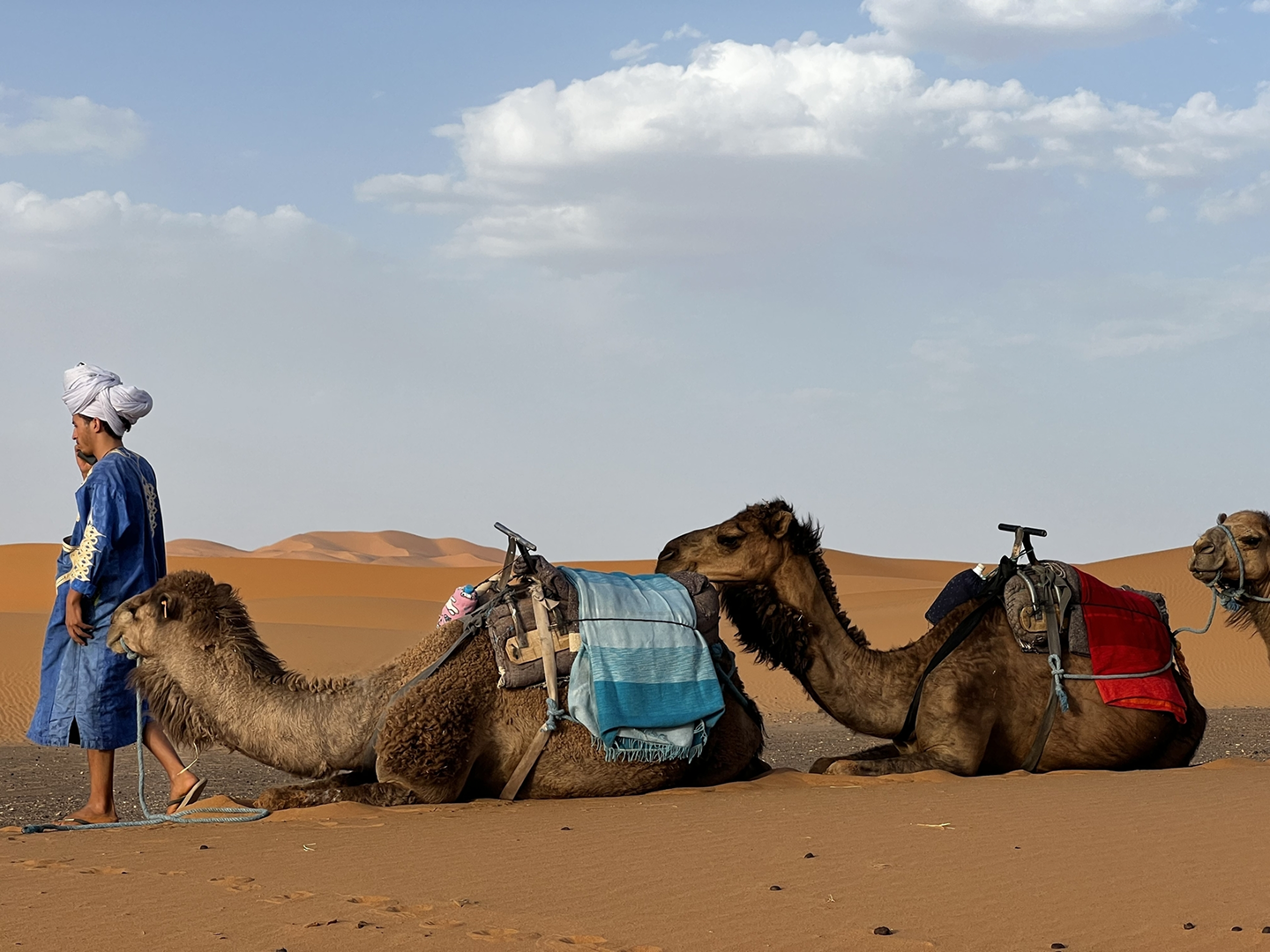
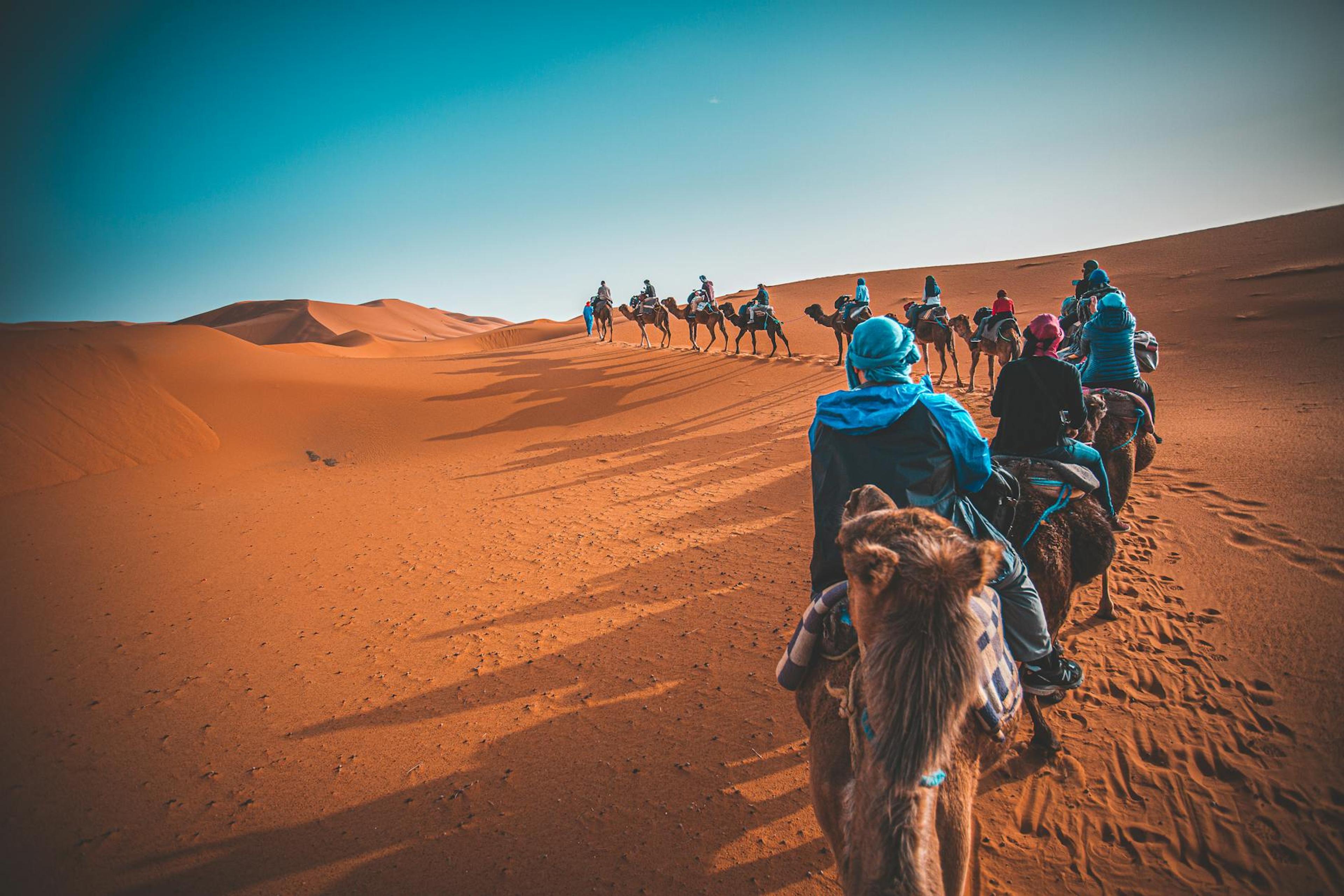
A camel guide in the Sahara
Planning Your Desert Trip
Most travellers do the desert as part of a loop from Marrakech. The classic is our 3-day Marrakech to Merzouga desert tour — two travel days through the Atlas and Todra Gorge around a night at an Erg Chebbi camp. If you're shorter on time, the 4-day Zagora route trades the biggest dunes for less driving, and the 6-day Erg Chigaga crossing is the remote option for travellers who want the desert without another camp in sight. Not sure which erg is right for you? Start with our Merzouga guide for the full picture of the area, its camps and how the routes compare.
Month-by-month at a glance
Planning a Morocco tour? Browse our tours
See all tours →Quick answers
October. Days are 22–26°C, nights need only a light jacket, and post-summer air gives the clearest dune light of the year. March is the best spring equivalent.
Days are lovely — sunny and around 18–20°C. Nights are genuinely cold and can approach freezing in the dunes in December–January. Desert camps provide thick blankets and heated dinner tents; bring warm layers and it's a beautiful time to go.
We don't recommend it and AZA pauses desert departures in these months. Afternoon temperatures regularly exceed 45°C in Merzouga and Zagora, which is unsafe and simply not enjoyable.
The chergui wind is most common from late March through May. Storms usually last a day or two, rarely stop tours, and mostly mean hazy skies and a scarf over your face. Severe days are worked around, not through.
November to February — cold, dry air gives the clearest skies of the year. October and April are nearly as good with much warmer nights.
At Erg Chebbi, night temperatures in December commonly fall to 3–7°C and can approach 0°C in the small hours. With camp blankets and proper layers it's comfortable — without them it isn't.
Yes — tours run normally during Ramadan and the desert camp evenings are, if anything, more atmospheric. Guides who are fasting still work as usual; meals for guests are unaffected.