3-Day Marrakech to Fes Desert TourMarrakech to Fes, One Way
3 days / 2 nights·Max 10
About this journey
Most 3-day Sahara tours from Marrakech spend a third of the trip driving you back the way you came. This one doesn't. You get the same spectacular outbound route — the Tizi n'Tichka pass, Aït Benhaddou, the Dades Valley — but instead of retracing the road on your last day, the tour continues north through the Ziz Valley and ends in Fes. Day one is the long, scenic crossing of the High Atlas and the Draa Valley to the Dades Gorge. Day two continues east through the Todra Gorge to Merzouga, with a sunset camel trek into Erg Chebbi and a night at a traditional desert camp. On the final day you climb the dunes for sunrise, then drive north through the Ziz Valley and the Middle Atlas cedar forests, arriving in Fes by evening — a shorter final day than the drive back to Marrakech would be, and it actually gets you somewhere new. This tour suits travellers continuing on to Fes, Chefchaouen or beyond, or anyone who'd rather end their Sahara crossing in one of Morocco's great imperial cities than sit through a repeat of yesterday's road back to Marrakech.
- Cross the High Atlas via the dramatic Tizi n'Tichka pass (2,260m)
- Walk the UNESCO ksar of Aït Benhaddou before the tour buses arrive
- Camel trek into Erg Chebbi for a sunset arrival at your desert camp
- Sunrise dune climb, then north through the Ziz Valley to Fes
- Tour ends in Fes — ideal if you're continuing north or exploring the medina next
Day by day
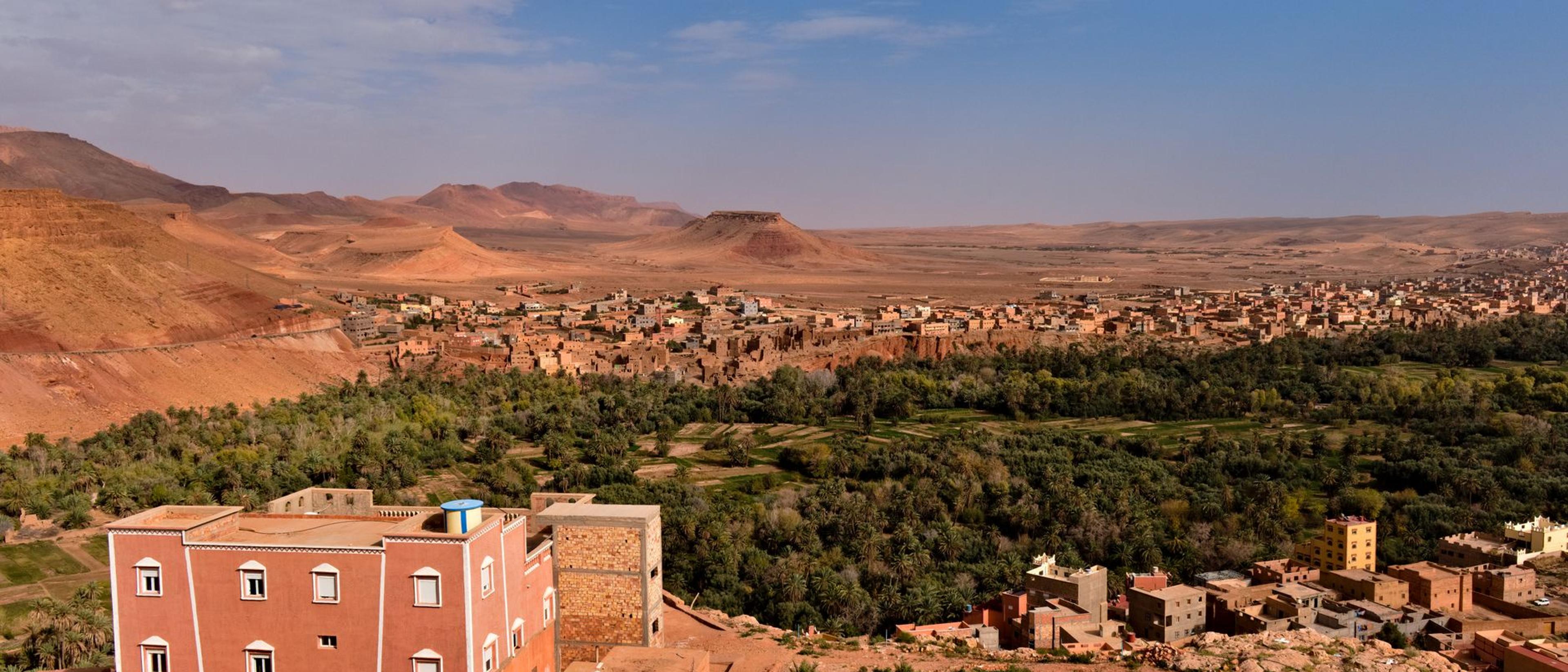
Depart Marrakech at 07:00 and cross the High Atlas via the Tizi n'Tichka pass — the road tops out at 2,260m with views back over the valley. We stop at Aït Benhaddou, Morocco's best-preserved kasbah, for a 90-minute walk through the ksar before continuing through the Draa Valley's palm groves. Arrive at your guesthouse in the Dades Valley by early evening, in time to watch the light change on the gorge walls.
- Tizi n'Tichka pass
- Aït Benhaddou ksar
- Draa Valley palmeries
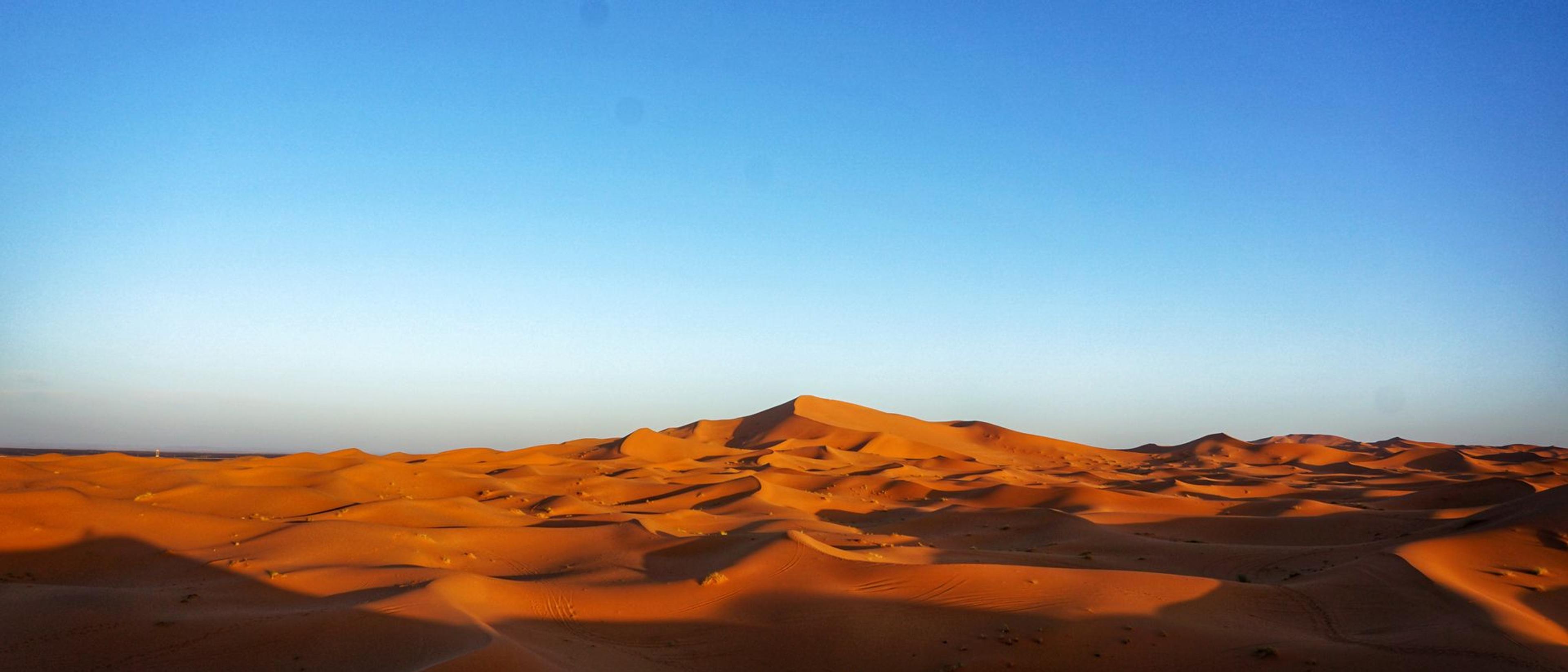
After a short morning walk in the Dades Gorge, we drive through Todra Gorge, where the canyon walls rise 300m and narrow to just 10m at the tightest point. Lunch stop in Tinjdad, then on to Merzouga by mid-afternoon. Camels are waiting at the edge of Erg Chebbi for a 45-minute trek to your desert camp, timed to reach the dunes for sunset — the best light of the whole tour.
- Todra Gorge
- Erg Chebbi camel trek
- Sunset in the dunes
Wake before dawn for the short climb up the dunes behind camp — sunrise over Erg Chebbi is worth the early start. Back at camp for a quick breakfast, then straight on the road: north through the Ziz Valley's palm oasis, Er-Rachidia and Midelt, climbing into the Middle Atlas cedar forests before descending to Fes in the evening. It's a long final day, but shorter than the drive back to Marrakech — and it ends somewhere new. Drop-off at your riad in the Fes medina.
- Sunrise dune climb
- Ziz Valley oasis
- Middle Atlas cedar forests
- Tour ends in Fes, not Marrakech
Your journey on the map
Inclusions & exclusions
What’s included
- Private air-conditioned 4WD, Marrakech to Fes
- Local driver (English, French, Spanish)
- 2 nights accommodation (1 guesthouse in the Dades Valley, 1 desert camp in Erg Chebbi)
- Camel trek at sunset with overnight desert camp
- All entrance fees (Aït Benhaddou, gorges)
- Drop-off at your riad or hotel in Fes
Not included
- Flights and travel insurance
- Lunches (budget $8–15/day)
- Personal expenses and tips
- Optional: hot air balloon over the dunes (+$280)
- Entrance fees to historical landmarks
Your accommodation
Choose your style
3-Day One-Way Small-Group Tour
- Max 10 travellers
- Daily departures Mar–Nov
- Ends in Fes — no return drive
- Accommodation & most meals included
- English-speaking driver
What travelers say
“We were heading north to Fes anyway, so this tour dropped us right in the medina instead of backtracking to Marrakech — saved us a full day of driving. Our guide timed the camel trek perfectly — almost 40 minutes of golden light on the dunes before dinner.”
“Aït Benhaddou at 9am with barely anyone else there was worth the early start alone. The desert camp had real beds, not the backpacker-tent setup I was expecting.”
“Loved that we didn't waste our last day driving back the way we'd come — the drive north through the Ziz Valley was actually really scenic, and we were dropped right at our riad in the Fes medina by early evening.”
Why choose AZA Morocco Tours
- Local expert guides — born and raised in Morocco
- Private tours guaranteed to run on your dates
- All-inclusive pricing — no hidden fees
- Simple deposit-based booking — just 30% upfront
- Small-group option (max 10) when a departure fills
- Verified reviews on TripAdvisor
Questions about this tour
Most Sahara tours from Marrakech are loops that spend the final day retracing the outbound route back to Marrakech — about 8–9 hours of repeat driving. This version instead continues north through the Ziz Valley to Fes, a shorter drive that actually gets you somewhere new instead of back where you started.
Fes is well connected — regular trains and buses run to Chefchaouen, Tangier, Casablanca and Rabat, and Fes–Saïss Airport has regional flights. Happy to help point you to reliable onward options once you're dropped off.
The outbound route is identical — Tizi n'Tichka, Aït Benhaddou, Dades Valley, Todra Gorge, Merzouga. The difference is entirely on day 3: this version continues north to Fes, our loop tour drives back to Marrakech.
Comfortable walking shoes, a warm layer for desert nights (8–12°C even in summer), sunscreen, a scarf or buff for sand, a head torch, and a camera. The desert camp provides blankets and bedding.
You stay in a traditional Berber-style camp with furnished tents — beds and bedding included, not backpacking tents. The camp has solar lighting, shared bathrooms, and a communal area where dinner is served.
March–May and September–November offer the best balance of daytime heat and cool, clear desert nights. December–February is also excellent (cold nights, brilliant skies). We suspend desert departures in July and August when Sahara temperatures regularly exceed 48°C.