Wear ISO 12312-2 eclipse glasses for every minute of the 2 August 2027 eclipse except totality itself, when the Sun is completely covered. In Chefchaouen that is 09:45:25 to 09:49:38 Morocco time. Bring glasses from home: they are hard to find in Morocco.
This guide covers what to buy, when to take your glasses off, how to keep children safe and how to photograph the eclipse without missing it. For the bigger picture, see our complete guide to the 2027 eclipse in Morocco.
Why the partial phases are dangerous
Looking straight at the Sun is never safe, and an eclipse makes it tempting. During the partial phases the visible sliver of Sun is still intense enough to burn the retina, and the damage is painless, so you will not feel it happening. Even at 99% coverage the remaining crescent is dangerous.
Sunglasses, however dark, do not protect you. Nor do smoked glass, stacked sunglasses, photographic negatives or CDs.
Choosing eclipse glasses
Buy glasses or handheld viewers that meet the international standard ISO 12312-2. The American Astronomical Society keeps a list of reputable manufacturers and sellers, which is the safest place to start; counterfeit glasses printed with the ISO number have been sold before major eclipses.
Buy them before you travel. Eclipse glasses are not sold widely in Morocco, and shops near the path may run out or sell doubtful stock in the final week. Bring a spare pair per person, and one to put over a phone lens.
Before you use them, check each pair. The filters should have no scratches, holes or creases, and through them you should see nothing at all except the Sun or a very bright light. If a pair is damaged, throw it away. Welder’s glass of shade 12 or darker is also safe if you already own some.
When it is safe to take them off
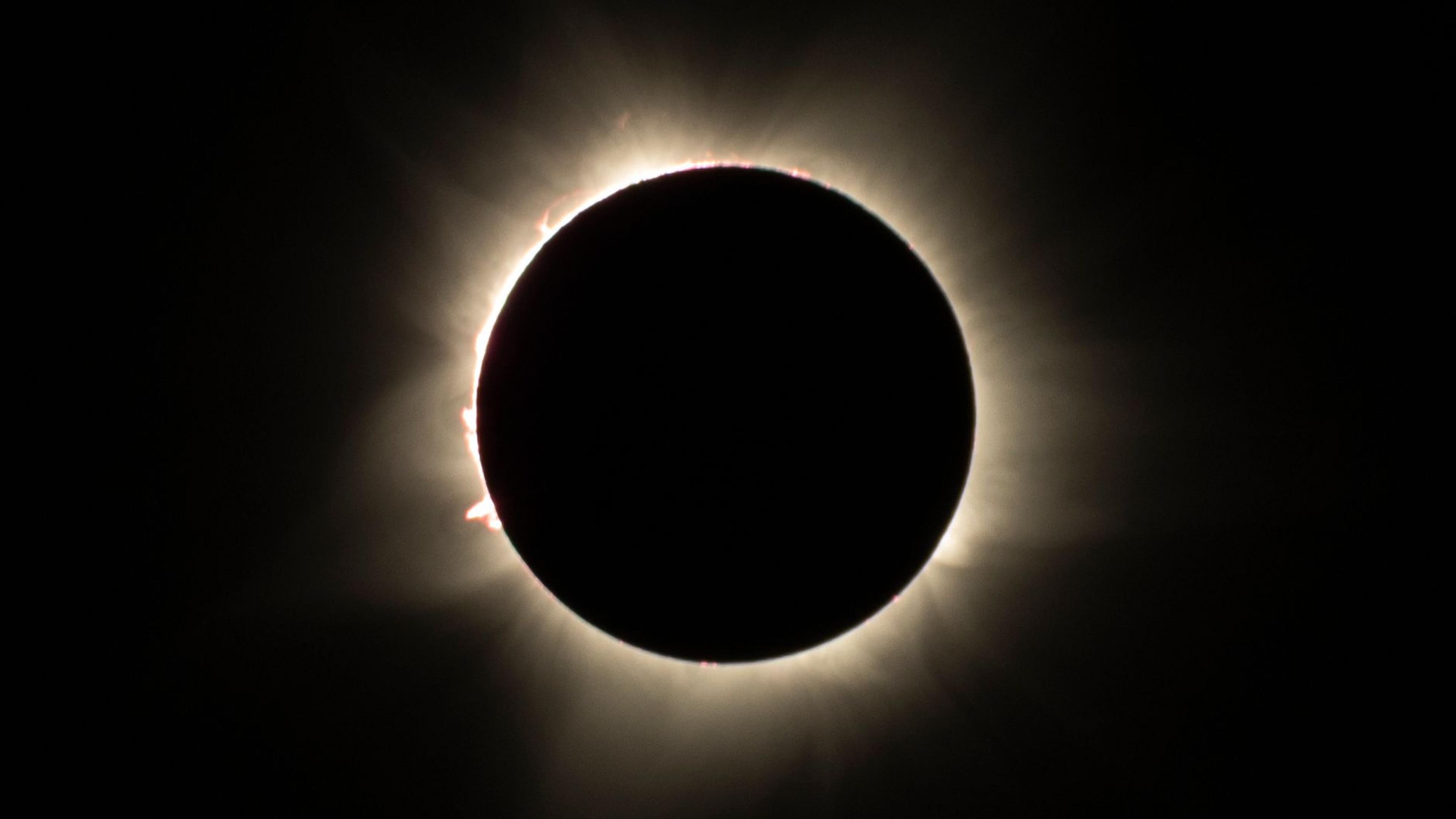
Only during totality. As the last bright bead of the Sun disappears, at C2, the sky darkens and the corona appears. Now you can look with your bare eyes, and you should: the corona is about as bright as a full Moon and completely safe to watch.
Put your glasses back on the moment the first flash of sunlight reappears at C3. It comes suddenly. Our 2027 eclipse times guide lists C2 and C3 for every town, so set a phone alarm for about ten seconds before C3 as a reminder. In Chefchaouen totality lasts 4 min 13 s; in Tangier and Tetouan 4 min 51 s.
| Phase | From | To | Glasses |
|---|---|---|---|
| Partial eclipse | 08:40:36 | 09:45:25 | On |
| Totality | 09:45:25 | 09:49:38 | Off |
| Partial eclipse | 09:49:38 | 11:01:18 | On |
Children
Children love an eclipse, but they are also the most likely to peek. Fit glasses to their faces before the day (a strip of tape at the sides helps), keep an adult beside each young child during the partial phases, and explain the rule simply: glasses on until it goes dark, glasses off only while it is dark. For small children a pinhole projector is easier than glasses.
Binoculars, cameras and telescopes
Never look through binoculars, a camera viewfinder or a telescope at the partial phases, even while wearing eclipse glasses. Optics concentrate the light and will burn through the glasses and your eye. They need a proper solar filter fitted over the front of the lens. During totality you can use binoculars without a filter, and the view of the corona and the red prominences at the Moon’s edge is spectacular, but take them away from your eyes before C3.
Photographing the eclipse on a phone
Phones cope better than people expect, but pointing one at the Sun for long can damage the sensor. Hold an eclipse filter, or a spare pair of glasses, over the lens for the partial phases, and take it off for totality.
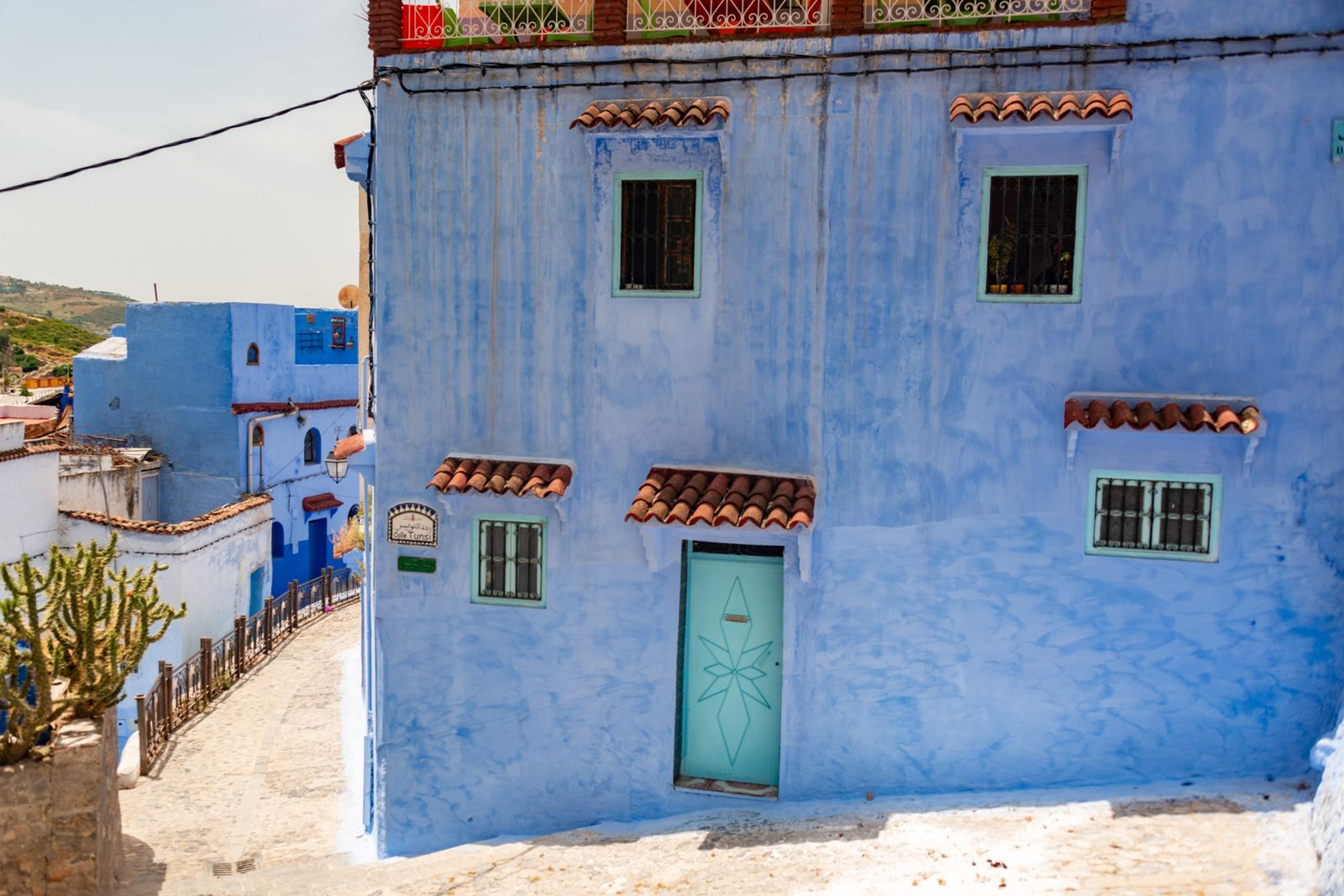
For totality, wide is better than zoomed. A phone cannot do the corona justice close up, but it is excellent at the scene: the dark sky, the orange glow of sunset all around the horizon, the faces around you, and the blue streets of Chefchaouen in sudden twilight. Lock focus and exposure by pressing on the Sun, turn the brightness down a little, rest the phone on something steady, and start a video a minute before C2 to catch the shadow arriving and the light changing.
Then put the phone down. Four minutes goes faster than you think, and most people who have seen totality say the same thing: watch it with your own eyes first.
Pinholes and leaf shadows
A pinhole projector is the simplest safe way to watch the partial phases: a small hole in a piece of card projects a tiny image of the crescent Sun onto another card or the ground. A kitchen colander does the same thing many times over. Look under trees too: the gaps between leaves turn every patch of sunlight on the ground into a small crescent.
If you think you looked at the Sun
Damage from looking at the Sun is called solar retinopathy. Symptoms, if they come, usually appear within hours rather than seconds: blurred or distorted vision, a dim or blind spot near the centre of what you look at, or colours that seem washed out. If you notice any of these after the eclipse, see an eye doctor as soon as you can. Tangier, Tetouan and Fes all have private clinics, and your driver or riad can arrange an appointment.
Drivers and roads
Never watch while driving. Roads near popular viewpoints will be busier than usual on 2 August, and some drivers will be looking at the sky. Be parked and set up before the partial phase begins, and stay put until the eclipse is over or at least until totality has ended. On our tours your driver does exactly that: the vehicle stays parked through the eclipse.
Heat and sun on eclipse morning
You will spend about two hours outside in the August sun, so bring a hat, sunscreen and plenty of water, and find some shade for the partial phases. Mornings in the Rif are warm rather than hot, and the air cools noticeably as totality approaches. Our private tours, such as the 8-day Chefchaouen, Essaouira and Marrakech tour and the 5-day tour from Casablanca, keep eclipse morning free so you can watch at your own pace. See all private eclipse tours.
Planning a Morocco tour? Browse our tours
See all tours →Quick answers
Not reliably. They are not sold widely, and stock near the path may run out or be of doubtful quality in the final week. Buy ISO 12312-2 glasses from a reputable supplier before you travel, with a spare pair each.
Only during totality, from the moment the last bead of sunlight disappears (C2) until the first flash returns (C3). In Chefchaouen that is 09:45:25 to 09:49:38 Morocco time. At any other time, keep them on.
No. Even very dark sunglasses let through far too much light. Use eclipse glasses or handheld viewers that meet the ISO 12312-2 standard, or welder’s glass of shade 12 or darker.
Yes. Cover the lens with an eclipse filter during the partial phases, remove it for totality, and shoot wide to capture the sky and the landscape. Start a video a minute before totality, then put the phone down and watch.