On Monday 2 August 2027 a total solar eclipse crosses northern Morocco. Totality lasts up to 4 minutes 53 seconds, starting around 09:45 Morocco time, in a band that runs from Larache and Tangier through Tetouan and Chefchaouen to Al Hoceima and Nador. Rabat, Fes and Marrakech see only a partial eclipse.
This guide covers where the Moon’s shadow falls, when it arrives, what the weather is likely to do, and how to plan a trip so you are standing in the right place on the morning. We run private tours across the north of Morocco, and we have built our eclipse tours around the same advice you will read here.
What happens on 2 August 2027
The Moon’s shadow touches down in the Atlantic, makes landfall on both sides of the Strait of Gibraltar at almost the same moment, and races east across North Africa: Morocco, Algeria, Tunisia, Libya and Egypt, then Saudi Arabia, Yemen and Somalia. Totality is longest in Egypt’s Nile valley, at up to 6 minutes 23 seconds.
In Morocco the shadow is about 236 km wide. It crosses the country from west to east in roughly seven minutes: totality begins at 09:44 in Larache on the Atlantic and at 09:51 in Oujda near the Algerian border. The whole event, from the first bite out of the Sun to the last, takes about two hours and twenty minutes.
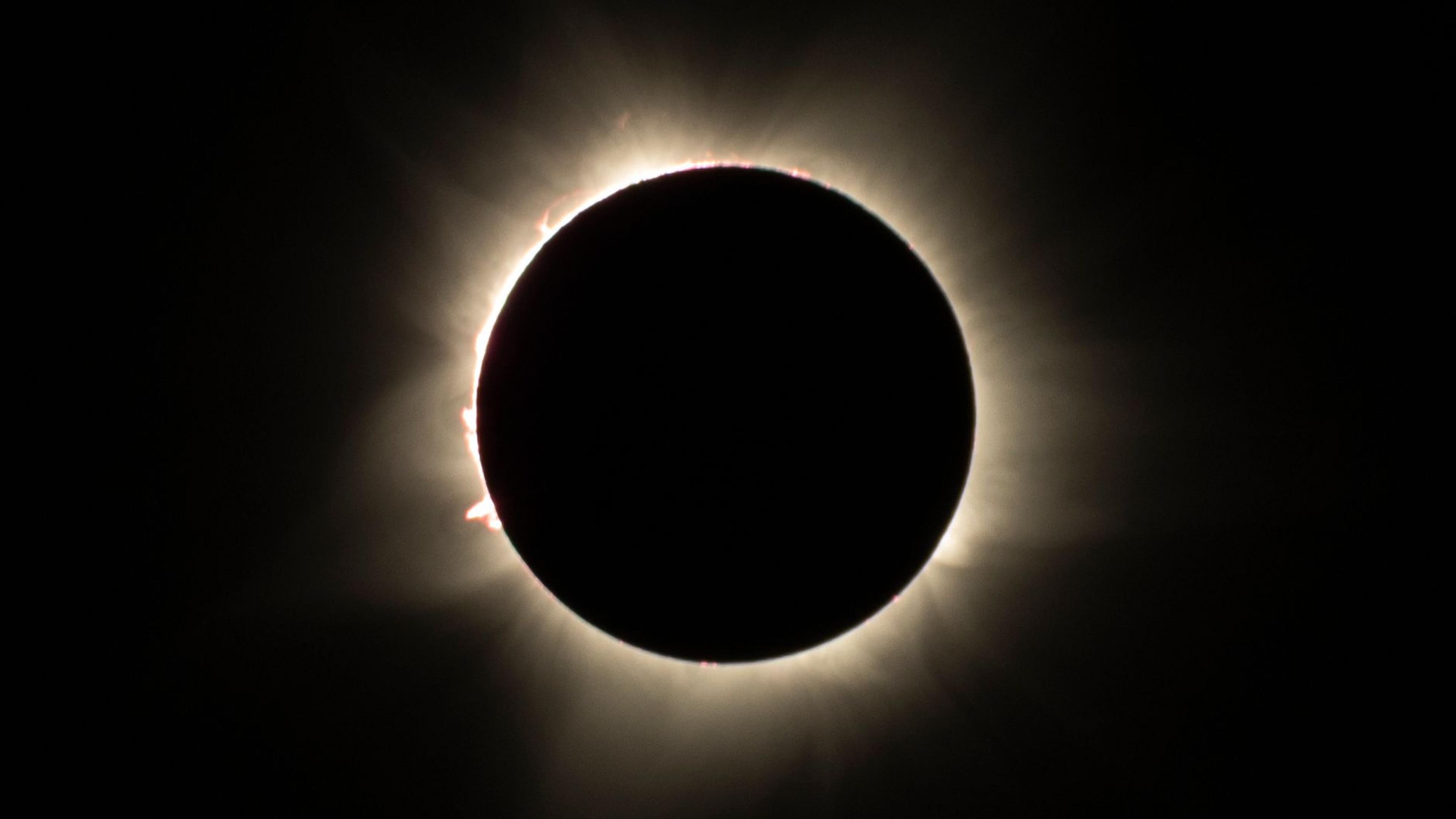
Totality is the part that matters. While even a sliver of the Sun is showing, the sky stays bright and you need eclipse glasses. Once the Moon covers it completely, the sky darkens to deep twilight, the temperature drops, the brightest planets and stars appear, and the Sun’s pearly outer atmosphere, the corona, spreads out around the black disc of the Moon. That is what people travel for.
Where the path of totality crosses Morocco
The band of totality covers the far north of the country, the Tangier–Tetouan–Al Hoceima region and the Mediterranean coast as far as Saïdia. The closer you are to the centre line, which runs just north of Tetouan, the longer totality lasts.
| Place | Totality | Starts | Sun height |
|---|---|---|---|
| M’diq | 4 min 53 s | 09:45 | 38° |
| Tetouan | 4 min 51 s | 09:45 | 38° |
| Tangier | 4 min 51 s | 09:44 | 38° |
| Asilah | 4 min 44 s | 09:44 | 38° |
| Al Hoceima | 4 min 26 s | 09:46 | 40° |
| Larache | 4 min 18 s | 09:44 | 38° |
| Nador | 4 min 14 s | 09:48 | 41° |
| Chefchaouen | 4 min 13 s | 09:45 | 39° |
| Saïdia | 4 min 00 s | 09:49 | 42° |
| Ouazzane | 2 min 35 s | 09:45 | 38° |
| Oujda | 0 min 58 s | 09:51 | 42° |
Just outside the band, the eclipse is partial. Rabat sees 98.6% of the Sun covered, Fes 98.4%, Meknes 98% and Casablanca 97%. Marrakech and Essaouira see about 89%, and Merzouga in the Sahara about 86%. Explore every town on our interactive eclipse map, or see full contact times in 2027 eclipse times by city.
Eclipse morning, minute by minute
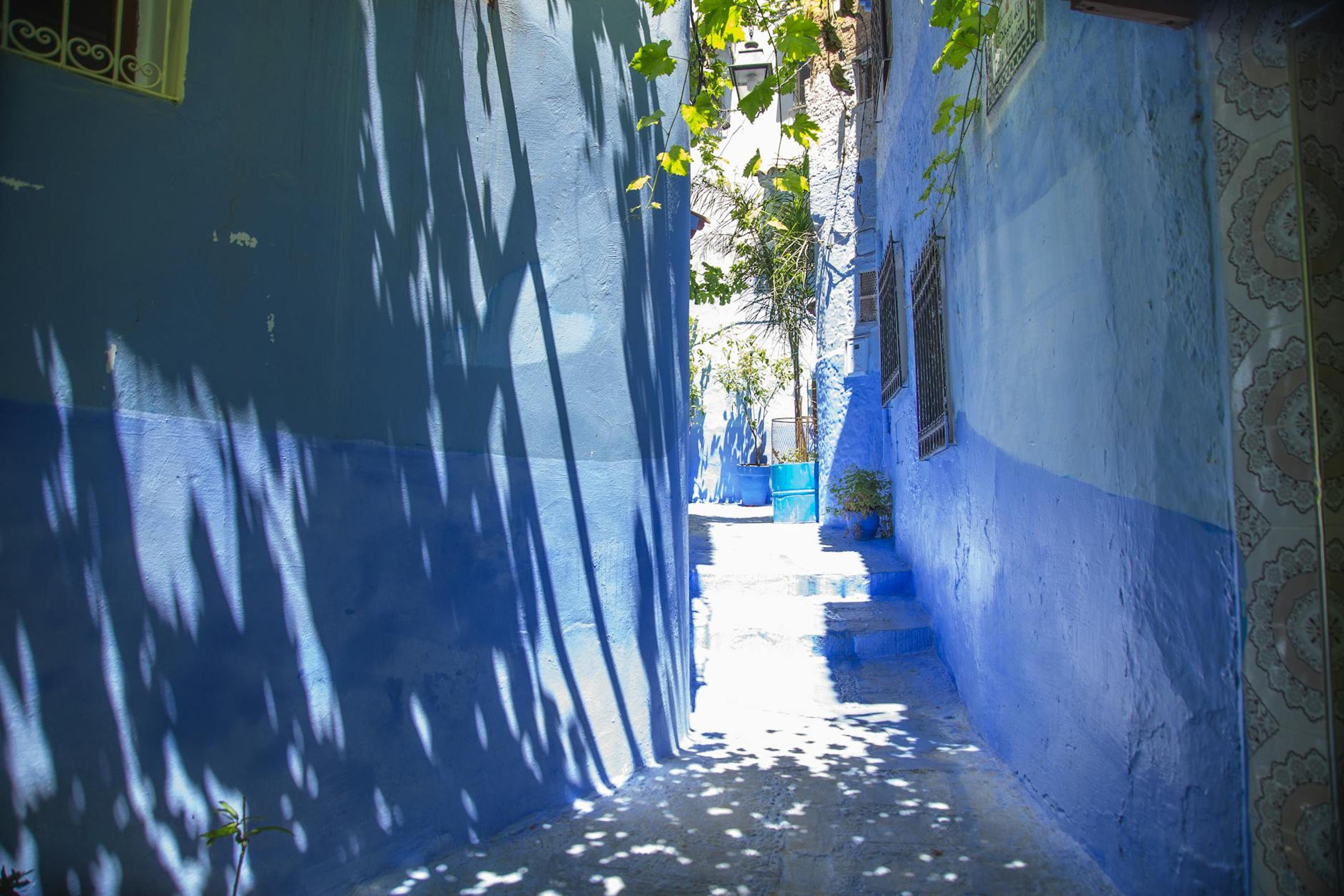
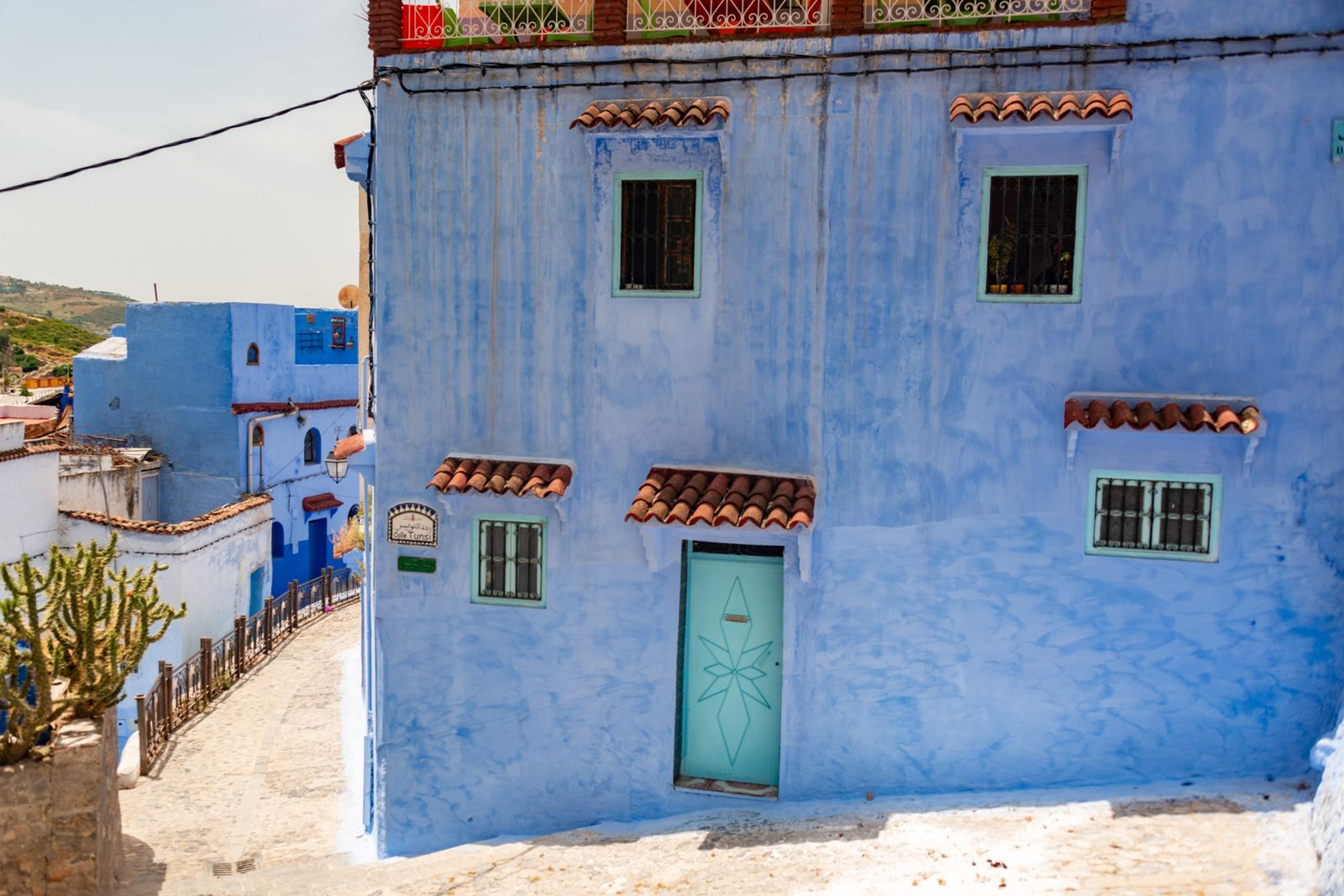
The eclipse happens mid-morning, with the Sun about 38° high, a little south of due east. In Chefchaouen, where we base our tours, the Moon first touches the Sun at 08:40. Totality runs from 09:45:25 to 09:49:38, and the partial phase ends at 11:01. In Tangier, totality starts at 09:44:38 and lasts 4 min 51 s.
For the last ten or fifteen minutes before totality the light turns strange and silvery, shadows sharpen, and the air cools. Just before the Sun disappears, beads of sunlight flicker through valleys on the Moon’s edge, and a final flash, the diamond ring, signals totality. The same happens in reverse at the end.
What the weather is likely to do
August is one of the driest months in northern Morocco, but the coasts have a habit of morning low cloud. Meteorologist Jay Anderson, who publishes eclipse climatology at Eclipsophile, describes the Strait of Gibraltar and the Alboran Sea as the cloudiest part of the western track. Marine stratus forms over the cool water and pushes onto the coasts, and the Rif mountains can trap it along the Mediterranean shore.
Inland is better. Anderson’s data gives Chefchaouen the lowest cloud amount of any site in Morocco, because the Rif shelters it from the sea air on both sides. Tangier usually escapes the worst of the Atlantic stratus, which tends to stay on the western side of the peninsula, and the east side of Tetouan avoids most of the Mediterranean cloud. The other risk is dust carried north from the Sahara, which can leave a milky haze over the whole sky.
No one can promise a clear sky, but you can improve your odds by staying inland, watching the forecasts in the final days, and keeping the option to move on the morning. Our guide to where to watch the eclipse in Morocco compares every option.
Is it worth travelling into the path from Fes or Marrakech?
Yes. A 98% partial eclipse in Fes is interesting, but it is a different event. The remaining sliver of Sun is still bright enough to light the sky as normal, the corona never appears, and you must keep glasses on throughout. Only inside the band does day turn to twilight. From Fes, Chefchaouen is about three and a half hours by road; from Rabat, Asilah and Larache are about two hours north on the motorway.
Planning the trip
When to arrive
Be inside the path the night before. Driving in at dawn adds risk for no reason, and you want time to choose a viewing spot after checking the morning forecast. On a private tour that means arriving in Morocco by 31 July or 1 August, depending on the route. The 9-day private tour from Tangier starts on 1 August and spends eclipse morning in Chefchaouen; the 8-day Chefchaouen, Essaouira and Marrakech tour starts in Casablanca on 31 July.
Getting there
Tangier has an international airport and fast ferries from Tarifa in Spain. Fes and Casablanca have more flight connections and are a few hours’ drive from the path. Early August is the busiest week of the year on the Strait ferries, when Moroccans living in Europe travel home for the summer, so if you are coming from Spain, cross a day or two early. Our Spain or Morocco guide covers the crossing.
Where to stay
Chefchaouen is a small town of mostly small riads, and August is already peak season in the north. Book as early as you can. Tangier and Tetouan have more rooms, and Tangier will draw the largest eclipse crowd in Morocco because it is the easiest place to reach.
The August heat
The north coast is warm rather than hot in August, but Fes and Marrakech pass 36–40°C in the afternoons, and the Sahara passes 40°C, so we don’t run desert nights in July and August. Eclipse trips work best kept to the north, the imperial cities, the Middle Atlas and the Atlantic coast. Our Morocco weather guide has the month-by-month numbers.
Eye safety in one paragraph
Never look at the partial phases without eclipse glasses that meet the ISO 12312-2 standard; ordinary sunglasses are not safe. Take them off only when the Sun is completely covered, and put them back on at the first flash of returning sunlight. Bring glasses from home, as they are hard to find in Morocco. Our eclipse safety and photography guide covers children, cameras and phones.
How we run eclipse tours
Every AZA tour is private: your own vehicle and English-speaking driver, on your dates. For the eclipse we base guests in Chefchaouen the night before, check the forecast and the dust outlook together the evening before, and move north to Tetouan or Tangier on the morning if that gives better odds. Nothing is planned before the eclipse ends. See the private eclipse tours, or the 10-day Classic Grand Morocco tour, which spends two nights in Chefchaouen.
Planning a Morocco tour? Browse our tours
See all tours →Quick answers
The partial phase begins at about 08:40 Morocco time (UTC+1). Totality starts between 09:44 and 09:51 depending on where you are: 09:44 in Tangier, 09:45 in Tetouan and Chefchaouen, 09:47 in Al Hoceima and 09:48 in Nador. The eclipse ends between 11:00 and 11:07.
Up to 4 minutes 53 seconds near M’diq on the coast north of Tetouan. Tangier and Tetouan get 4 minutes 51 seconds, Al Hoceima 4 minutes 26 seconds, Nador 4 minutes 14 seconds and Chefchaouen 4 minutes 13 seconds. Towns near the edge of the path get much less: Oujda gets under a minute.
No. Marrakech sees a partial eclipse with about 89% of the Sun covered. Fes (98.4%), Rabat (98.6%) and Casablanca (97.1%) are also just outside the path. To see totality you need to be in the far north, between Larache and Saïdia.
Dry and sunny for most of the day, but the coasts often have morning low cloud from the sea, and Saharan dust can haze the sky. Eclipse climatology puts inland Chefchaouen at the lowest cloud amount in Morocco, with the east side of Tetouan and central Tangier the best of the coastal options.
Yes. Northern Morocco has some of the longest totality on the western part of the track, inland sites with good weather odds, and short drives between options. Totality in Tangier and Tetouan is longer than anywhere in Spain.