Ramadan is a good time to visit Morocco — major sites are quieter, hotel and riad prices often drop, and the atmosphere shifts into something most tourists never see. What changes: most restaurants outside tourist zones close during daylight hours, the pace of daily life slows, and evenings come alive after sunset in a way that doesn't happen the rest of the year. Ramadan dates shift roughly 11 days earlier on the Gregorian calendar each year, so check the specific dates for your travel year before booking.
When Is Ramadan in 2027 and 2028?
Ramadan 2027 is expected to run from around 8 February to 9 March 2027, and Ramadan 2028 from around 28 January to 25 February 2028. Exact start dates are confirmed only a day or two ahead by the official moon sighting, so treat the first and last day as ±1 day when booking. Eid al-Fitr follows immediately after the final day — a genuine public holiday worth planning buffer days around.
What Actually Changes During Ramadan
During daylight hours, many local restaurants and cafes close or reduce their hours, though hotel and riad restaurants and cafes in tourist areas stay open for guests as normal. Some shops close earlier in the afternoon and reopen after sunset for what feels like a second business day. Right before sunset, streets fill quickly as everyone heads home or to a cafe to break the fast — plan to be settled somewhere by then, not mid-transfer between cities.

A traditional Moroccan tagine
Evenings are where Ramadan actually shows itself. Medinas and squares — Jemaa el-Fna especially — come alive later and stay busy well past midnight, a different rhythm entirely from the rest of the year. Food stalls do their best business after 9pm rather than at dinner time.
Should You Eat and Drink in Public?
Technically, public eating during fasting hours isn't well received, though enforcement toward visitors is very relaxed in practice — hotel and riad restaurants and cafes in tourist zones serve guests normally throughout the day. The polite approach is discretion: eat indoors or in your riad courtyard rather than snacking on the street. It's a courtesy, not a hard rule, and nobody will stop you — but it's a small gesture that's noticed and appreciated.
Is Ramadan a Good Time to Visit?
Yes, with the right expectations. Major sites are noticeably quieter, and riad prices commonly drop 10–15%. It's not the month for a food-and-market-focused trip, since daytime dining options thin out, but it's genuinely good for travellers who want fewer crowds and better rates. Eid al-Fitr, the holiday marking Ramadan's end, brings a few days of a real public-holiday feel — some transport and site hours are affected, so we build in buffer days around it. See our best time to visit Morocco guide for the full festival calendar.

Shopping in a Moroccan medina souk
How AZA Runs Tours During Ramadan
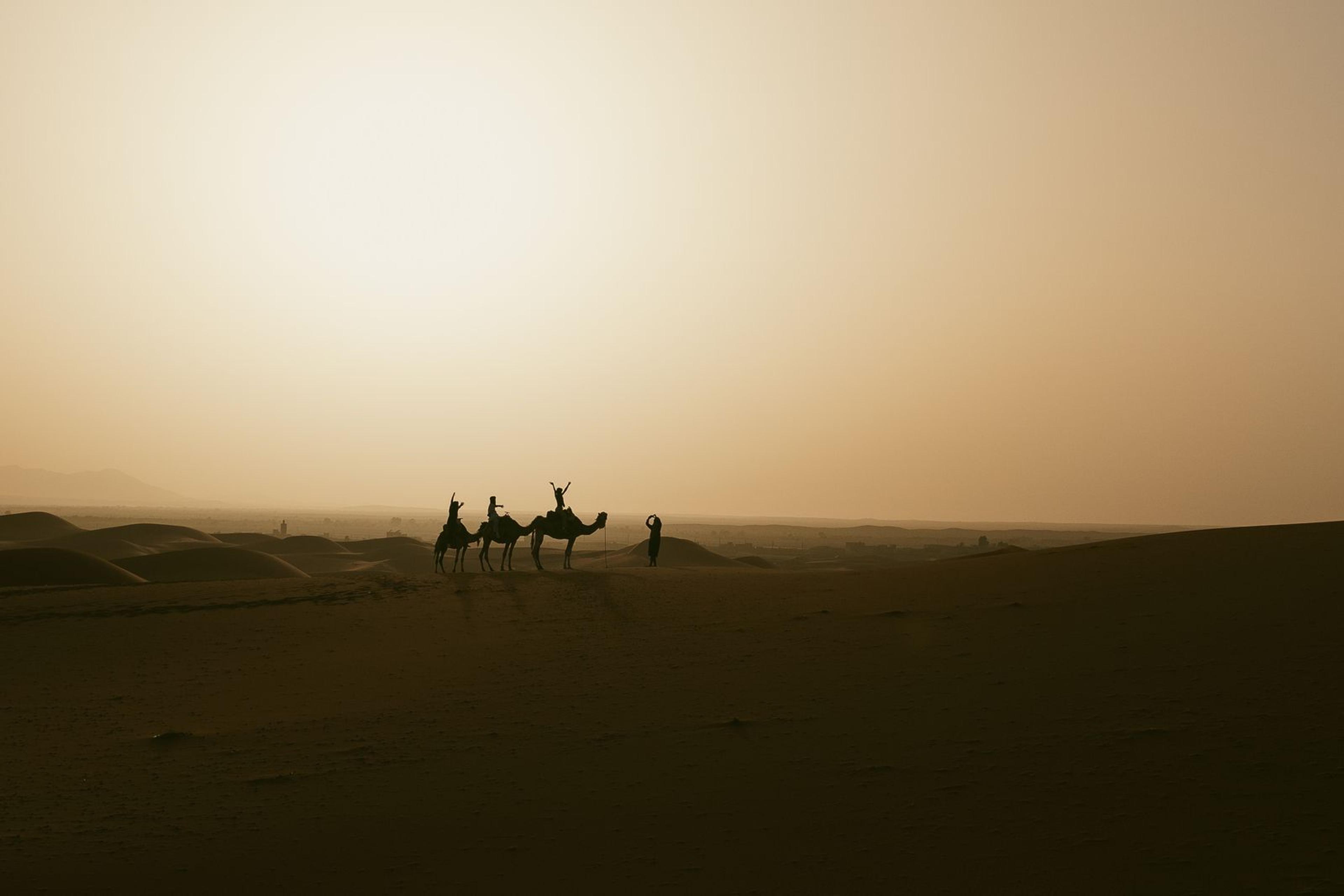
Our guides observe the fast if they choose to, and itineraries shift slightly — earlier starts before the day's heat builds, lunch stops adjusted since some local restaurants are closed, and dinner becoming the highlight event of the day rather than an afterthought. Camel treks and desert camps run exactly as normal. Breaking the fast at a Sahara bivouac, with the whole camp gathering as the sun goes down, is genuinely one of our favourite things to offer during this month — it's worth asking about specifically if you're booking a private tour during Ramadan.
Planning a trip that overlaps with Ramadan or Eid? Get in touch and we'll time the route around it properly rather than working around it as an afterthought.
Planning a Morocco tour? Browse our tours
See all tours →Quick answers
Yes — major sites are quieter and riad prices commonly drop 10–15%. It's less ideal for a food-and-market-focused trip since daytime dining options thin out, but good for travellers prioritising fewer crowds and better rates.
Many local restaurants outside tourist areas close or reduce hours during daylight. Hotel and riad restaurants, and cafes in tourist zones, stay open for guests as normal throughout the day.
Yes — tourists aren't legally restricted and enforcement is very relaxed toward visitors. The polite approach is discretion: eating indoors or in your riad rather than on the street, out of respect rather than obligation.
Ramadan shifts roughly 11 days earlier each year on the Gregorian calendar, since it follows the lunar Islamic calendar. Check the confirmed dates for your specific travel year before booking, as they're set closer to the time based on moon sighting.
Yes, and it's genuinely worth experiencing — the square comes alive later in the evening than usual, with food stalls doing their best business after 9pm rather than at typical dinner time.
Eid al-Fitr, marking the end of Ramadan, brings a few days of genuine public-holiday atmosphere — some transport schedules and site opening hours are affected. We build buffer days around it on any tour running through that window.