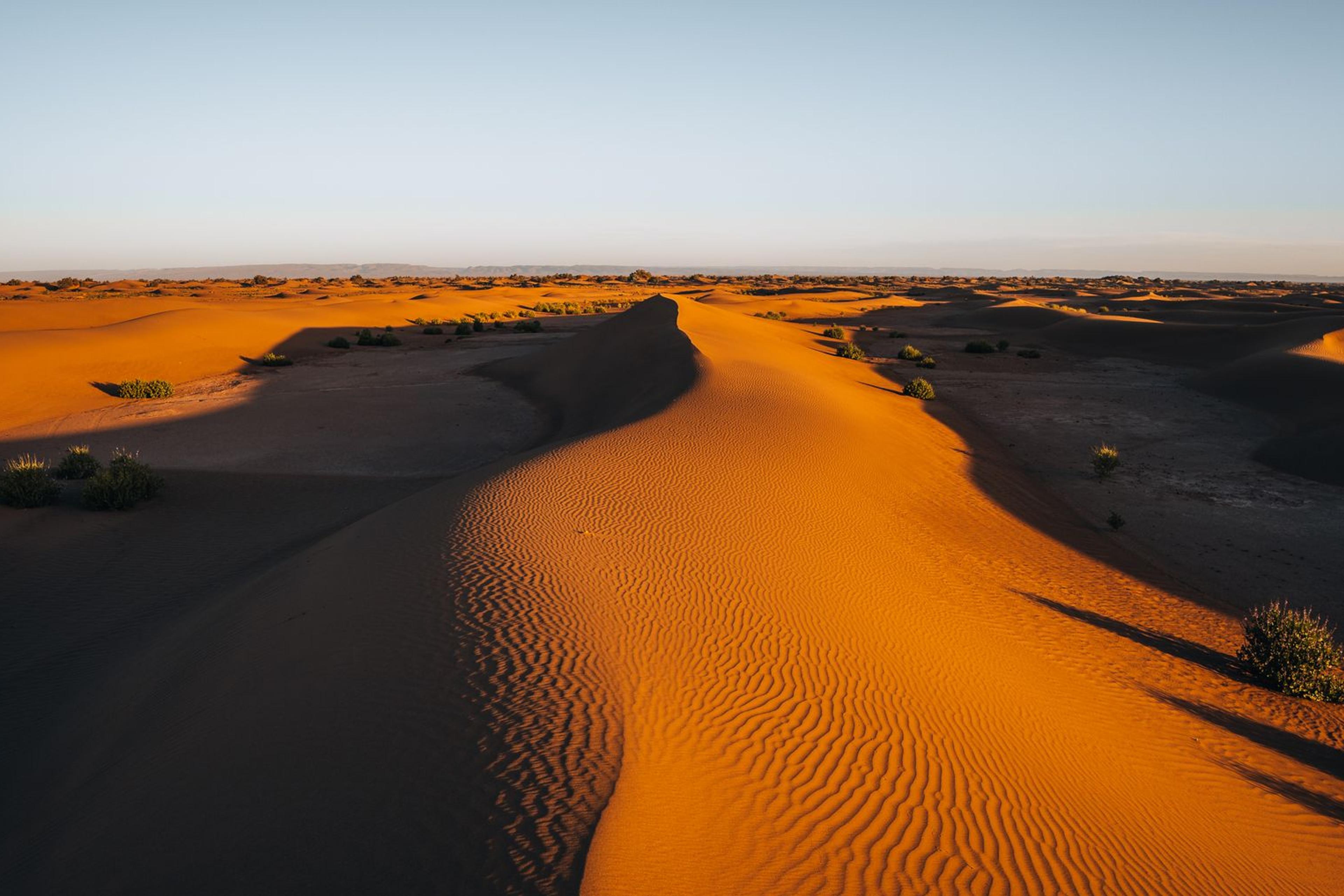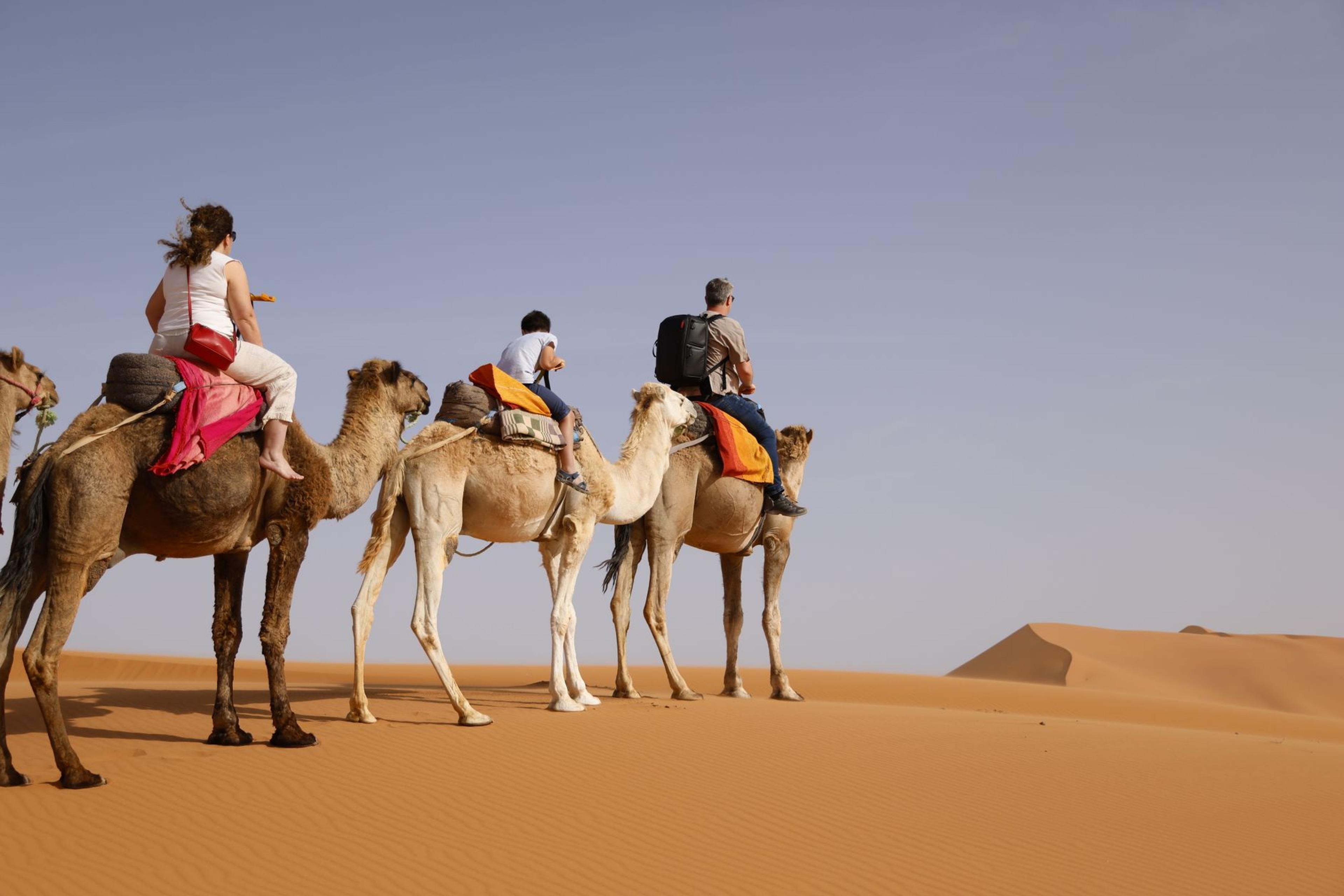
Morocco's weather varies dramatically by region and season. Marrakech and Fes run 20–28°C from March to May and September to November, dropping to 12–18°C in winter. The Sahara desert swings hardest: daytime highs above 30°C even in winter, but nights near freezing October through March. The Atlantic coast stays mild and windy year-round, rarely exceeding 25°C even in August. This guide breaks down actual temperature ranges, rainfall, and regional differences month by month. For trip-planning advice on when to actually go, see our best time to visit Morocco guide.
Morocco's Four Climate Regions
The Atlantic Coast (Essaouira, Casablanca, Tangier)
The coast runs 16–22°C for most of the year thanks to steady Atlantic trade winds, climbing only to 22–25°C in peak summer. Essaouira in particular rarely feels hot. Rainfall concentrates November through February (60–90mm/month), with July–August essentially dry. Sea temperature stays a brisk 17–20°C year-round — pleasant for a paddle, cold for a long swim.
The Imperial Cities (Marrakech, Fes, Meknes)
Marrakech and Fes see the widest seasonal swing of any city region: 12–18°C in January versus 36–40°C in July and August. Spring and autumn (20–28°C) are genuinely comfortable for full days of walking. Rainfall is light and concentrated November through March; summers are essentially rain-free.
The High Atlas Mountains
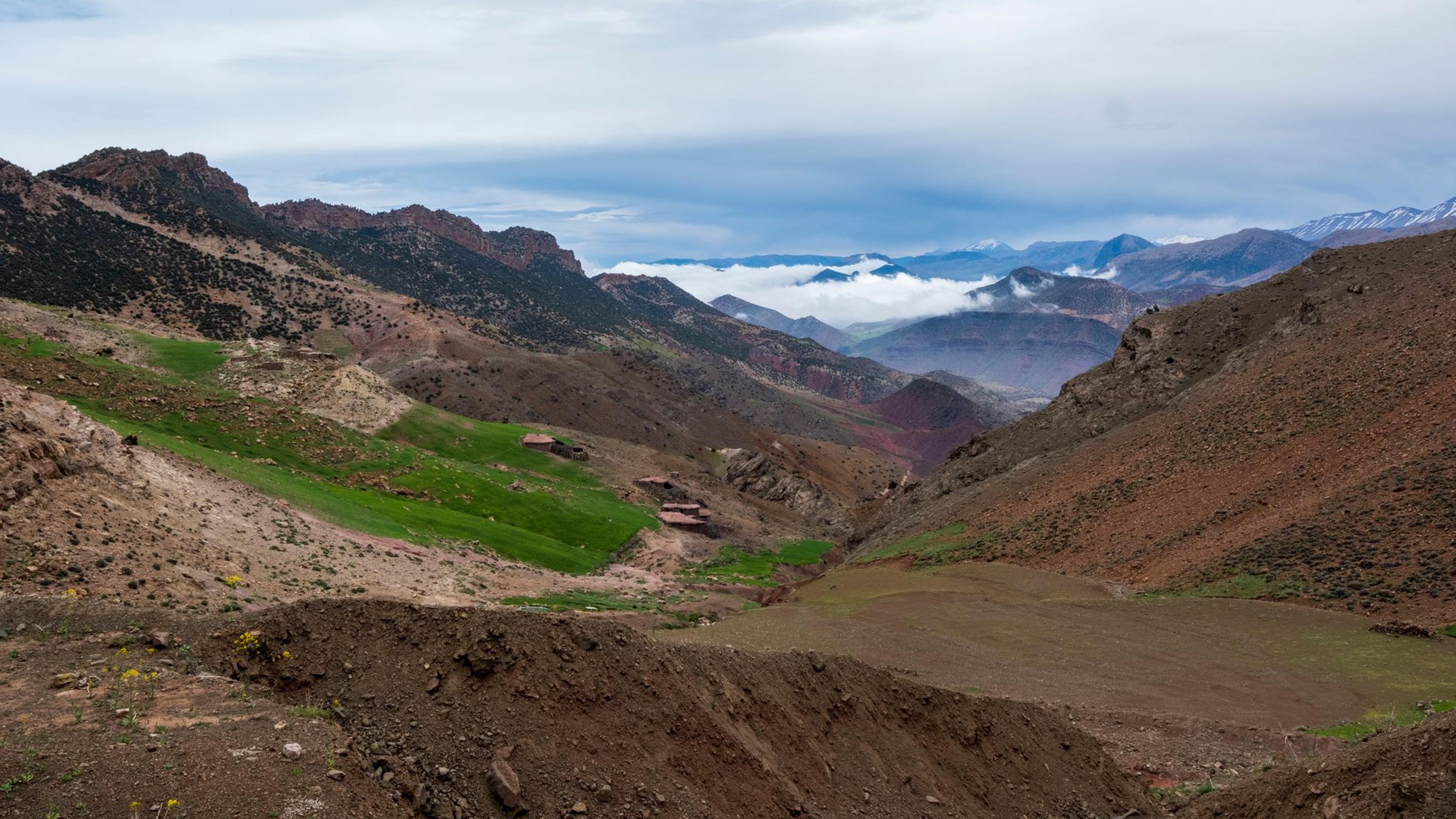
The Atlas Mountains run 10–15°C cooler than Marrakech at any given time, with snow above 2,000m from December through March closing some high passes. Summer days reach a pleasant 22–28°C in villages like Imlil, but nights drop to 8–12°C even in July — pack a layer regardless of season.
The Sahara Desert
Merzouga and Erg Chebbi see the most extreme daily range in the country: winter days often hit 20–24°C under full sun, then drop to 2–6°C after dark. Summer days regularly exceed 40°C, sometimes 45°C+, with nights staying a warm 22–26°C. Rainfall is negligible almost every month.
For the desert specifically, our best time to visit the Sahara guide rates every month in the dunes — including the two we refuse to run tours in.
Rainfall & Humidity
Almost all of Morocco's rain falls November through March, with the coast getting noticeably more than the interior. Marrakech averages under 250mm annually — drier than London gets in three months. Humidity is low everywhere except the coast, where sea moisture keeps evenings noticeably damper than inland cities.
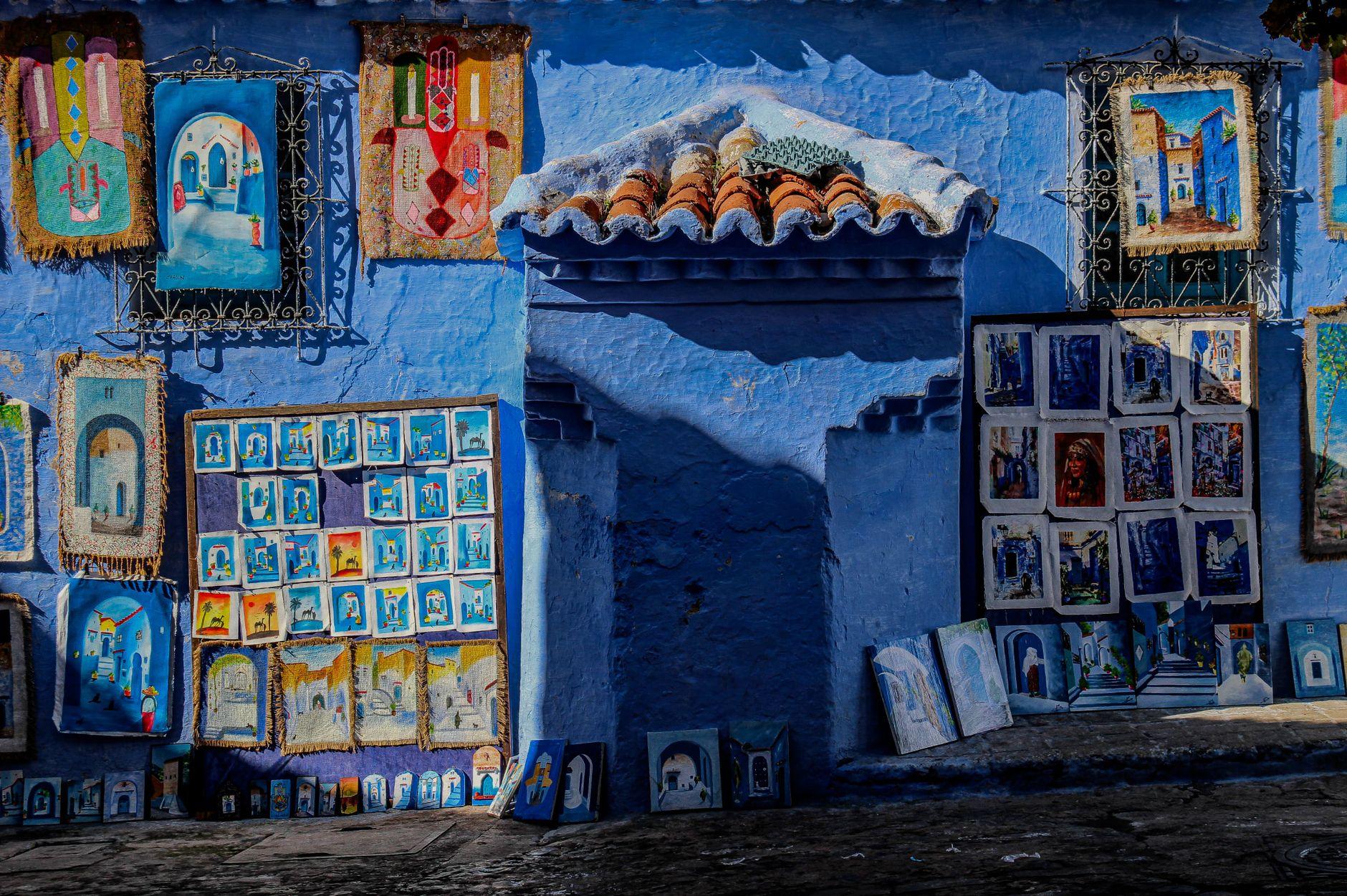
Chefchaouen, Morocco
Does It Snow in Morocco?
Yes — reliably, every winter. The High Atlas holds snow above 2,000m from December through March, the cedar-forest town of Ifrane in the Middle Atlas looks briefly alpine (it holds Morocco's record low of −24°C), and Oukaïmeden near Marrakech runs Africa's most accessible ski lifts an hour from the medina. For travellers this mostly means one thing: some high passes close in mid-winter, which is why certain overland routes run differently from December to February.
UV Index & Sun Exposure
Sun intensity is easy to underestimate in the "mild" months. UV runs very high March through October across the whole country, and altitude makes it worse in the Atlas — sunburn happens fast above 2,000m even when the air feels cool. High-SPF sunscreen and a hat matter in every season, not just summer.

Essaouira's harbor and ramparts
What This Means for Your Route
Weather should pick your route, not just your dates. Spring and early autumn open up Atlas Mountains trekking at its best. October through April is the window for the 3-day Sahara desert tour and every other desert route. And if you must travel in July or August, point the trip at the coast — the Marrakech and Essaouira coastal tour is built around the one region where Moroccan summer is genuinely pleasant.

Merzouga, Morocco
Building a route around specific weather needs? Get in touch and we'll time it to the regions and conditions that matter most to you.
Month-by-month at a glance
Planning a Morocco tour? Browse our tours
See all tours →Quick answers
January is coldest nationwide, though "cold" is regional — Marrakech still hits 18°C by day, while Sahara desert nights and High Atlas passes can drop below freezing.
No — Marrakech gets under 250mm of rain annually, most of it November through March. The Atlantic coast is noticeably wetter than the interior, and the Sahara sees almost none year-round.
Summer days regularly exceed 40°C and can pass 45°C in July and August. Winter days are far milder at 20–28°C, though nights drop to 2–6°C — the desert's real extreme is the day-to-night swing, not just the heat.
December and January are wettest, particularly on the Atlantic coast (Essaouira, Casablanca, Tangier). Interior cities and the Sahara stay comparatively dry even in winter.
Only near the coast, where sea moisture keeps evenings noticeably damp. Marrakech, Fes, and the Sahara are dry climates year-round, similar to other North African desert-adjacent regions.
Winter nights (November–February) commonly drop to 2–6°C. Even in summer, desert nights cool to a relatively mild 22–26°C compared with daytime highs above 40°C — pack a warm layer regardless of season.
Yes — the High Atlas holds snow above 2,000m from December through March, Ifrane in the Middle Atlas is reliably white in mid-winter, and Oukaïmeden near Marrakech has ski lifts. Some high mountain passes close in winter, which changes certain overland routes.