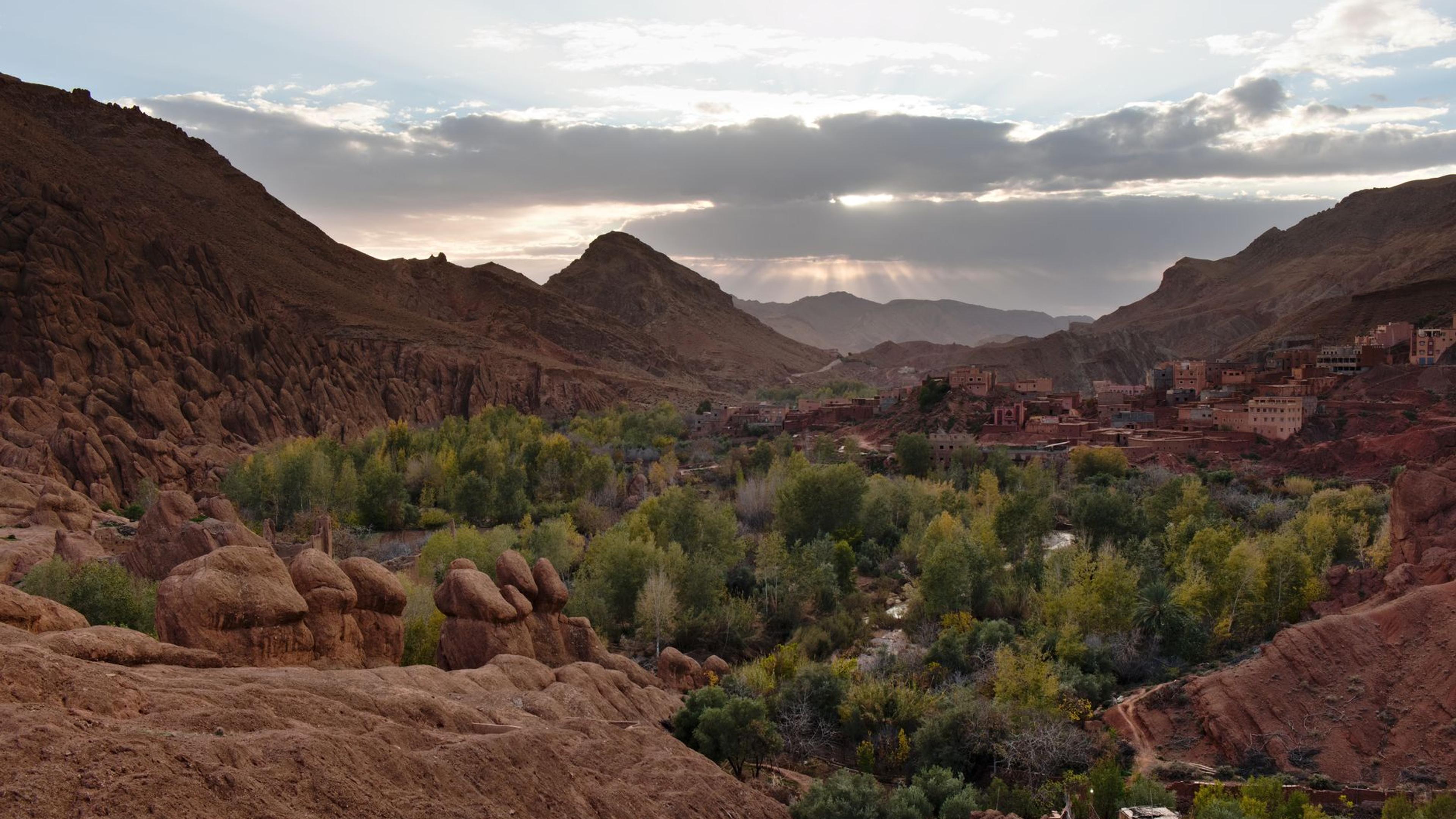
The best time to visit Morocco is March to May or September to November. Spring brings mild temperatures across most of the country (18–26°C in Marrakech), the Dadès Valley roses in full bloom, and crowds that are manageable rather than overwhelming. Autumn offers nearly identical weather with the added benefit of quieter medinas and shorter queues at the big sites. July and August are workable — Marrakech averages 38°C and the Sahara can exceed 45°C at midday — but they suit travellers who don't mind serious heat more than first-timers. Below is a full month-by-month breakdown, plus the regional differences that actually change your packing list and your route.
How Morocco's Climate Changes by Region
Morocco isn't one climate — it's four. A single date range that's perfect for the coast can be the wrong call for the desert, and vice versa. The country runs from Atlantic coastline to snow-capped mountains to sand sea within a few hundred kilometres, so "best time" depends heavily on where your route actually goes.
The Atlantic Coast (Essaouira, Casablanca, Tangier)
The coast runs cooler and windier than the interior year-round, thanks to steady Atlantic trade winds. Essaouira rarely breaks 25°C even in August, which makes it the one region where summer is genuinely comfortable. Winters are mild but grey, with more rain than anywhere else in Morocco.
The Imperial Cities (Marrakech, Fes, Meknes, Rabat)
Marrakech and Fes sit inland and heat up fast — both can hit 40°C+ in July and August, with the medinas offering little shade at midday. Spring and autumn are when these cities are actually pleasant to walk for hours, which is what a proper medina visit requires.
The High Atlas Mountains
The Atlas Mountains run on their own calendar. Snow closes the high mountain passes from November through March, which rules out certain overland routes but opens up short ski trips near Oukaïmeden. April to June brings wildflowers and the clearest long-range views of the year. Summer is warm during the day but drops sharply after dark — pack a mid-layer even in July.
The Sahara Desert
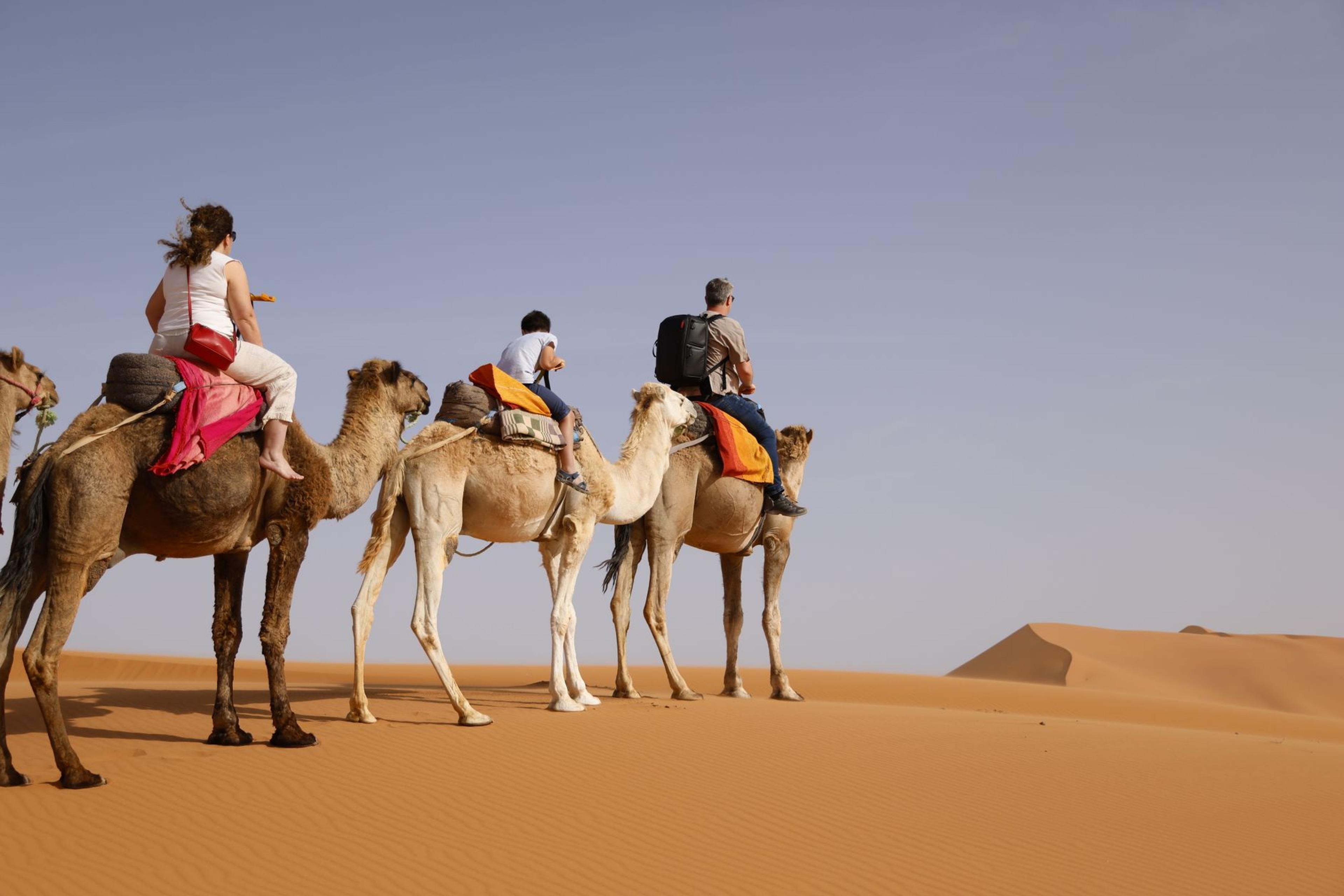
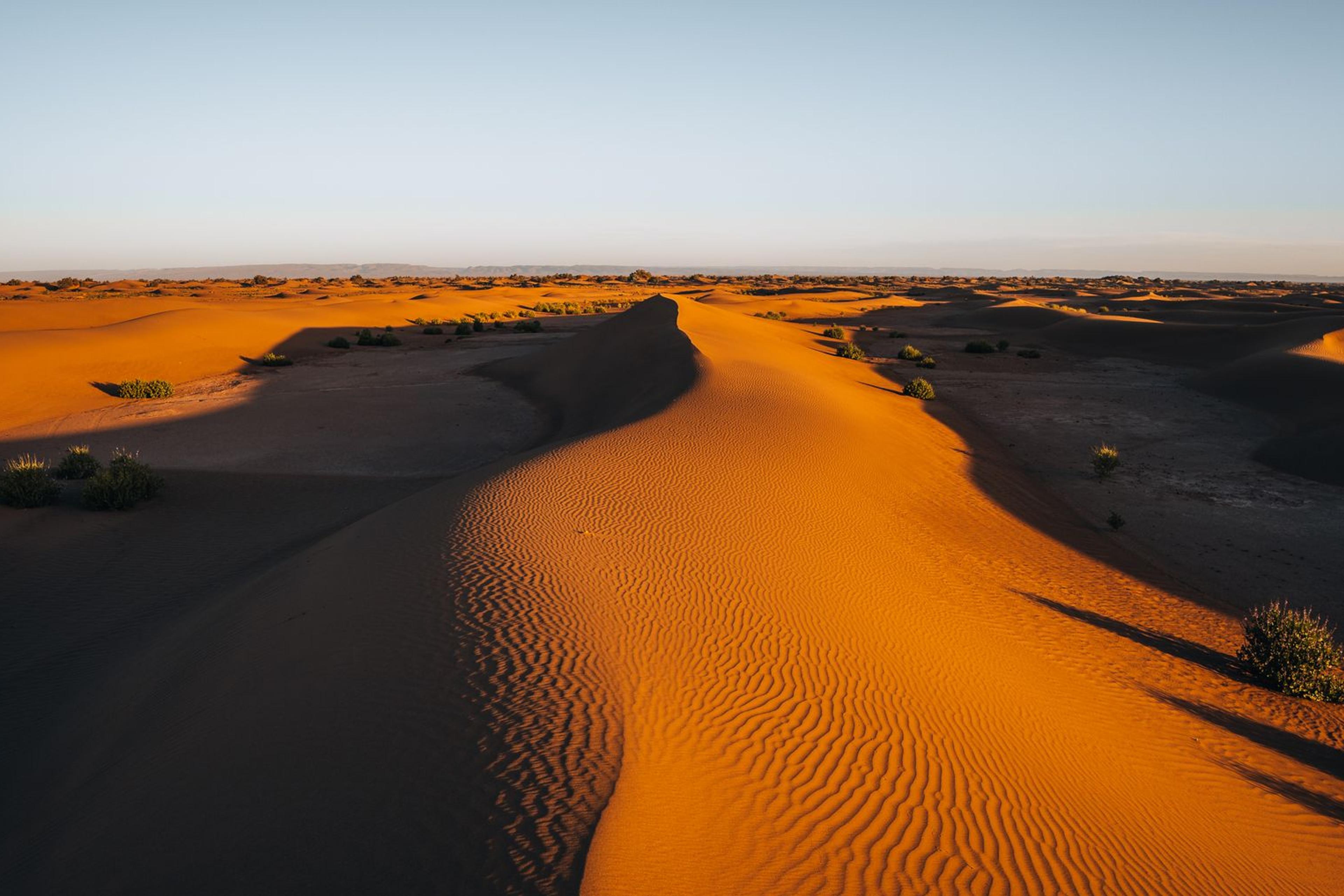
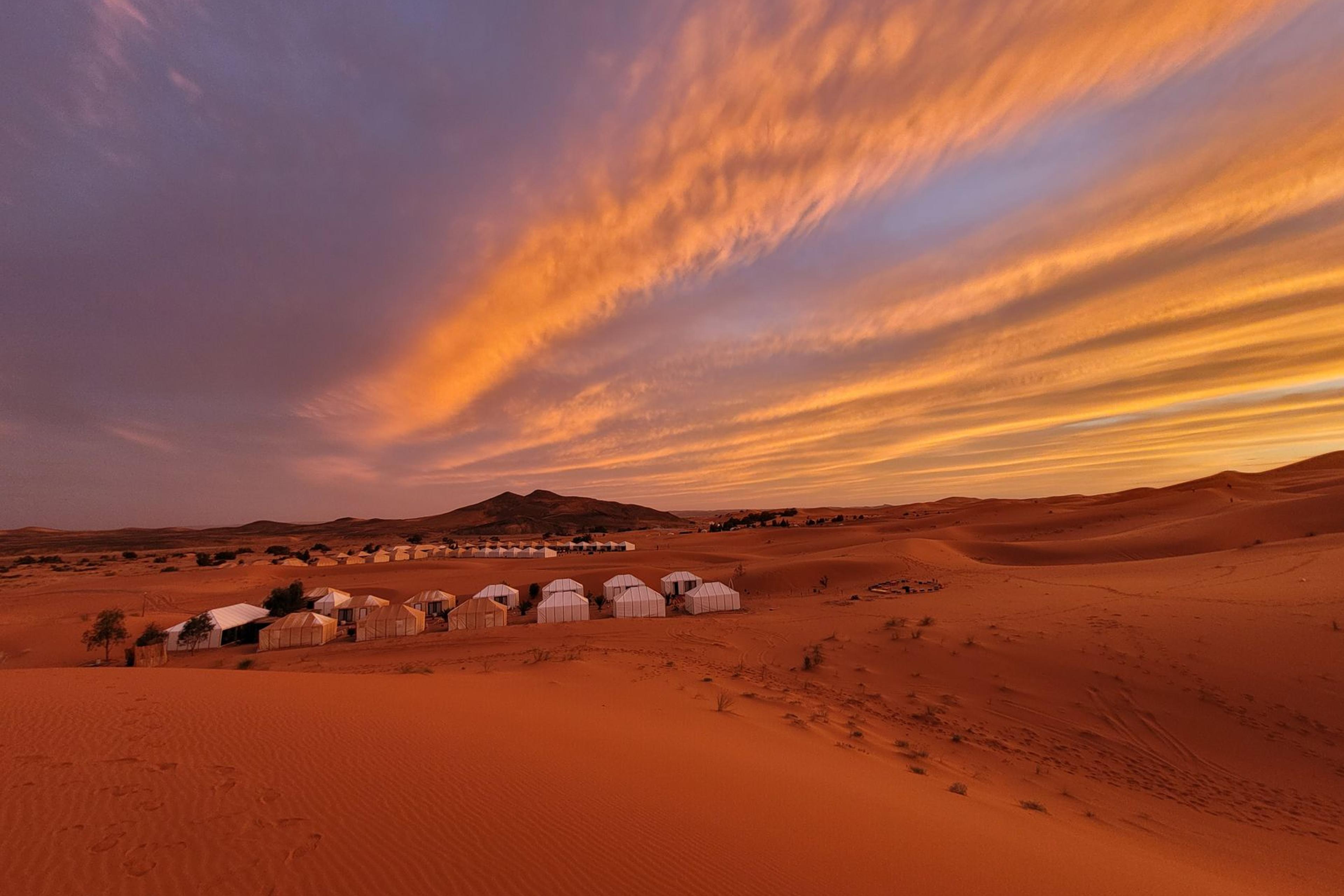
Merzouga and the Sahara swing harder than anywhere else in the country: from near-freezing desert nights in January to daytime highs past 45°C in July and August. We avoid running desert camps in peak summer for exactly that reason. October through April is the sweet spot — warm days, genuinely cold nights (pack a down layer), and the dunes at their most photogenic in the low winter sun. It's the main reason our 3-day Sahara desert tour from Marrakech runs heaviest in these months.
The desert deserves its own calendar — our dedicated best time to visit the Sahara guide covers every month in the dunes, winter night temperatures, and sandstorm season in detail, written by the driver who runs our 3-day Merzouga route every week.
Morocco's Festival and Holiday Calendar
Ramadan shifts roughly 11 days earlier each year on the Gregorian calendar, so check the dates for your travel year specifically. During Ramadan, many restaurants outside tourist zones close during daylight hours and the pace of daily life slows — it's a genuinely interesting time to visit, but not the moment for a food-focused trip. Eid al-Fitr (end of Ramadan) and Eid al-Adha bring a few days where transport and some sites run reduced hours, so we build in buffer days around both.
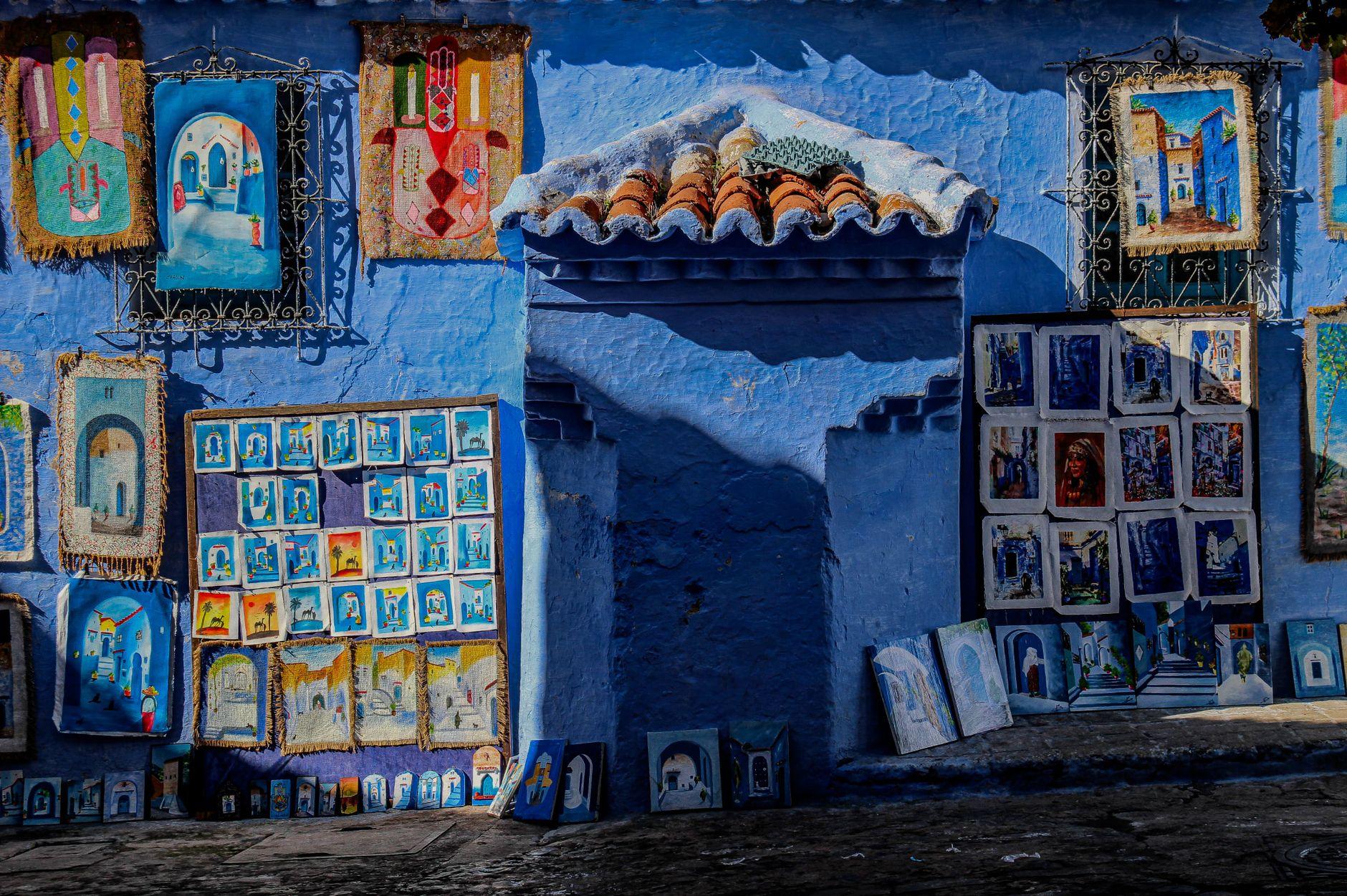
Chefchaouen, Morocco
For the full picture of travelling during the holy month — what closes, what doesn't, and why the evenings become the best part — see our dedicated guide to visiting Morocco during Ramadan.
Two festivals worth timing a trip around: the Rose Festival in Kelaat M'Gouna (early May, Dadès Valley in full bloom) and the Gnaoua World Music Festival in Essaouira (late June), Morocco's biggest music event outside Marrakech.
The Insider Pick: Why October Is Underrated
October gets overlooked because school holidays are over, but that's exactly what makes it good. Temperatures are still in the mid-to-high 20s across the imperial cities, the summer crowds have gone home, and riad rates typically drop 15–20% compared with the April peak. We cover the full breakdown of what that means for your budget in our Morocco travel cost guide.

Essaouira's harbor and ramparts
Best Time by Traveller Type
- Honeymooners and photographers → late February to early April: rose-gold light, green valleys, warm days, quiet riads.

Merzouga, Morocco
- Families → Easter break or October half-term: comfortable temperatures for kids, everything open — our 8-day family adventure runs its most popular departures in both.
- Trekkers → April to June or September to October for the Atlas Mountains — snow-free trails, clear views, comfortable climbing temperatures.
- Budget travellers → November and late January: lowest riad rates of the year, mild city weather, and the desert still fully open.
- Stargazers → November to February in the Sahara: the coldest nights are the clearest skies of the year.
Booking Around Peak Season
March through May is our busiest stretch — most of our 7-day Morocco itinerary departures sell out 8–10 weeks in advance for spring dates. If your travel dates are flexible, autumn gives you the same weather with far more availability, especially for small-group departures capped at 12 people.
Not sure which window suits your route? Get in touch and we'll build an itinerary around the season that actually matches what you want to see.
Month-by-month at a glance
Planning a Morocco tour? Browse our tours
See all tours →Quick answers
April and October are the two standout months. April brings the Dadès Valley roses into bloom with warm, comfortable temperatures nationwide. October has nearly identical weather with fewer crowds and prices 15–20% lower than spring.
Marrakech and Fes regularly exceed 38°C in July and August, and the Sahara can pass 45°C at midday — tough for first-time visitors. The Atlantic coast (Essaouira, Casablanca) and the High Atlas Mountains stay noticeably cooler and are good summer alternatives.
Yes. Winter (December–February) is mild in the cities — Marrakech averages 18°C by day — though desert nights drop close to freezing, so pack a down layer for any Sahara camp. Snow closes some High Atlas mountain passes.
October to April. Daytime temperatures are warm rather than extreme and nights are properly cold and clear for stargazing. July and August regularly exceed 45°C at midday, which is why most operators, including AZA, scale back summer desert departures.
Yes, though it's still a good time to visit. Many restaurants outside tourist areas close during daylight hours and the pace of daily life slows. Riads, transport, and guided tours run normally. Check the specific Ramadan dates for your travel year, as they shift roughly 11 days earlier annually.
The Rose Festival takes place in Kelaat M'Gouna in the Dadès Valley in early May each year, timed to the peak of the annual rose harvest. The valley itself is in bloom slightly earlier, from mid-to-late April.
October is one of the best-value months to visit. Weather is nearly identical to April — warm days, cool evenings — but with smaller crowds at major sites and accommodation prices typically 15–20% lower than the spring peak.