For a Morocco desert tour, wear loose, breathable layers that cover your arms and legs, closed shoes for the dunes, sunglasses, and a cotton scarf — and pack one genuinely warm layer for the night, when the temperature can fall 15–20 degrees from the afternoon high. That's the whole formula. Below is the detail: why long sleeves beat tank tops in 30°C heat, the one item you should buy in the souk instead of at home, and the mistakes we quietly fix for guests every single week.
The Desert Is Two Climates in One Day
Every packing mistake I've seen in ten years of camp nights comes from imagining the desert as one temperature. It isn't. An October afternoon on the dunes might be 26°C; that same night at camp can be 10°C, and in December it can approach zero. So you're not dressing for "hot" or "cold" — you're dressing for both, a few hours apart. The month-by-month numbers are in our best time to visit the Sahara guide; the short version is that layers win in every season.
Daytime: Loose, Light, Long
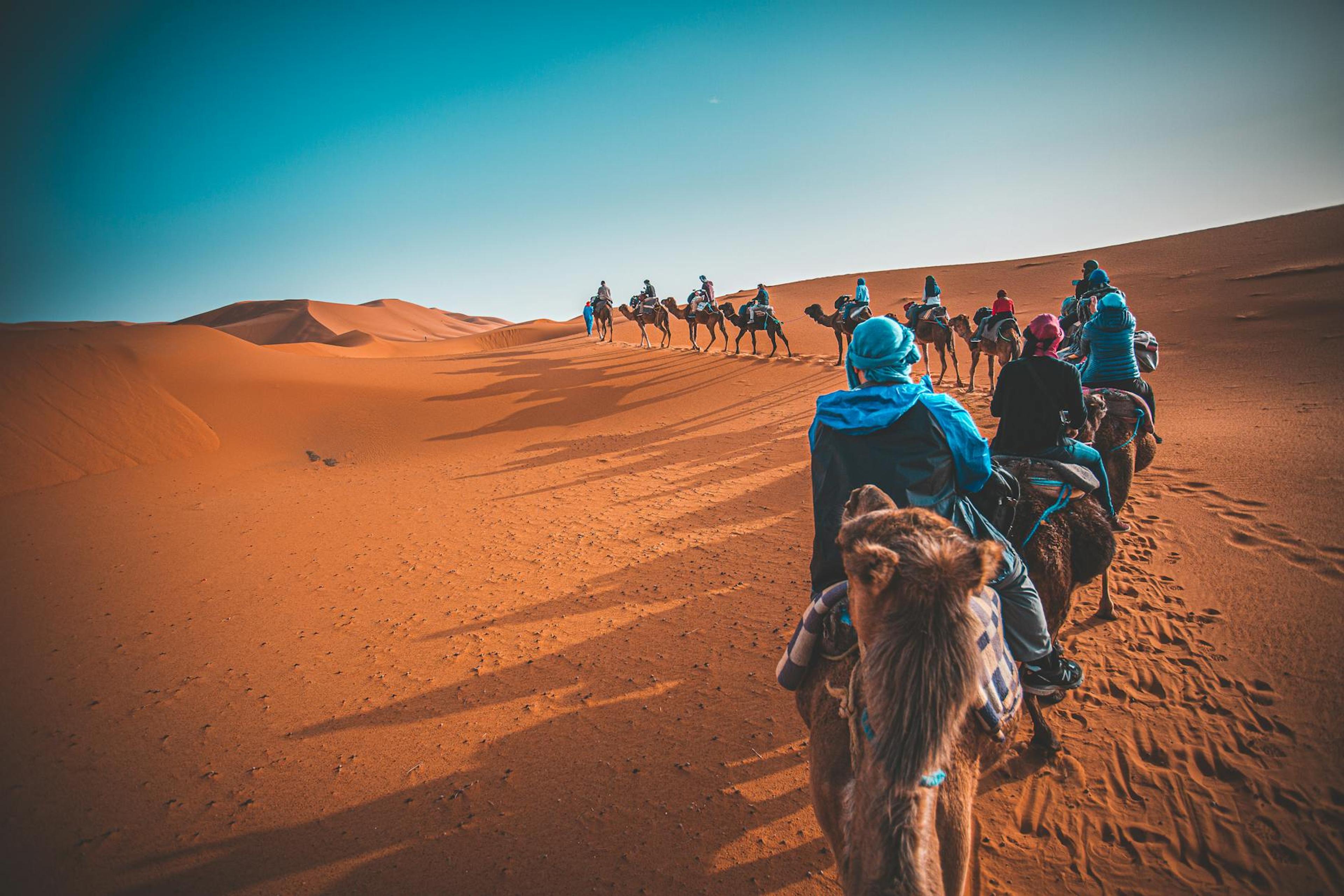
The instinct is shorts and a tank top. The people who live in the Sahara wear the opposite — loose, full-length layers — and they're right. Covered skin stays cooler in direct sun, burns less, and doesn't get sandblasted when the wind picks up. Light cotton or linen trousers, a loose long-sleeved shirt, and a light colour palette will keep you more comfortable at 2pm than any amount of exposed skin. Shorts are fine in the vehicle and around the camp; just don't make them your only plan.
The Scarf: Buy It in the Souk
The single most useful item on a desert trip is the cheche — the long cotton scarf you'll see on every driver and camel handler in the south, mine included. Wrapped right, it's sun protection, sand protection and a warm layer in one, and your guide will happily show you the wrap (it takes thirty seconds to learn and guests never stop wearing it afterwards). Don't order a "desert scarf" online — buy one in the Marrakech souk for a few dollars on the way; it's a better scarf and a better souvenir.
Night at Camp: This Is Where People Get Caught
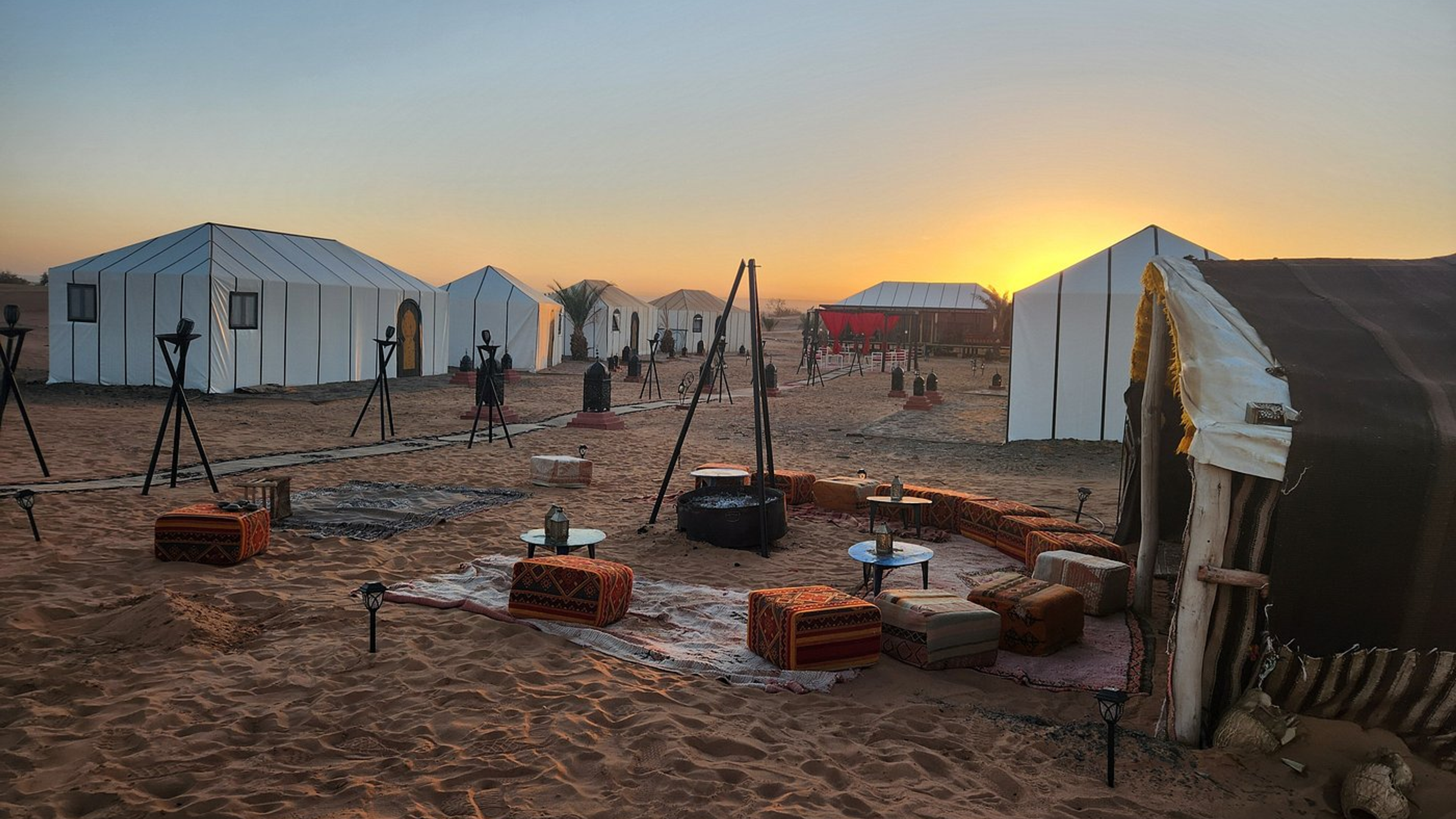
Whatever month you come, pack one layer you'd trust on a cool mountain evening — a fleece, a light down jacket, or a proper sweater. From October to April you will wear it every night. In the deep winter weeks of December and January, add a warm hat and thick socks; the camps provide heavy blankets and heated dinner tents, but the walk from the fire to your tent at midnight is genuinely cold. Guests who follow this advice remember the winter desert as magical. Guests who don't remember it as cold.
Feet: Simpler Than You Think
Normal trainers are the right desert shoe — closed against the sand, comfortable in the vehicle, fine on a dune. Hiking boots are unnecessary unless your trip also includes real trekking. Bring sandals or flip-flops for around the camp, and know that climbing the dunes barefoot at sunset is not just acceptable but the best way to do it: the sand has cooled by then and it's the softest walking surface on Earth. What doesn't work: anything with a heel, anything you'd be sad to see full of sand, and brand-new shoes of any kind.
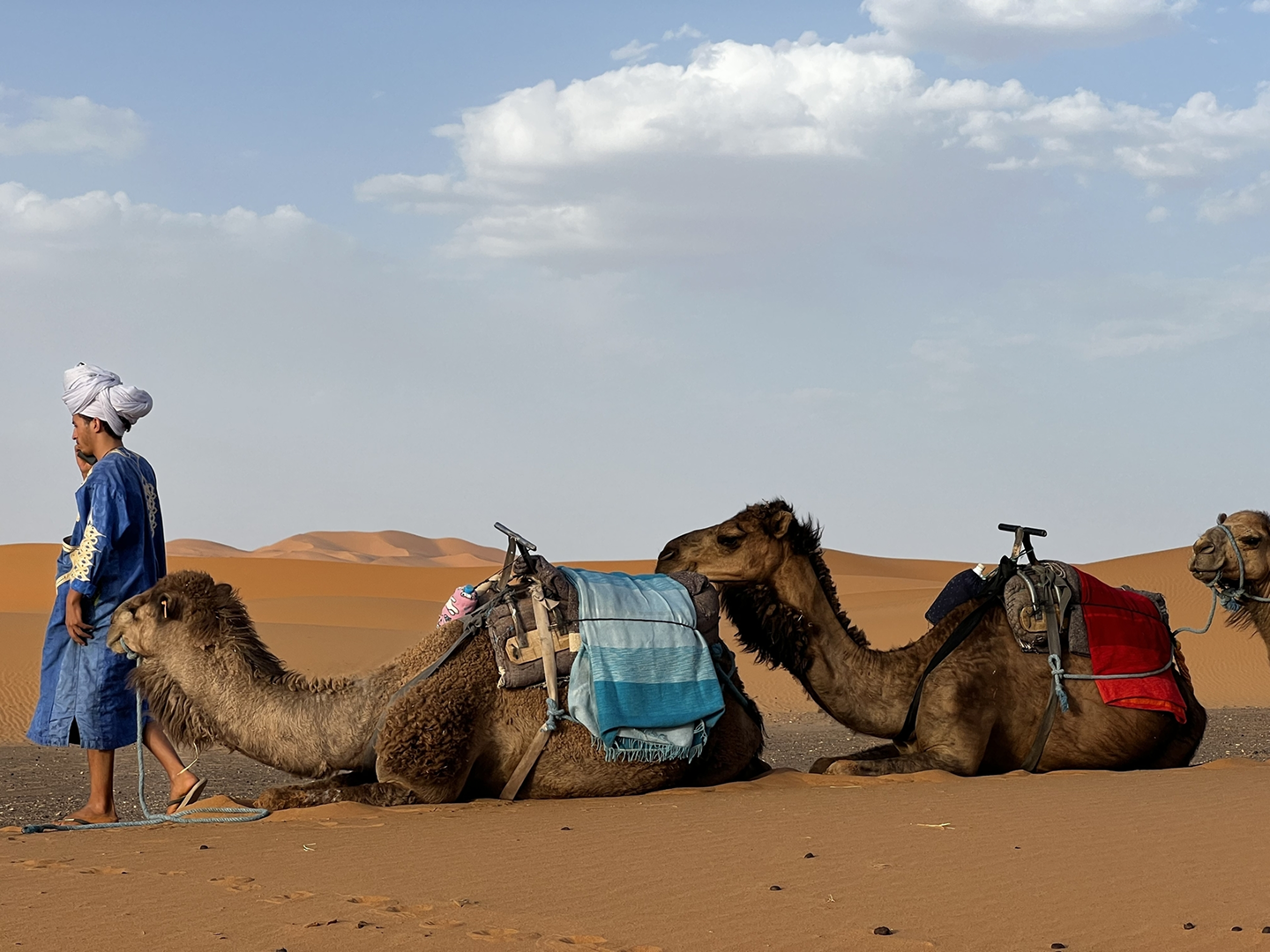
A camel guide in the Sahara
The Overnight Bag Trick
Your main suitcase stays safely in the vehicle at the edge of the erg — the camel (or 4x4 shuttle) takes only a small overnight bag to camp. Pack that bag in the morning: night layer, next day's shirt, toothbrush, phone, power bank (camps have limited charging), and any medication. This one habit removes ninety percent of desert-night friction, which is why we remind every group about it at breakfast on camp day.
For Women Travellers
In the desert itself and at camp, dress for comfort — the modesty considerations that apply in city medinas relax almost completely out here, and loose layers are what everyone of every gender ends up in anyway. Where dress does matter more is the towns and villages you pass through on the drive; shoulders-and-knees-covered is the respectful baseline there. Our solo female travel guide covers the wider picture of dressing and travelling comfortably across Morocco.
Ready to Put It to Use?
This covers the desert leg; for the full-trip checklist — cities, mountains, riads, seasons — see the complete Morocco packing list. And if the trip isn't booked yet: the classic 3-day Marrakech to Merzouga tour is where most people's first cheche gets worn, and the 4-day Zagora route suits shorter schedules. Everything about the area itself is in our Merzouga guide.
Planning a Morocco tour? Browse our tours
See all tours →Quick answers
Long, loose trousers (the saddle rubs against bare legs), closed shoes, a long-sleeved layer and a scarf. Avoid short shorts and slippery fabrics — an hour in the saddle makes you feel every choice.
No. Normal trainers handle everything a standard desert tour involves. Boots only earn their weight if your itinerary includes genuine trekking in the Atlas as well.
From October to April, expect 5–12°C at night, and near 0°C in December–January. Camps provide heavy blankets, but you want your own warm layer, hat and thick socks in winter.
No — there's no expectation to cover hair anywhere in Morocco as a visitor. Many travellers of all genders end up wearing a cheche scarf on the dunes anyway, purely for sun and sand.
In the vehicle and around camp, yes. On the dunes and camel ride, long loose layers are cooler, protect you from sun and sand, and are what your guides will be wearing for good reason.
A small overnight bag only — your main luggage stays in the vehicle at the edge of the dunes. Pack your night layer, a change of shirt, toiletries, medication and a power bank; camp charging is limited.