
Morocco is easy to get around once you know which transport covers which part of the country. Trains run fast and frequently between Tangier, Rabat, Casablanca, Marrakech, Meknes and Fes. CTM and Supratours buses reach the places trains don’t, such as Essaouira, Chefchaouen, Ouarzazate and Merzouga. Petit taxis handle short trips inside cities, grand taxis link nearby towns, and domestic flights save a long day on the far south. For the Atlas, the Sahara and anywhere with a lot of luggage, most travellers use a private driver or a tour.
01Which transport for which route?
| Route | Best options | About |
|---|---|---|
| Tangier → Rabat → Casablanca | Al Boraq high-speed train | 2 h 10 Tangier–Casablanca |
| Casablanca → Marrakech | Train or driver | About 2 h 40 by train, about 3 h by road |
| Casablanca → Fes | Train or driver | About 3 h 45 by road |
| Marrakech → Fes | Train (about 7 h) or via the desert with a driver | See our Marrakech to Fes guide |
| Marrakech → Essaouira | Bus or driver | About 3 h by road |
| Fes → Chefchaouen | Bus or driver | About 4 h by road |
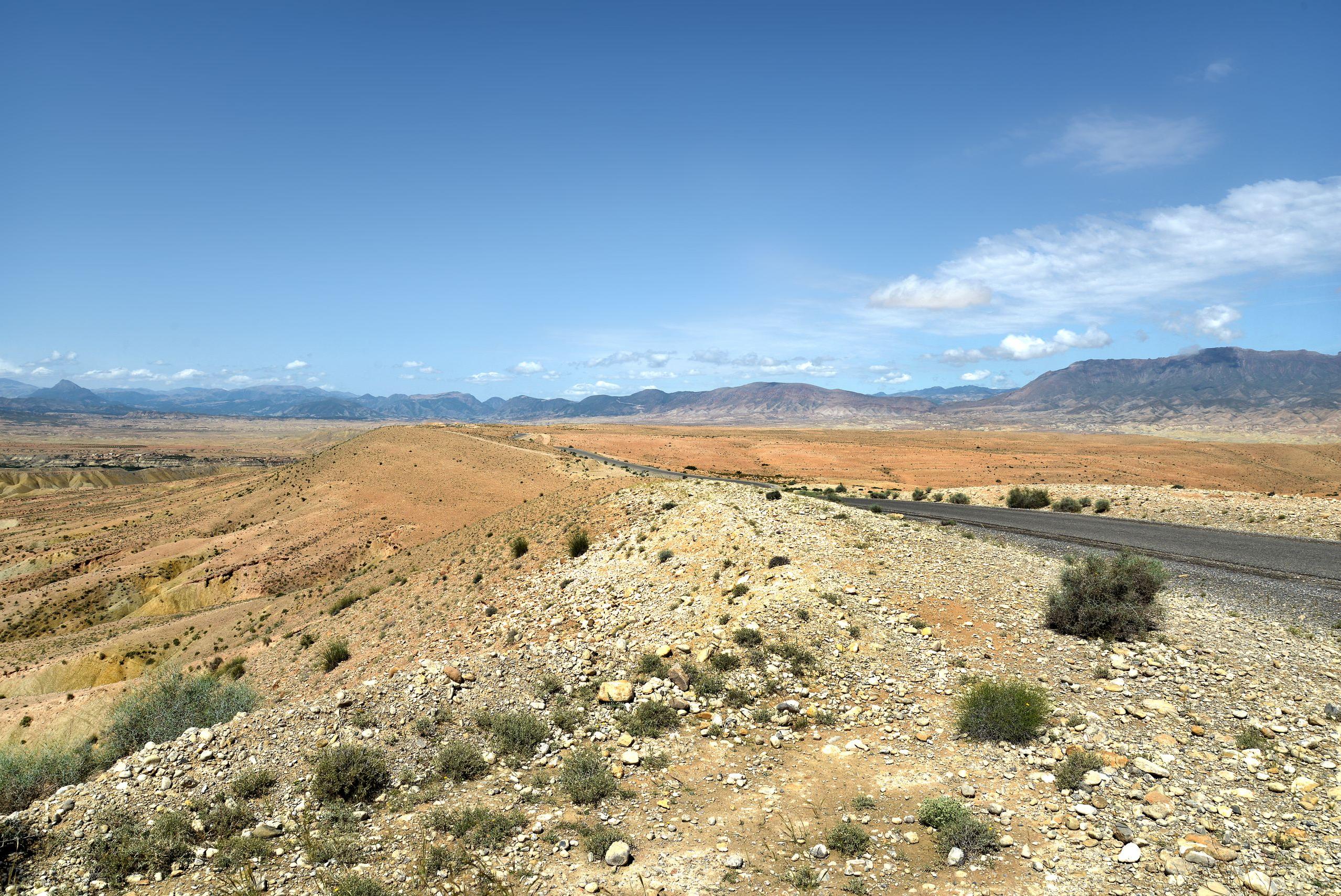
| Marrakech → Merzouga (Sahara) | Driver or tour; long-distance bus | About 10 h; usually split over two days |
| Marrakech → Imlil (Atlas) | Driver or grand taxi | About 1 h 30 |
Road times are typical door-to-door times with short stops. Our route planner map shows distances for any combination.
02Trains
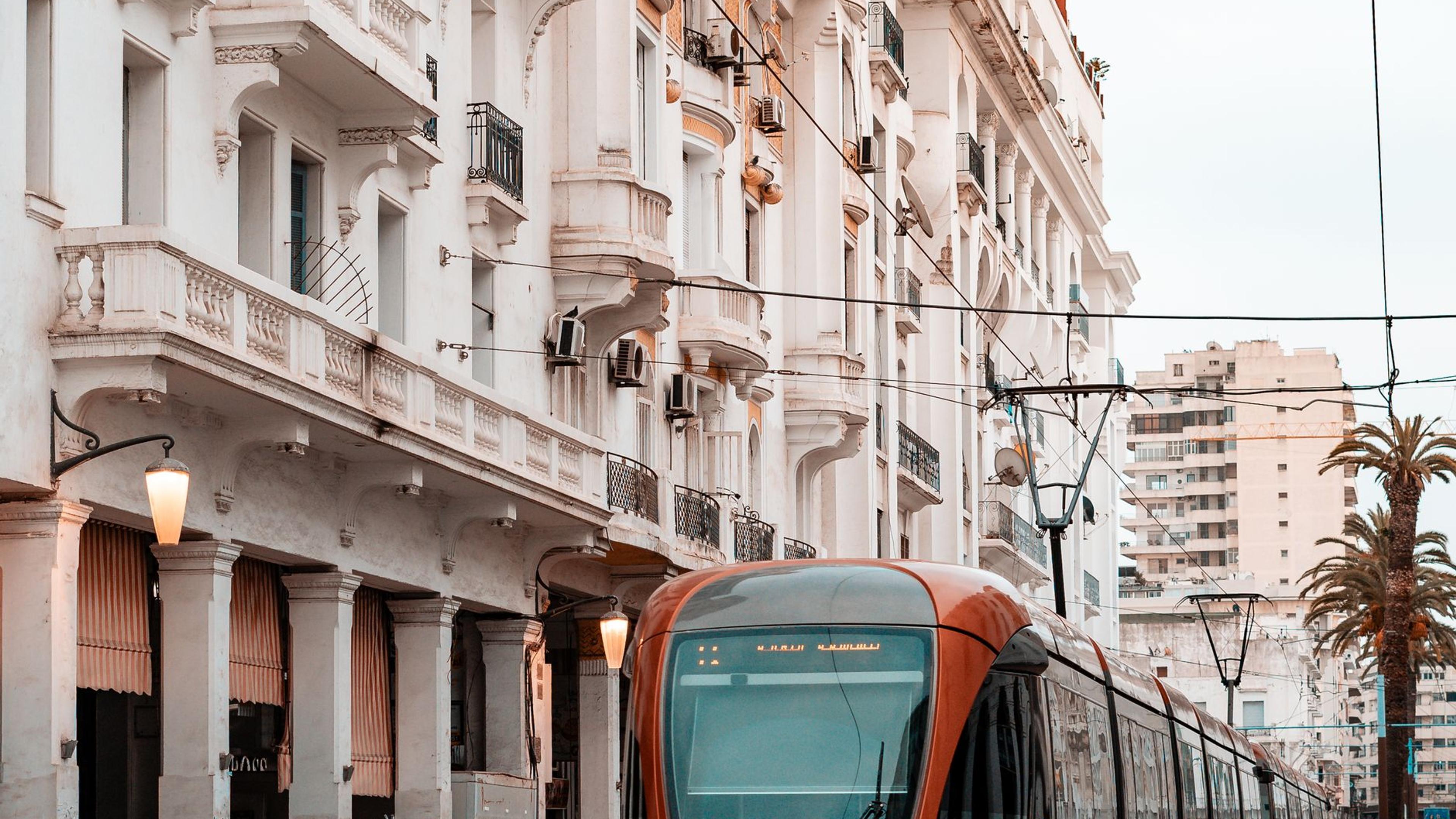
Morocco’s national railway, ONCF, runs the backbone of the country’s transport. The Al Boraq high-speed line, opened in 2018, connects Tangier, Kenitra, Rabat and Casablanca, with Tangier to Casablanca taking about 2 hours 10 minutes. Classic Al Atlas trains continue from Casablanca to Marrakech in about 2 hours 40 minutes, and link Rabat and Casablanca with Meknes and Fes. A high-speed extension towards Marrakech is under construction.
Trains are comfortable, cheap and usually on time. First class is worth the small extra on busy routes. Tickets are sold at stations and on oncf.ma. There is no railway south or east of Marrakech, so trains won’t get you to the Atlas villages, Ouarzazate or the Sahara. Casablanca’s airport has its own station: see Casablanca airport to the city.
03Long-distance buses
CTM is the national bus company and Supratours is the coach network linked to ONCF, which connects with train arrivals. Between them they reach almost every town travellers visit, including Essaouira, Agadir, Chefchaouen, Ouarzazate and Merzouga. Coaches are air-conditioned, seats are assigned, and luggage goes in the hold for a small fee. Book a day or two ahead in busy periods. Cheaper local buses also exist, but they are slower and less comfortable.
04Petit taxis and grand taxis
Petit taxis
Small city taxis for trips inside one city. They take up to three passengers and their colour changes from city to city. They are meant to use the meter; if a driver won’t, agree the price before you get in. Petit taxis can’t leave city limits.
Grand taxis
Larger cars that run fixed routes between towns and villages. They are shared: each seat is sold separately and the car leaves when it is full, traditionally with six passengers. You can pay for all the seats to have the car to yourself, but it isn’t a licensed tourist vehicle with a planned route and a driver who stays with you.
05Domestic flights
Royal Air Maroc and low-cost airlines fly between the main cities. Flights mainly make sense for the far south, such as Dakhla or Laayoune, or when you are short of time and flying between, say, Fes and Marrakech. For most routes, the time spent getting to and through the airport cancels out the saving.
06Renting a car
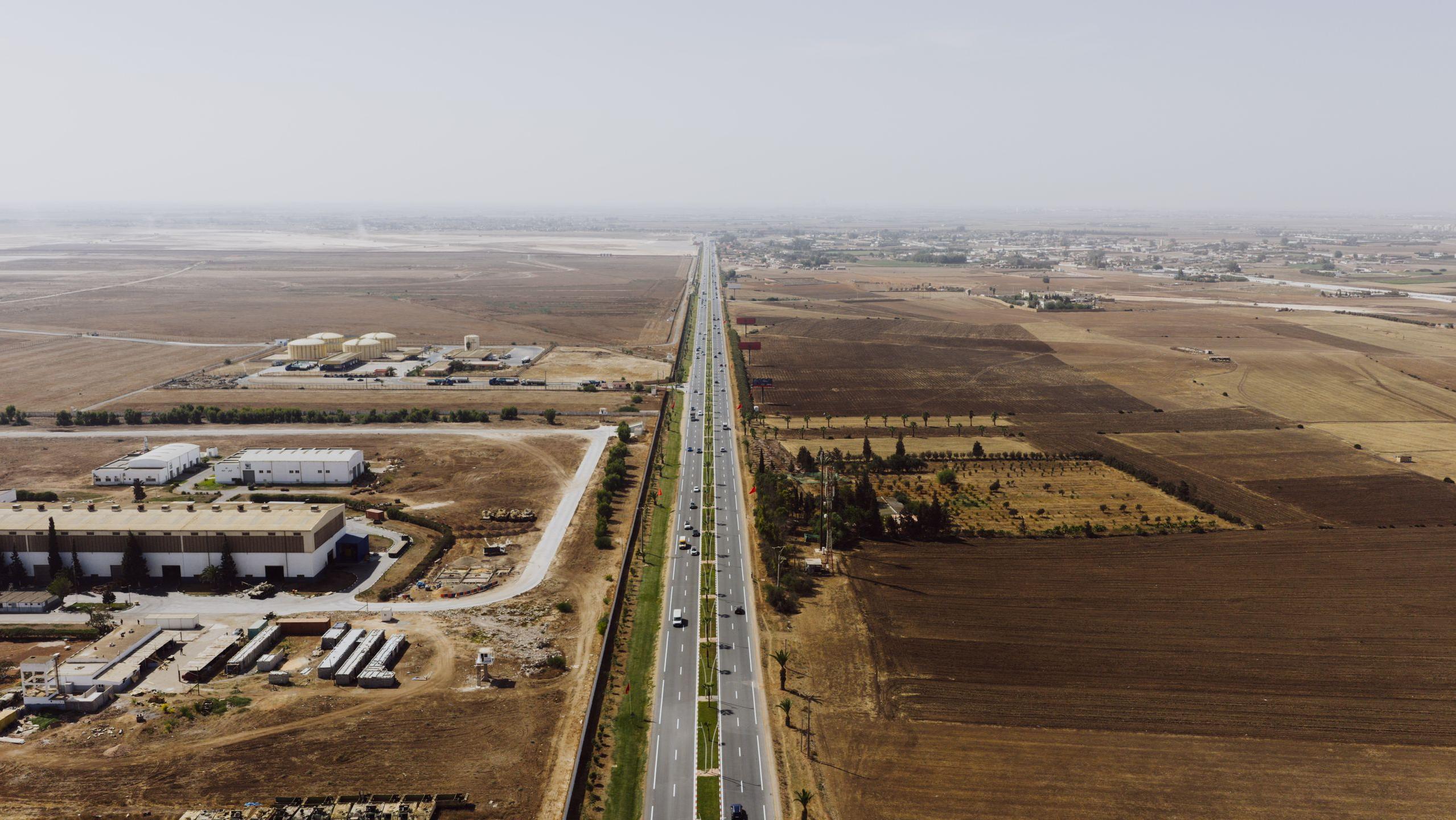
Car rental is widely available at airports and in cities, and it gives you full freedom on open roads. It is less useful in the big medina cities, where you will park the car for days. Read driving in Morocco before you decide, and compare it with a driver in private driver vs renting a car.
07Private drivers
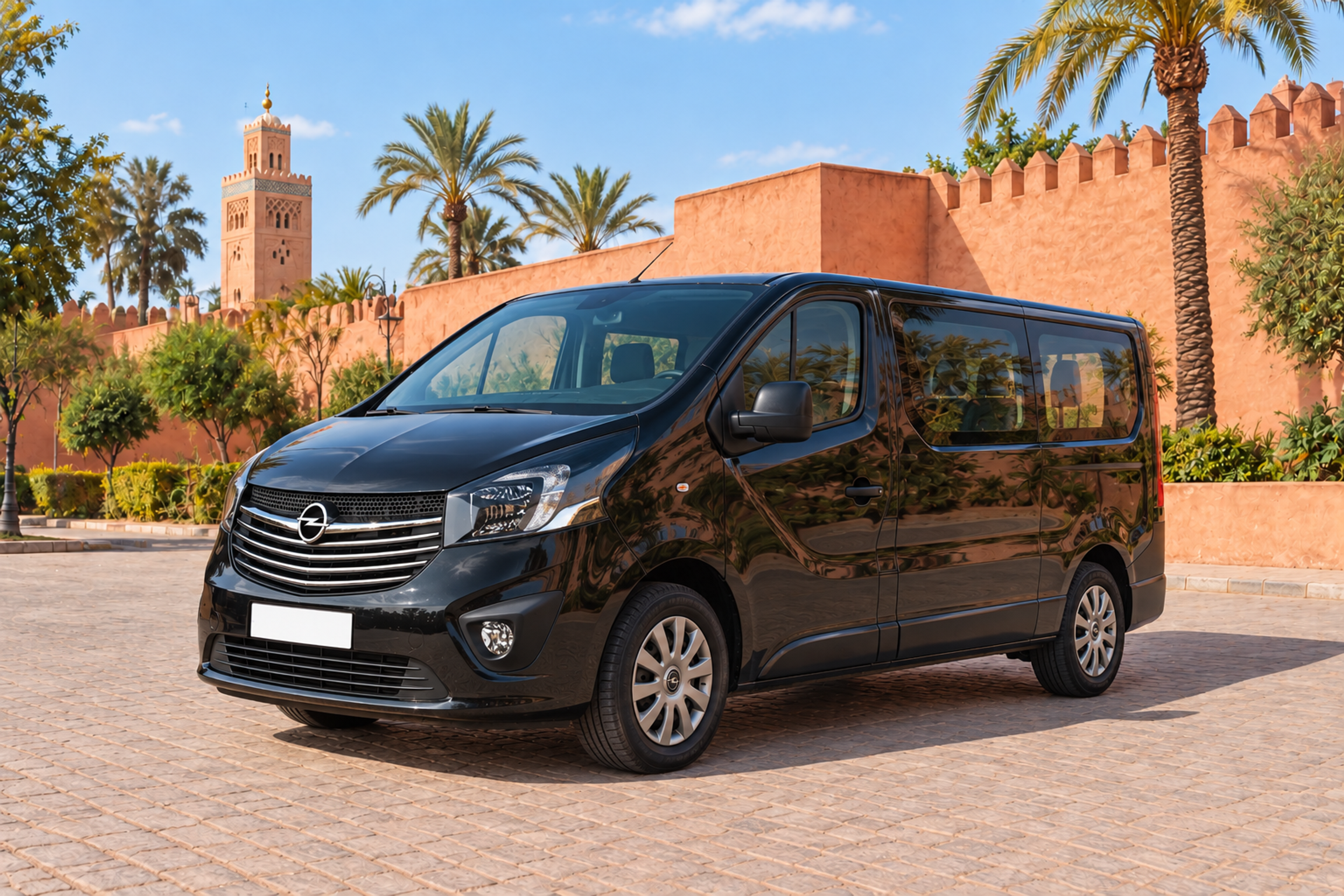
A private driver gives you your own vehicle and a local driver for an airport pickup, a single transfer, a day out or a whole trip. It is the simplest option for families, groups and anyone heading over the Atlas to the desert, because it goes door to door and the price is per vehicle. See our private driver service and what a private driver costs.
08Arriving by air
Most travellers land in Marrakech or Casablanca. Our arrival guides cover every option from the terminal: Marrakech airport to the medina and Casablanca airport to the city. If you would rather be met in arrivals, we can arrange an airport transfer at either airport.
- Private Driver HireJust a car and driver: airport transfers, day hire or your own multi-day route.Browse tours →
- Tours from MarrakechEvery route that starts in Marrakech: desert trips, Atlas treks and longer loops.Browse tours →
- Tours from CasablancaRoutes that start the day you land: round trips back to Casablanca or one-way to Marrakech.Browse tours →
Quick answers
Trains for the Tangier–Rabat–Casablanca–Marrakech–Fes cities, CTM or Supratours buses for other towns, and a private driver or tour for the Atlas and the Sahara.
Yes. Direct classic trains run between Marrakech and Fes and take about 7 hours. Many travellers go via the Sahara by road instead, over two or three days.
Yes, by long-distance bus to Merzouga or Zagora, but it is a long day. There is no train. Most visitors go with a driver or on a tour and split the journey.
Petit taxis are small city cabs for up to three passengers that can’t leave the city. Grand taxis are shared cars running fixed routes between towns, leaving when every seat is sold.
Al Boraq links Tangier and Casablanca in about 2 hours 10 minutes, stopping at Kenitra and Rabat. It is Africa’s first high-speed line.
Yes, between the main cities. Trains and coaches are good. A car or driver becomes useful for the mountains, the desert and small villages.
Want this trip planned for you?
Tell us your dates and what you like. We send back a route and a price.
Get a free quoteBrowse tours →